
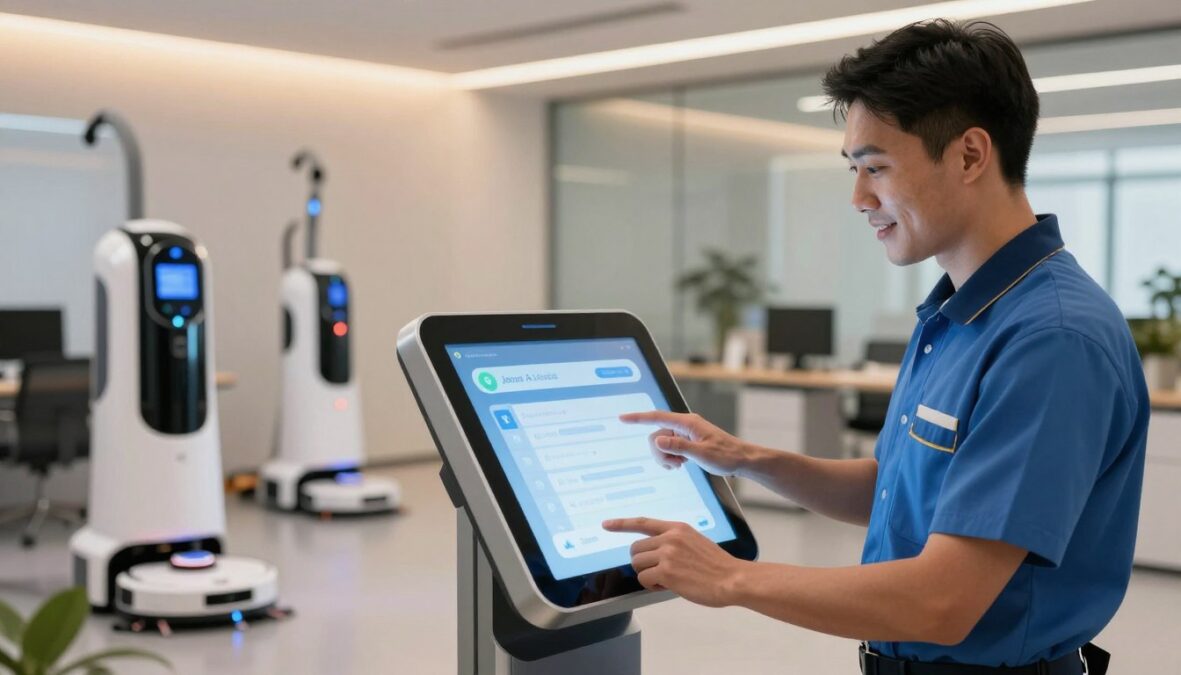
The world of facility maintenance is changing fast. What seemed like science fiction is now a practical reality for cleaning teams in the U.S. Our latest janitor ai chatbot review 2026 shows how these digital helpers are changing how we manage commercial spaces.
These tools are not just ideas anymore. They are essential assets that make daily tasks easier and improve building checks. By mixing smart software with advanced hardware, modern systems make sure every part of a facility gets the care it needs. This guide gives a clear look at how this tech is changing the game for managers everywhere.
Key Takeaways
- Smart technology is now a standard tool for modern facility maintenance teams.
- Digital assistants help improve the accuracy of building audits and daily cleaning schedules.
- Integrating software with hardware creates a more efficient workflow for staff.
- Facility managers can use these systems to reduce operational costs significantly.
- The industry is moving toward a future where automation supports human labor rather than replacing it.
The Evolution of Janitorial Automation Technology
The world of facility maintenance has changed a lot. Before, cleaning teams followed strict schedules that didn’t always match the building’s needs. Now, janitorial automation technology focuses on smarter, data-based choices.
Today’s systems work with the environment, offering real-time responsiveness. They use advanced data to make sure cleaning happens where it’s most needed.
At the core of this shift are advanced janitor robots. These robots get data from sensors and computer vision. They learn from past use and adjust to how people move in a building.
This new tech in janitorial automation helps facility managers a lot. It moves away from old, fixed plans. This leads to a cleaner, greener space and saves on labor costs.
Comprehensive Janitor AI Chatbot Review 2026
The world of commercial maintenance is changing fast with smart software. Our janitor ai chatbot review 2026 shows how tech is making maintenance in big buildings better. It turns messy schedules into a clear, trackable plan.
Core Functionality and User Interface
An innovative ai chatbot for janitorial industry is like a central hub for cleaning tasks. It lets managers control robots, sensors, and teams with one easy-to-use interface.
These systems make complex data simple. They make sure everyone knows their role. Real-time updates help teams adjust fast when unexpected things happen.
Integration with Existing Cleaning Management Systems
Today’s facilities use many technologies to work well. Good automated cleaning management systems work with what’s already there, like HVAC and security.
When these systems work together, they form a single, efficient unit. This seamless integration cuts down on manual work. It makes sure resources are used wisely.
- Centralized Control: Manage all assets from one dashboard.
- Data-Driven Decisions: Use sensor feedback to trigger cleaning tasks.
- Improved Compliance: Maintain digital logs for every completed job.
Key Features of the Janitor AI Chatbot
Janitorial automation technology lets facility managers focus on big plans, not daily tasks. Smart software makes sure every part of your building gets cleaned when it needs it most.
Automated Scheduling and Task Allocation
Modern systems use smart data to manage staff. They look at how many people are around and when to decide when to clean.
This intelligent approach means your team is always where they’re needed most. This makes your team much more productive.
Real-Time Inventory Tracking and Supply Management
Managing cleaning supplies can be a big problem. Our AI uses cameras and sensors to keep track of what you have.
When supplies are low, it alerts the team right away. This proactive management stops you from running out of cleaning stuff when you need it most.
Predictive Maintenance Alerts for Cleaning Equipment
Broken equipment can stop your cleaning work. Our chatbot checks your machines with advanced sensors.
It spots problems before they happen, like motor issues. Getting these predictive maintenance alerts lets you fix things when it’s quiet. This keeps your cleaning tech running smoothly.
Operational Efficiency Gains in Commercial Cleaning
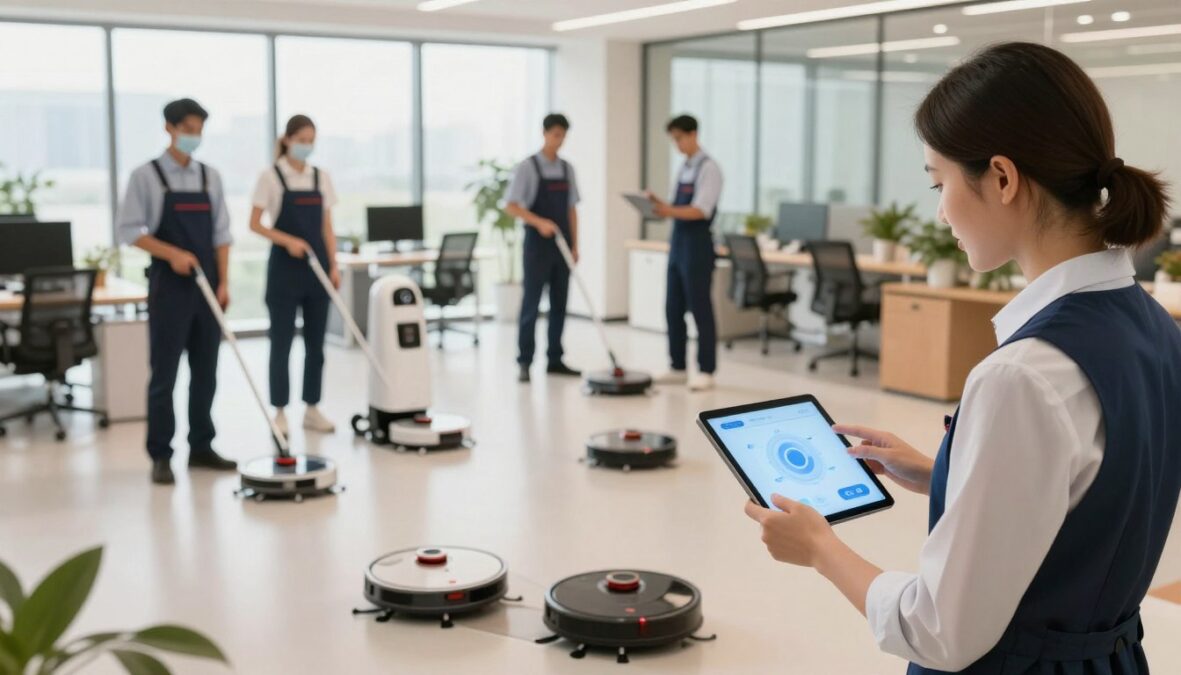
Boosting operational efficiency is now the top priority for large-scale cleaning operations. Facility managers are constantly seeking ways to streamline their daily routines while maintaining high standards of hygiene. By integrating smart technology, teams can move away from manual processes and embrace a more data-driven approach to facility maintenance.
Reducing Administrative Overhead
AI-driven tools offer a big advantage by reducing time spent on paperwork. Automated reporting and scheduling features allow managers to offload repetitive tasks to the software. This shift ensures that leadership can focus on higher-value strategic tasks rather than getting bogged down in manual logs.
When administrative burdens decrease, the entire organization benefits from faster decision-making. Digital systems provide instant access to performance metrics, which helps in identifying areas that need immediate attention. This level of transparency is essential for maintaining a high-quality environment in busy commercial spaces.
Optimizing Staff Deployment and Workflow
Smart software helps managers place their cleaning crews exactly where they are needed most. By analyzing foot traffic patterns and usage data, the system suggests the most effective routes for staff to follow. This optimized workflow prevents wasted time and ensures that high-traffic areas receive the attention they deserve.
The impact of these improvements is measurable and impressive. For example, a global financial firm that implemented an app-driven janitor fleet across twenty floors reported an 18% reduction in cleaning costs within just three months. This success story highlights how precise deployment can lead to substantial financial savings while simultaneously improving the overall cleanliness of the facility.
Pros and Cons of Implementing AI Cleaning Solutions
Innovation can make things more efficient, but we must consider both sides. Using ai cleaning solutions can change how a place works. But, it’s all about finding the right balance with technology.
Advantages for Facility Managers
The main plus of these systems is their unmatched consistency. They automate routine tasks, keeping cleaning standards high all the time.
These tools also offer clear audit logs, which are key for following rules. With ai cleaning solutions, you can easily see what was cleaned and when. This makes reporting easier for everyone involved.
Potential Challenges and Implementation Hurdles
Even with the benefits, managers face specific challenges when starting. One big task is setting data retention policies from the start.
You also need to make sure who can access sensitive info. If you don’t set these rules early, new tech might move faster than your security can keep up.
The aim is to make sure your ai cleaning solutions are both useful and safe. By tackling these issues early, you can enjoy the benefits of automation. And you’ll keep your facility’s data secure and in line with rules.
Virtual Assistant for Janitorial Services: User Experience
A friendly virtual assistant for janitorial services connects complex software to frontline workers. When tech is easy to use, staff is more likely to see it as a help, not a problem. User experience is key to long-term success.
Ease of Onboarding for Cleaning Staff
The best digital tools are easy to learn, so new hires can start quickly. A virtual assistant for janitorial services makes training fast. This lets managers focus on quality, not tech issues.
“Technology in the workplace should feel like an extension of the team, not a barrier to productivity.”
To make onboarding easier, providers add these features:
- Simplified dashboards that show only the most important tasks.
- Step-by-step tutorials for setting up equipment.
- Quick buttons for reporting supply or maintenance needs.
Communication Capabilities and Language Support
Diverse cleaning teams need flexible communication tools. Many platforms now support multiple languages, helping staff communicate in their own language. This is crucial for maintaining high standards in large, multicultural teams.
Some providers also offer a friendly digital partner. This assistant can send reminders, gamify cleanliness achievements, and more. It makes daily tasks fun and engaging, boosting staff morale.
Data Security and Privacy in Smart Janitorial Software
Keeping your building’s data safe is as crucial as keeping the floors clean. When you use smart janitorial software, protecting sensitive info is a major concern for facility managers.
Protecting Sensitive Facility Information
Today’s systems focus on privacy to safeguard your facility’s data. Most data processing happens right on the device, reducing internet data transfer.
When data does need to be sent, it goes through encrypted cloud pipelines. Also, camera feeds are treated as ephemeral data. This means they’re processed instantly and not stored for long. This method greatly lowers the chance of unauthorized access to your building’s visuals.
Compliance Standards for Automated Systems
Using smart janitorial software means following strict rules. Whether it’s a corporate office or a medical space, your tools must meet tough privacy standards.
These systems are made to follow global data protection rules. This ensures your automated cleaning services stay in line. By picking platforms that value transparency and security, you can update your cleaning services safely and protect your facility’s data.
Comparing AI Chatbot Advancements in the Janitorial Sector
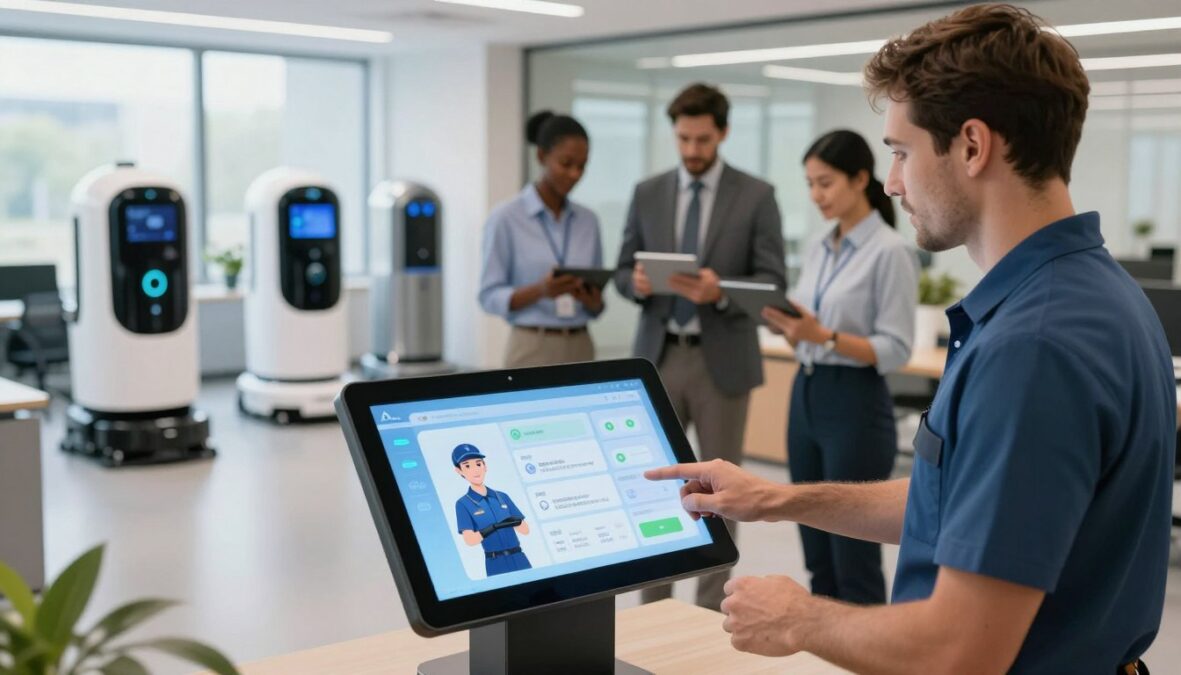
Looking at the latest tools, we see not all digital assistants are created equal. The innovative ai chatbot for janitorial industry solutions are changing how facility managers work with their buildings. These systems now manage daily operations, not just simple tasks.
How Janitor AI Chatbot Stacks Up Against Competitors
Many platforms just handle scheduling, but Janitor AI Chatbot does more. It talks to HVAC, lighting, and security systems. This means cleaning tasks are done when they’re most needed, not just on a set schedule.
While others focus on just managing tasks, this platform uses chatbot technology in cleaning services to be more responsive. It looks at data from sensors to tell staff when to clean or adjust lights. This level of detail gives it a big edge in facility management.
Scalability for Small Businesses vs. Large Enterprises
These tools are great because they grow with your business. For small businesses, they offer an easy-to-use interface. This helps small crews work more efficiently with less time.
Big companies with lots of floors get a lot from these systems too. They can handle lots of data and control everything from one place. These ai chatbot advancements in janitorial sector tools make sure your cleaning is always efficient, no matter the size of your operation.
The Future of Janitorial Services with AI Assistants
The future of janitorial services with AI assistants looks bright. It brings a smarter, more efficient way to manage buildings. We’re moving from manual work to using data for better cleaning.
Predicting Long-Term Industry Trends
In the next few years, we’ll see a big push for sustainability and custom cleaning plans. Buildings will be like living systems, with sensors and cleaning platforms working together. This means cleaning only when it’s needed.
This change will cut down on waste and make sure resources are used wisely. With ai cleaning solutions, managers can lower their environmental impact and keep places clean.
“The most successful organizations will be those that view technology not as a replacement for their workforce, but as a powerful tool to elevate human potential.”
The Role of Human-AI Collaboration
The real strength of a virtual assistant for janitorial services is in handling boring and risky tasks. It frees up staff to focus on important work like solving problems and planning maintenance.
This change lets cleaning experts do more complex tasks. They can focus on solving big problems instead of doing the same thing over and over. Here’s how roles are changing with human-AI collaboration.
| Task Category | Traditional Approach | AI-Enhanced Approach |
|---|---|---|
| Floor Maintenance | Manual scrubbing | Autonomous navigation |
| Supply Management | Periodic manual checks | Real-time automated alerts |
| Staff Oversight | Reactive supervision | Strategic data analysis |
| Safety Protocols | Human-led inspection | Predictive hazard detection |
The future of janitorial services with AI assistants is all about teamwork. ai cleaning solutions do the hard work, but humans are key for checking quality and making smart choices. Using a virtual assistant for janitorial services today gets your team ready for a better future.
Recommendations for Facility Managers
Before you start using smart janitorial software in your cleaning routine, plan carefully. It’s important to know your specific needs rather than using a generic solution. By understanding your current cleaning process, you can make the switch to digital easier.
Assessing Your Facility Needs Before Adoption
Begin by doing a detailed needs assessment. Identify your facility’s busiest spots, any special cleaning rules, and the biggest challenges in your cleaning schedule. Knowing these details helps you set clear goals for your new system.
Think about how people move through your space. Areas like lobbies and restrooms need more attention than offices or storage rooms. By noting these patterns, you can make sure your smart janitorial software focuses on the most important areas first.
Best Practices for Successful Deployment
After figuring out your needs, plan a phased rollout. Start with small tests, like a single floor or a few restrooms. This lets your team get used to the new tech without affecting the whole place.
It’s crucial to watch how things go during these tests. Use the data to tweak your settings and make sure the system works as you want. Following these steps will help your transition to automated systems be both successful and measurable.
| Facility Type | Primary Focus | Success Metric |
|---|---|---|
| Corporate Office | Desk Sanitization | Task Completion Rate |
| Healthcare Clinic | Compliance Standards | Audit Pass Rate |
| Retail Center | High-Traffic Zones | Response Time |
| Educational Campus | Supply Management | Inventory Accuracy |
Cost-Benefit Analysis of AI Integration
Upgrading your cleaning operations means weighing costs against benefits. A detailed financial review is key when looking at automated cleaning management systems. This ensures your budget matches your goals.
Return on Investment Expectations
These tools offer more than just saving on labor. They help improve productivity and health outcomes significantly.
For instance, a hospital using robotics for cleaning saw a 23% drop in infections in a year. This shows how technology can pay off by making places safer and reducing risks.
Hidden Costs and Maintenance Requirements
Initial costs are clear, but ongoing expenses are also important. Keeping up with ai chatbot advancements in the janitorial sector means regular software fees and hardware updates.
Don’t forget the time for staff training and fixing issues. Proactive maintenance of your automated cleaning management systems keeps your investment working well without surprises.
Staying current with ai chatbot advancements in the janitorial sector is smart. Planning for these costs helps your facility’s financial health in the long run.
Conclusion
Using modern digital tools changes how teams handle daily tasks. The use of AI in janitorial work is a big step forward. It makes operations more efficient and improves service quality.
Now, facility managers can make complex tasks easier. Chatbot technology in cleaning services lets teams focus on important tasks. This way, they keep high standards everywhere.
The future of janitorial work with AI is bright. It’s about using these tools wisely to make spaces cleaner, safer, and more efficient. Smart software helps teams stay on top of maintenance needs.
Investing in these systems is key to long-term success. Facilities that innovate will see better productivity and building health. Start looking into these digital solutions today to boost your team’s performance.
FAQ
How has janitorial automation technology evolved leading into 2026?
What are the core findings of the latest janitor AI chatbot review 2026?
What specific features make an innovative AI chatbot for janitorial industry applications effective?
How does a virtual assistant for janitorial services improve staff morale?
What kind of ROI can be expected from automated cleaning management systems?
How do these systems ensure data security and privacy within a facility?
What does the future of janitorial services with AI assistants look like for human employees?
What are the best practices for facility managers before adopting AI cleaning solutions?
There are no reviews yet. Be the first one to write one.