
The world of creativity is changing fast, and you need the best tools to keep up. Our recraft ai design tool review 2026 shows how this platform is key for today’s creators. It’s crucial for both entrepreneurs and professional artists to know about it.
This software makes digital art easier by automating complex tasks. It uses advanced automation to create top-notch visuals quickly. We’ll look at its main features that make it essential for your creative tools.
Let’s see how this innovation changes your work in building brands and visual assets. It’s time to find out if it really meets the market’s high standards.
Key Takeaways
- Discover how modern automation streamlines your creative production process.
- Learn why this platform is becoming a favorite for entrepreneurs and designers.
- Understand the core value proposition behind this innovative software.
- Explore practical tips to improve your digital art output effectively.
- Gain insights into the future of visual creation for the coming year.
The Evolution of AI Design: Setting the Stage for 2026
Looking at the latest design tool trends, we see generative AI is more than a novelty. It’s changing how creative pros work every day. Now, we’re moving from manual work to smart systems that do the hard stuff.
The Shift Toward Generative Design
Today’s creative work flows rely on automation for speed. Tasks like background removal or making color palettes are done in seconds. This lets designers focus on big ideas, not small details.
Generative models are key to this new era. They create top-notch assets from simple text prompts. This is crucial for teams that need to make more without losing quality.
Why Recraft AI Stands Out in the Current Market
In the sea of ai design software 2026, Recraft AI leads with its vector generation. It’s easy to use yet delivers pro-grade results. It’s seen as the best ai design tool for those needing precision and growth.
This tool fits well into current design workflows. It’s loved by modern design teams for its focus on user control and brand consistency. It fixes many issues found in earlier AI models. Here’s how it stacks up against old methods.
| Feature | Traditional Design | AI-Assisted Design |
|---|---|---|
| Background Removal | Manual Pen Tool | Instant Automation |
| Color Palettes | Manual Selection | Generative Suggestions |
| Vector Scaling | Redrawing Required | Infinite Resolution |
| Workflow Speed | Slow/Linear | Rapid/Iterative |
Recraft AI Design Tool Review 2026: A Comprehensive Analysis
Our latest top design tool reviews show Recraft AI’s big progress in a year. This recraft ai design tool review 2026 helps creators choose in the busy software market.
Understanding the Core Philosophy of Recraft
At its core, Recraft is a versatile solution for freelancers and big marketing teams. It aims to connect complex AI with real design needs.
It focuses on vector-based outputs for high-quality designs, no matter the project size. This design tool analysis shows it’s more than a trend—it’s a solid tool for keeping brands consistent.
“The true power of modern design software lies in its ability to empower the user, not replace the creative spark.”
Key Updates and Improvements Since Last Year
In the last year, Recraft has grown a lot. This recraft ai tool review says the interface is now easier to use. This means faster design cycles than before.
The table below shows the main areas where Recraft has improved:
| Feature Category | 2025 Status | 2026 Improvement |
|---|---|---|
| Vector Precision | Basic | Advanced |
| Brand Consistency | Limited | High |
| Rendering Speed | Moderate | Ultra-Fast |
| User Workflow | Manual | Automated |
These updates show Recraft’s dedication to quality. By listening to users, they’ve turned a promising idea into a key design tool.
Core Features and Capabilities
When looking for the best ai design software 2026, the features matter a lot. Creators today need more than basic image making. They want precision, scalability, and control over their art.
Vector Graphics Generation
One standout feature is making high-quality vector graphics. These graphics stay sharp no matter the size, ideal for logos and print. It’s the first to handle text of any size and length, keeping your text clear and editable.
“Design is not just what it looks like and feels like. Design is how it works.”
Advanced Style Control and Customization
Getting the right look can be tough. Now, users have advanced style controls to tweak every part of their design. Whether you want something simple or detailed, you can adjust it all.
This customization lets you make your designs truly yours. By adjusting settings, your images will match your brand perfectly. This focus on detail makes the software stand out in the ai design software 2026 world.
Multi-Modal Design Support
The platform supports multiple design styles, letting you try different looks easily. You can switch between styles and formats without losing your design’s essence. This freedom encourages creative exploration and helps you find new ideas fast.
With these features, the tool is a versatile partner in your creative work. It helps you explore new ideas while keeping your work professional. These features change how designers work, making it more fun and efficient.
User Interface and Workflow Experience
Design starts with a clean interface. When you open the platform, you see a layout that’s fast and easy to use. This lets you focus on your creative ideas without technical issues getting in the way.
Navigating the Dashboard
The Infinite Canvas is at the heart of the experience. It’s a workspace for today’s creators. Here, you can work with your team in real-time, without any delays.
You can organize your assets, manage layers, and see project history from the dashboard. It’s all about making your workflow smooth.
Integration with Professional Design Software
Connecting AI assets to your tools is easy. The platform knows designers use specific tools to finish their work. It makes sure your workflow stays productive and efficient.
Compatibility with Adobe Creative Cloud
You can move files between your Adobe apps and this platform easily. This keeps your work quality high, from start to finish. It’s a key feature for designers in 2026.
Export Options and File Formats
Being flexible with exports is important. The platform supports many formats, making sure your work is ready for any use. Key options include:
- SVG and PDF for scalable vector graphics.
- PNG and JPG for high-resolution raster images.
- Layered files for advanced editing.
These options ensure your work meets professional standards, whether for printing or digital use.
Performance and Output Quality
Our design tool analysis shows that today’s creative tools must offer both top-notch visuals and fast processing. Designers need software that can handle complex tasks well. We look at how these tools improve from raw to professional-grade output.
Resolution and Scalability
Image resolution is key in any design tool analysis. Recraft uses advanced AI to boost pixel density without losing quality. This is crucial for both print and digital media.
The platform supports vector-based outputs. This means designers can scale their work endlessly. Logos and illustrations stay sharp, whether on a small screen or a huge billboard.
Consistency in Brand Identity
Keeping a consistent look across projects is a big challenge. The platform helps by offering strong style controls. These controls lock in colors, typography, and themes.
With these customization features, users can ensure all assets match their brand guidelines. This is key for agencies that need to produce lots of content while keeping a unified look.
Speed and Rendering Efficiency
Meeting tight deadlines requires a tool that renders quickly. Our design tool analysis shows the platform cuts down wait times. Designers can work faster and stay creative.
The table below compares the platform to traditional workflows:
| Metric | Manual Workflow | Recraft AI |
|---|---|---|
| Initial Concepting | Hours | Minutes |
| Resolution Scaling | Lossy/Manual | Lossless/AI |
| Brand Alignment | Variable | Consistent |
| Rendering Speed | Slow | Instant |
The tool’s speed and quality make it a valuable asset for professionals. It automates repetitive tasks, letting creators focus on strategy.
Pros and Cons of Using Recraft AI
When looking at the recraft ai tool review, it’s key to balance creativity with technical needs. Designers want tools that are both powerful and easy to use. This tool offers a unique way to create art.
The Advantages of the Platform
High-Fidelity Vector Outputs
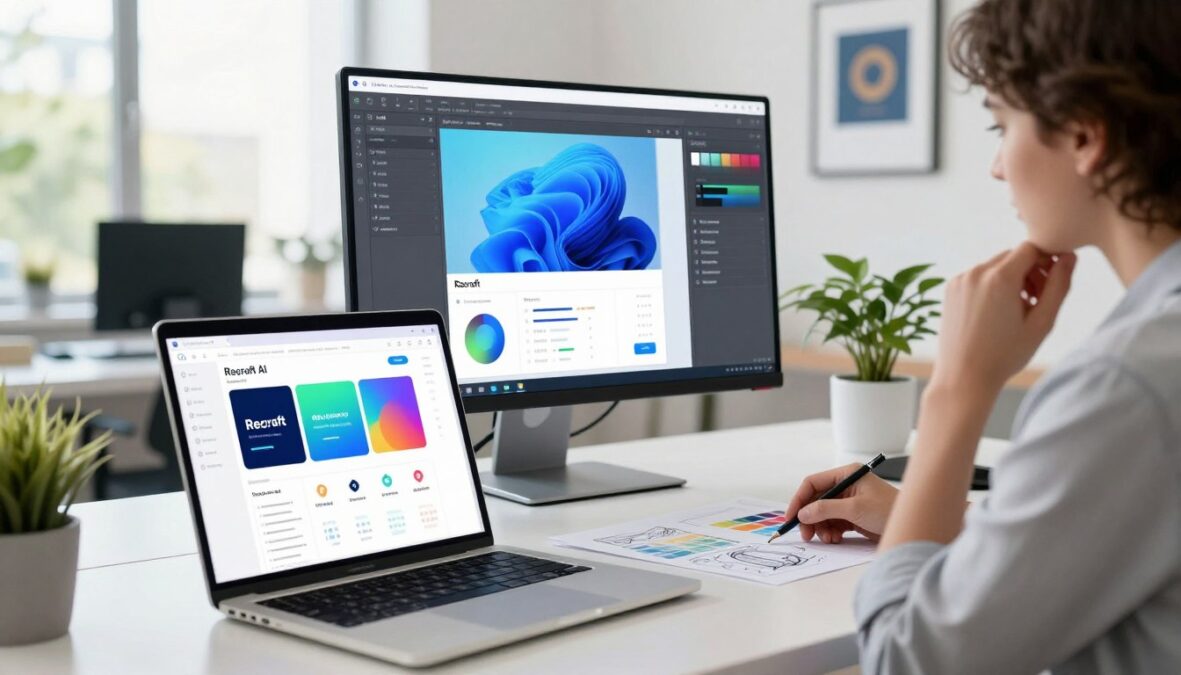
This tool is great for making high-fidelity vector graphics that look sharp at any size. Unlike regular images, these vectors can be edited well in other software. The AI eraser and background remover let you control your designs precisely.
Intuitive Prompt Engineering
The platform is good at turning words into beautiful images with intuitive prompt engineering. It gets what you mean quickly, saving time. This makes the recraft ai tool review a good choice for those who want to work efficiently.
Potential Limitations to Consider
Learning Curve for Advanced Features
While the basics are easy, getting the hang of advanced features takes time. You might need to play around with settings to get the same results every time. This is common in complex software, but it’s something to think about if you’re in a hurry.
Dependency on Internet Connectivity
The tool needs a stable internet connection to work well. Slow or unreliable internet can cause delays. Still, for those with steady web access, the recraft ai tool review is very powerful.
Comparative Analysis with Industry Alternatives
Looking for the best ai design tool shows that not all platforms are equal. A detailed design tool comparison helps you find software that fits your creative needs.
Recraft AI vs. Midjourney
Midjourney is known for its amazing art and textures. But, it uses Discord, which might not work for teams needing a dedicated workspace.
Recraft AI, on the other hand, works right in your browser. It feels like a real design app, making project management easier.
Recraft AI vs. Adobe Firefly
Adobe Firefly is great for those in the Creative Cloud. It makes AI work seamlessly with Photoshop and Illustrator.
Recraft AI focuses on vector graphics generation and style control. It’s perfect for creating scalable assets for branding.
Determining the Best Tool for Your Specific Needs
Choosing the best ai design tool depends on your project goals and needs. If you want easy access and vector workflows, Recraft AI is a good choice.
It’s important to compare design tools before signing up. The table below shows how these tools compare in key areas.
| Feature | Recraft AI | Midjourney | Adobe Firefly |
|---|---|---|---|
| Primary Interface | Web-based | Discord | Web/Adobe Apps |
| Vector Output | Excellent | Limited | Moderate |
| Ease of Use | High | Low | High |
| Professional Integration | Good | Low | Excellent |
Ideal Use Cases and Target Audience
AI-driven design tools are changing the game for many professionals. They make complex tasks easier, letting users focus on strategy. Whether starting a new brand or improving existing ones, the right tech can greatly increase output.
Graphic Designers and Freelancers
For creative pros, the biggest challenge is often starting. AI tools help by overcoming creative blocks with quick, high-quality ideas. Designers can explore many concepts in just minutes, saving hours on initial sketches.
Freelancers face tight deadlines and many clients. AI tools speed up the idea phase, helping them deliver projects faster without losing quality. This gives them a competitive edge in a busy market.
Marketing Teams and Content Creators
Marketing teams must keep up with fresh content for social media. AI tools help maintain consistent brand identity across all digital platforms. They automate social media asset creation, keeping feeds lively with little effort.
Content creators can quickly try out different visual styles. This speed keeps campaigns fresh and on-trend. It turns rough ideas into polished, professional products.
Small Business Owners and Entrepreneurs
Many entrepreneurs can’t afford a full design team or expensive agencies. AI design tools let them create professional-grade visual identities themselves. From logos to flyers, high-quality design is now accessible.
This ease allows small businesses to look professional, building trust with customers. With user-friendly interfaces, they can make assets that seem expert-made. It’s a cost-effective way to grow a business while keeping branding sharp.
Pricing Models and Subscription Value
When looking at new software, the cost is key to its value for your projects. A detailed design tool comparison helps pick a plan that fits your needs without spending too much. This ensures you get the most out of your money.
Free Tier Limitations
The platform has a Free plan for those exploring its main features. It gives access to basic generation tools but has limits on how much you can make and use commercially.
Free users get limited access to advanced tools and fast rendering. It’s great for hobbyists but might not be enough for professionals needing to work fast.
Premium Subscription Tiers
For bigger creative projects, there are two paid options. The Pro plan costs $10 a month and boosts your generation limits and style controls.
The Team plan, at $55 a month, is for teams. It has tools for managing assets and accounts, perfect for agencies needing to manage many clients.
| Plan Type | Monthly Cost | Best For |
|---|---|---|
| Free | $0 | Casual Users |
| Pro | $10 | Individual Pros |
| Team | $55 | Creative Agencies |
Is the Investment Worth It for Professionals?
Choosing to upgrade depends on your project volume and complexity. If you need consistent brand identity and quick changes, the Pro plan is worth it for the time it saves.
The Team plan is a great deal for teams needing to keep designs consistent across projects. A thorough design tool comparison shows that the paid plans are reliable and fast for professional work.
Tips for Maximizing Your Design Workflow
Keeping up with latest design tool trends means improving how you use AI. Recent data shows 95% of professionals using AI spend less time on manual tasks. This lets them focus on creative strategy. By adopting smart habits, you can increase your daily output and stay competitive.
Mastering Prompt Engineering for Better Results
Good results come from clear instructions. Instead of vague terms, give AI specific details on lighting, texture, and style. Iterative refinement is crucial; adjust your prompt if the first result isn’t perfect.
Think of your prompts as a conversation with a skilled assistant. Clearly define the context and desired outcome. This minimizes the need for revisions and keeps your work unique.
Leveraging Community Templates
You don’t have to start every project from scratch. The platform offers many community templates as great starting points. Using these saves time and inspires your creativity.
Customizing templates fits your brand identity. This is key for designers who value speed without losing quality. It’s a great way to stay current with latest design tool trends in a fast market.
Automating Repetitive Design Tasks
Automation is a game-changer for growing your creative business. It lets you offload tasks like resizing assets to AI. This frees up time for complex problem-solving and client communication.
The table below shows how different strategies boost your efficiency:
| Strategy | Primary Benefit | Time Saved |
|---|---|---|
| Prompt Engineering | Higher Accuracy | High |
| Community Templates | Faster Ideation | Very High |
| Task Automation | Reduced Manual Labor | Maximum |
Using these strategies will help you master latest design tool trends and keep your workflow efficient. Start by automating one task today and see your efficiency improve.
Conclusion
Recraft AI is a big step forward for digital artists and teams. It combines vector precision with generative power. This makes it a top choice in the design world.
Using Recraft AI can unlock your creative potential. It helps keep your brand consistent and makes complex graphics easier. This saves a lot of time for users.
Try out Recraft AI to see how it can change your projects. Compare it with other design tools to see why it’s so popular. Start using it today and see your ideas come to life faster and more accurately.
FAQ
The Shift Toward Generative Design
Why Recraft AI Stands Out in the Current Market
Understanding the Core Philosophy of Recraft
Key Updates and Improvements Since Last Year
Vector Graphics Generation
Advanced Style Control and Customization
Multi-Modal Design Support
Navigating the Dashboard
Integration with Professional Design Software
Resolution and Scalability
Consistency in Brand Identity
Speed and Rendering Efficiency
The Advantages of the Platform
Potential Limitations to Consider
Recraft AI vs. Midjourney
Recraft AI vs. Adobe Firefly
Determining the Best Tool for Your Specific Needs
Graphic Designers and Freelancers
Marketing Teams and Content Creators
Small Business Owners and Entrepreneurs
Free Tier Limitations
Premium Subscription Tiers
Is the Investment Worth It for Professionals?
Mastering Prompt Engineering for Better Results
Leveraging Community Templates
Automating Repetitive Design Tasks
Is Recraft AI considered the best ai design tool for vector graphics in 2026?
How does this recraft ai tool review compare the platform to Adobe Firefly?
What are the standout AI design tool features for professional workflows?
Does Recraft AI follow the latest design tool trends for 2026?
Can I use Recraft AI for free, or do I need a Pro plan?
How difficult is the prompt engineering for this specific ai design software 2026?
Is the AI eraser tool effective for complex compositions?
There are no reviews yet. Be the first one to write one.