

Several Kling AI coupon listings advertise savings for November 2026, but the offer that works for you is the one that appears in your checkout total. You can try a code, choose a plan offer, or wait to compare the terms before starting a subscription.
Credits are Kling AI’s virtual units for redeeming services, not money or prepaid value. For content creators using video generation and other creative tools, a discount matters only if it applies to the account and plan you intend to use. The final checkout total is the fastest way to confirm actual savings.
Key Takeaways
- Coupon listings advertise savings, but eligibility can vary.
- Check the offer’s plan, billing term, and expiration date.
- Compare the first-subscription price with the next renewal amount.
- Confirm any credit bonus or discount in checkout.
- Credits redeem services and are not cash.
These checks help you avoid treating an advertised offer as a guaranteed price. Treat every advertised discount as a claim to verify before paying.
Kling AI Promo Code November 2026: Which Offers Are Listed?
The current listings range from percentage-off claims to a bonus-credit offer, and each has its own displayed deadline. None is guaranteed to work for every account or plan, even when a coupon page shows a code.
The listed expiration date and advertised benefit can change or fail to apply at checkout. On November 7, 2026, these promo codes and deals appeared with the following terms:
| Code | Advertised offer | Listed expiration date | Stated condition |
|---|---|---|---|
| 7BRUQCVH855N | Up to 20% off | November 8, 2026 | No condition stated |
| 7BP5LJPJ2JZS | Deal | November 7, 2026 | No discount percentage stated |
| 7BKWB4B84AEU | Reward | November 10, 2026 | No condition stated |
| 7BFDHANVKSYD | Up to 15% off, Black Friday offer | November 11, 2026 | Black Friday offer |
| 7BDNAALMZG84 | Bonus credits | November 11, 2026 | Eligible first subscription |
A coupon listing is an advertised claim, not proof that the benefit will appear on your account.
A deal label does not state a percentage, and a reward label does not explain its value. Read the coupon details before acting, since the code or deal may depend on account status or a particular subscription.
Coupon codes can also be removed or updated before a displayed deadline. Recheck the displayed offer and its expiration date on the day you plan to subscribe.
Checking account and offer eligibility
Start with the offer’s eligibility wording, because a large percentage is irrelevant if your account or billing choice is excluded. Specific conditions tell you more than the headline discount, especially when an offer mentions new customers or a first subscription.
You must register or log in before buying a paid service. The offers listed for November 2026 can have different account and plan rules, so review each one against your intended purchase.
- Check whether the offer is limited to new customers or a first subscription.
- Confirm whether it applies to monthly billing, annual billing, or both.
- Make sure the plan you intend to buy is eligible for the offer.
- Compare the expiration date and final checkout total with the advertised terms.
An offer can apply to one billing term and exclude another. That difference can change the value of a discount, even when the plan name matches.
Keep the listed conditions beside your checkout screen as you assess the subscription. Do not make a purchase until the eligible plan and discount are visible together in the checkout summary.
Applying a promo code at checkout
Keep the offer page open while you move from its code or deal button to Kling AI checkout. Follow the offer’s own route, since a coupon code and a deal link may work differently.
Finish only when the checkout screen shows the benefit you intended to claim. Coupon listings may use “Get Code” or “Get Deal” actions, but a deal link can direct you to an offer without revealing a code.
- Reveal the offer details using its “Get Code” or “Get Deal” action.
- Copy the exact code if the offer provides one.
- Go to Kling AI checkout and enter the code in the promotion field, if available.
- Confirm that the discount or bonus appears before completing payment.
These are digital paid services, so checkout is the point where you can see whether the offer changed the amount due or added a bonus. A deal link may apply an offer without a separate code field.
If the total or bonus does not match the displayed terms, stop rather than assuming the difference will be corrected later. Complete payment only after the checkout screen confirms the benefit you intended to claim.
What does Kling AI cost per month in November 2026?
Kling AI’s paid plans show lower first-subscription prices than their next monthly renewal prices. The first price is introductory, while the next monthly renewal column shows the ongoing amount listed after that initial subscription.
The first-subscription discount applies only to the first subscription. Compare the visible introductory price with the next renewal price before deciding whether a plan fits your monthly budget.
| Plan | Monthly credits | Visible first-subscription price | Next monthly renewal price |
|---|---|---|---|
| Basic | No monthly credits | Not applicable, free forever | Not applicable |
| Standard | 660 | $6.99 shown against $10 | $8.8 |
| Pro | 3,000 | $25.99 shown against $37 | $32.56 |
| Premier | 8,000 | $64.99 shown against $92 | $80.96 |
| Ultra | 26,000 | $127.99 shown against $180 | $159.99 |
Basic is free forever and lists no monthly credits. Its creation allowance is shown separately from the paid-plan credit amounts, so do not treat it as a monthly credit balance.
The visible first-subscription price is a one-time condition, not the recurring monthly amount. A low opening price can make a plan easier to try, but the renewal figure is the amount to plan around afterward.
Compare the next renewal amount, not just the first month, with the budget you can maintain.
Paid-plan generation features
Standard, Pro, Premier, and Ultra all list the same core set of paid generation and editing features. The listed set is shared, so the tier names alone do not imply different core video or image tools.
Each paid plan lists 1080p video generation, image upscaling, fast-track generation, watermark removal, and video extension.
| Plan | 1080p video generation | Image upscaling | Fast-track, watermark removal, and extension |
|---|---|---|---|
| Standard | Listed | Listed | All listed |
| Pro | Listed | Listed | All listed |
| Premier | Listed | Listed | All listed |
| Ultra | Listed | Listed | All listed |
Fast-track generation supports a quicker workflow, while image upscaling can raise image resolution. Watermark removal and video extension are also listed across all four paid tiers.
The table covers the listed paid-plan features, not a promise that every generation mode costs the same number of credits. Credit use can differ by the generation task, so a shared feature does not mean identical usage.
Choose among these tiers by workload and credit needs, not by assuming a higher monthly price changes this shared feature set.
How many credits does native 4K video generation use?
Native 4K generation in the VIDEO 3.0 series uses a reference rate of 30 credits per second. The rate applies to native 4K video generation in the Kling VIDEO 3.0 series.
Multiply the chosen clip duration by 30 credits per second before generating. The actual estimate depends on the duration you select for the video.
Flexible clip duration
Kling VIDEO 3.0 series supports flexible generation durations from 3 to 15 seconds. You can set the clip length within that range to suit the scene or content format you are making.
A shorter clip uses fewer seconds of generation time, while a longer clip uses more. That duration choice directly affects the credit estimate for native 4K output.
Estimating native 4K credits
The reference rate is 30 credits for each second of native 4K video. Multiply the duration you choose by that rate before generating, using the selected duration rather than a guessed runtime.
The Bythentic Kling AI review also reports the 30-credit-per-second rate for native 4K VIDEO 3.0 generation.
Check the selected model and resolution before generation, because the 30-credit rate is specifically for native 4K VIDEO 3.0 output.
Choosing a plan by workload
The right tier depends first on whether you are exploring an idea or producing videos on a recurring schedule. Start with the workload, then weigh how much generation capacity and feature access your content creation requires.
Basic is the low-commitment place to test workflows before choosing a subscription. A plan makes more sense when its capacity matches the amount of video creation you expect to do.
Use Basic to explore
Basic can help you test prompts, styles, and a repeatable workflow before paying for a membership. It suits occasional experiments better than a production schedule that depends on regular generation.
Use those early tests to see how often you create, which tools you rely on, and how much credit use your usual projects require. That gives you a practical basis for comparing plans.
Consider paid tiers for recurring projects
For recurring production, compare the needed workload with the credits included in each paid tier. Pro, Premier, and Ultra list priority access to new features, which may matter if early access supports a project.
Ultra also lists a beta-test invitation when applicable. That benefit is not a reason to choose the tier by itself; it matters only if testing new tools fits your work.
Occasional experiments and recurring client or channel work place different demands on creative tools. Pay for a higher tier only when its larger workload capacity or listed access benefits match a real project need.
Renewal and credit auto-recharge rules
Automatic renewal and credit auto-recharge are separate settings with different triggers. One follows the billing cycle, while the other follows your credit balance.
Each payment action applies only when you have enabled its setting. Check the two controls separately because turning one on does not mean the other is active.
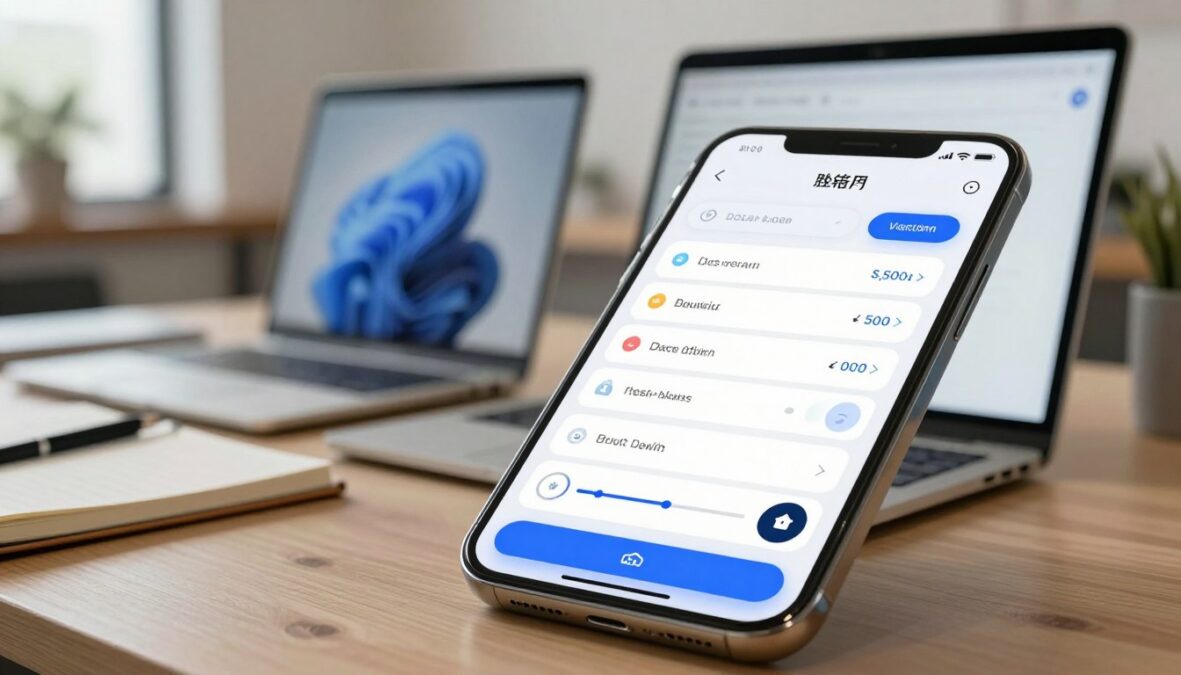
- Automatic renewal: When enabled, Kling AI deducts the next billing cycle’s fee from the bound payment account as the billing cycle is about to expire.
- Credit auto-recharge: When enabled, Kling AI deducts the configured amount when the balance falls below your user-set threshold.
The first setting can charge you as a membership period ends, even if you have not made a new purchase that day. The second can charge you when usage brings the balance below the threshold you chose.
Those triggers are distinct, so review the renewal control and the top-up control on their own. Review both toggles and their payment consequences before leaving a paid membership or top-up setting active.
The 2025 Black Friday offer
Kling AI’s 2025 Black Friday promotion combined annual-plan discounts with bonus credits and a limited unlimited-generation window. These were 2025 terms, not a November 2026 offer.
The 2025 annual plans listed 50% off for the first year. Their first-year prices and listed second-renewal-year discount were:
| Plan | 2025 first-year annual price | Listed second-renewal-year discount |
|---|---|---|
| Standard | $60 | 34% |
| Pro | $222 | 34% |
| Premier | $552 | 34% |
| Ultra | $1,080 | 34% |
The 2025 promotion also offered bonus credits with credit purchases. In 2025, purchases of $100, $200, $600, and $1,200 earned 40% bonus credits.
For smaller purchases, the 2025 terms offered 20% bonus credits on $5, $10, $20, and $50 purchases. These bonus percentages applied to the stated 2025 purchase amounts.
Premier and Ultra subscribers had unlimited video generation from November 17 through December 5, 2025. That window was part of the 2025 promotion and does not establish a later offer.
Use these past terms as historical context only, and verify any new promotion’s own dates and renewal conditions.
Black Friday 2026 purchase timing
Black Friday 2026 is November 27, with Cyber Monday following on November 30. Those dates mark useful comparison points, not a promise that Kling AI will offer a sale.
Past promotions do not guarantee a 2026 offer or discount. If a late-November deal appears, check its full terms against the plan you would choose without a promotion.
Mark the 2026 sale dates
Black Friday falls on November 27, 2026, and Cyber Monday falls on November 30, 2026. You can use those dates as reminders to compare available offers and regular plan terms.
A dated shopping event can help you set a comparison point, but it cannot tell you what a particular offer will include. Base a decision on the terms shown for that offer.
Compare the offer before you commit
Review the conditions that determine the real price and value:
- Eligible plan and billing term.
- First-year price compared with the later renewal price.
- Credit quantity and any condition that limits its validity.
- Whether the displayed total changes at checkout.
An offer may focus on an initial discount while leaving later charges at a different amount. Credit bonuses also need a clear quantity and validity condition to help you judge their usefulness.
Keep the plan and renewal terms visible while comparing any late-November offer with the regular monthly option.
Does Kling AI offer a student discount?
Kling AI has no standing student discount listed, so students should not budget around a year-round education rate. A temporary offer is different from a discount reserved for students.
Student status does not automatically qualify you for a subscription promotion. A new-customer offer may depend on account history, while a referral promotion can have its own rules.
Kling AI also has no standing discounts listed for military members or first responders. That does not prevent those users from qualifying for a temporary offer, but the offer’s own conditions still apply.
Read the eligibility language before treating any promo codes or savings as available to you. A general discount listing may not define student status as a qualifying condition.
Confirm the terms for your account before treating a temporary offer as a student benefit.
Can you use Kling AI content commercially?
Generated content is listed for commercial use on Standard and higher, while Basic excludes commercial use. The plan’s usage rights matter if you intend to use content in work that earns or supports income.
Standard, Pro, Premier, and Ultra list commercial use. Their element-creation quantities differ by tier, so check the quantity as well as the usage right.

Paid membership rights
Standard lists an element-creation quantity of 50 and commercial use. Pro and Premier each list an element-creation quantity of 150 and commercial use.
Ultra lists an element-creation quantity of 500 and commercial use. These quantities describe element creation, while commercial use describes whether the plan lists the right to use generated content commercially.
Examples can include client projects, advertising, branded content, or monetized channels. These are illustrations of commercial contexts, not extra legal guarantees about a particular project.
Basic plan restrictions
Basic is free forever and lists an element-creation quantity of 30. It does not allow commercial use of generated content, so it is not the listed option for work you plan to sell or promote.
Choose a paid plan before relying on Kling AI output for work you intend to sell, promote, or monetize.
Paid-service age and account requirements
You need to register or log in before purchasing or using a Kling AI paid service. An account comes first, and the service also has age limits for paid use.
Paid services are unavailable to anyone under 13 or below the applicable local minimum age. The local minimum-age rule can set a higher threshold than 13.
Users below the age of majority may use paid services only through a parent or legal guardian. This rule is separate from the minimum age for access.
Before paying, make sure the account holder meets the applicable age requirement and can use the service under these conditions. Do not treat a login alone as permission for a minor to make a paid-service decision.
If you are below the age of majority, have a parent or legal guardian handle the paid-service decision and use.
Kling AI credits are not cash
Kling AI credits are virtual tools for redeeming services, not money stored in your account. They measure service access, not a cash balance you can withdraw or use outside Kling AI.
Credits do not constitute a payment service and have no monetary or prepaid value. A displayed balance should not be treated like dollars or a refundable deposit.
Credits let you redeem Kling AI services, including video generation and other available tools. Their use depends on the service you redeem, not on an exchange rate with cash.
A plan’s listed credit amount can help you estimate how much service access it includes. It does not show that the balance has an equal value in dollars.
Judge a plan by the services its credits can redeem and the work you expect to generate.
A final check before renewal
Before committing, recheck the exact plan and the amount that will be charged now and at renewal. A quick review can catch a plan mismatch or an offer condition that changes the total.
Confirm the selected tier’s current credits, included features, and access rules. Kling AI says plan prices, credits, benefits, and access rules can change as products are updated.
Recheck plan terms
Check that the plan name matches your choice: Standard, Pro, Premier, or Ultra. Then compare its current credit allowance, features, and access rules with the work you expect to do.
Use this four-point checklist before you continue:
- Plan name.
- Credit allowance.
- Current charge and next charge.
- Offer eligibility.
Confirm the current checkout total
Review the amount due now and the next renewal amount on the checkout screen. Make sure any offer condition shown before payment matches your account and selected plan.
Keep the checkout terms that determine your next charge, not just the amount due today.
Save or note the final terms displayed at checkout so you can compare them with the next billing notice.
Conclusion
A Kling AI deal is useful only when its conditions fit your account and the discount appears in the amount due. The checkout total tells you whether the advertised savings apply to your selected plan.
Before paying, compare that confirmed amount with the next renewal charge. Also make sure the included credits and plan benefits match the work you expect to generate.
Promo codes and bonus credits can make a subscription more appealing, but neither replaces a clear view of the recurring cost. Check the current offer, confirm the renewal terms, and subscribe only when both fit your budget.
FAQ
Can I combine a referral offer with a promo code?
Does a November 2026 coupon listing apply to every Kling AI plan?
Can I use a 2025 Black Friday offer in November 2026?
Does the first-subscription discount apply again if I resubscribe later?
Are credits a cash balance that I can withdraw?
Is a student automatically eligible for a new-customer coupon?
There are no reviews yet. Be the first one to write one.