
OpenAI has once again pushed the boundaries of artificial intelligence with the release of Sora 2, an advanced text-to-video generation model that builds upon its predecessor with remarkable improvements. This new iteration represents a significant leap forward in AI’s ability to create realistic, high-definition videos from simple text prompts.
In this comprehensive guide, we’ll explore Sora 2’s enhanced capabilities, provide a detailed walkthrough of how to use it, and examine its far-reaching implications for various industries and society as a whole.
What’s New in Sora 2 by OpenAI
Sora 2 represents a significant evolution from the original Sora model released by OpenAI in December 2024. The new version introduces several groundbreaking features and improvements that set it apart from its predecessor and other AI video generators in the market.
Key Enhancements in Sora 2
The most notable improvement in Sora 2 is its ability to generate videos with matching dialogue and sound effects. This advancement creates a more immersive and realistic video experience, making the AI-generated content nearly indistinguishable from human-created videos in many cases.
Additionally, Sora 2 introduces a social media component, allowing users to share their AI-generated videos within a dedicated app ecosystem. This integration of content creation and distribution represents OpenAI’s vision for how AI-generated media might be consumed in the future.
Another significant enhancement is the “cameo” feature, which allows users to upload recordings of themselves and then insert lifelike representations into various AI-generated scenarios. This personalization option opens up new creative possibilities but also raises important questions about identity and consent.
Sora 2 also demonstrates improved temporal consistency, maintaining coherent scenes and character actions throughout longer video sequences—a challenge that previous text-to-video models struggled with.
Sora 2 vs. Sora 1: A Comparison
| Feature | Sora 1 | Sora 2 by OpenAI |
| Audio Generation | Limited or no audio | Full dialogue and sound effects |
| Video Length | Up to 60 seconds | Extended capabilities (up to 2 minutes) |
| Resolution | 1080p | Up to 4K in some cases |
| Character Consistency | Moderate | Significantly improved |
| User Integration | None | Personal “cameo” feature |
| Distribution | API access only | Dedicated app with social features |
| Watermarking | Basic | Moving watermarks and invisible metadata |
How to Use Sora 2 by OpenAI
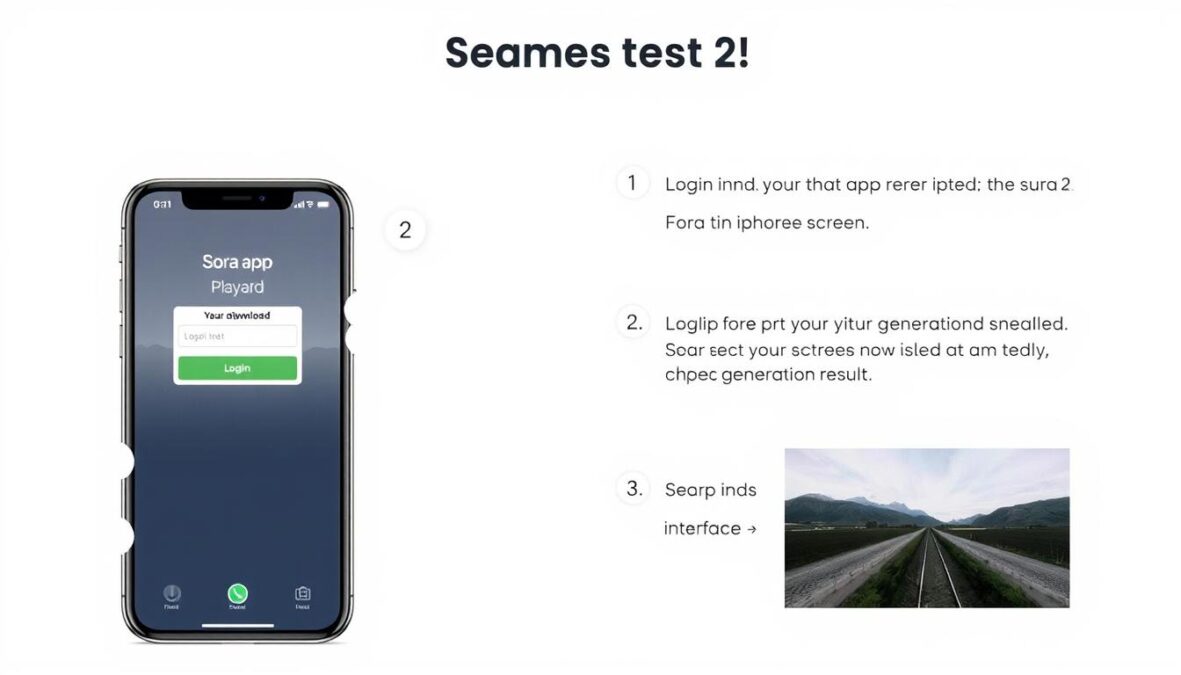
Currently, access to Sora 2 is invitation-only as OpenAI gradually expands availability. If you’ve received an invitation, here’s how to get started with this powerful AI video generation tool:
Getting Started with Sora 2
- Download the app: Sora 2 is available as a mobile application on iOS devices. Visit the App Store and search for “Sora” to download the app.
- Create or log in to your OpenAI account: You’ll need an OpenAI account to access Sora 2. If you already have one, simply log in; otherwise, follow the prompts to create a new account.
- Enter your invitation code: When prompted, enter the unique invitation code you received from OpenAI to gain access to Sora 2’s features.
- Complete the onboarding process: Follow the in-app instructions to set up your profile and preferences.
- Record your likeness (optional): If you want to use the “cameo” feature, follow the prompts to record video and audio of yourself that the AI can use to create personalized content.
Creating Your First Sora 2 Video
- Tap the “Create” button in the app to start a new video generation project.
- Enter your text prompt in the provided field. Be as descriptive as possible for best results. For example, instead of “beach scene,” try “A serene tropical beach at sunset with gentle waves lapping at the shore, palm trees swaying in the breeze, and golden light reflecting off the water.”
- Adjust settings such as video length, style preferences, and whether to include your “cameo” if you’ve set up that feature.
- Tap “Generate” and wait while Sora 2 processes your request. This may take anywhere from a few seconds to several minutes depending on the complexity of your prompt.
- Review your video once generation is complete. You can save it to your device, share it within the Sora app community, or regenerate with modified prompts if needed.
Practical Use Cases for Sora 2
Marketing Content
Create product demonstrations, promotional videos, and social media content without expensive production costs. Simply describe the scene you want, and Sora 2 can generate professional-looking marketing materials in minutes.
Educational Resources
Generate instructional videos, historical reenactments, or scientific visualizations to enhance learning experiences. Educators can bring abstract concepts to life through custom video content.
Creative Projects
Filmmakers, artists, and content creators can use Sora 2 to prototype scenes, visualize concepts, or create entirely new forms of digital art that blend human creativity with AI capabilities.
The Implications of Sora 2 by OpenAI
The release of Sora 2 by OpenAI marks a significant milestone in AI-generated media, with far-reaching implications for various industries, creative processes, and ethical considerations. Let’s explore the multifaceted impact of this technology.
Industry Impact
Media and Entertainment
Sora 2 has the potential to revolutionize content production workflows in film, television, and digital media. Independent creators can now produce high-quality visual content without extensive resources, potentially democratizing media production. However, established studios and production companies may need to adapt to a landscape where AI-generated content becomes increasingly prevalent.
Marketing and Advertising
Brands can now create customized video content at scale, potentially transforming how products and services are advertised. The ability to rapidly generate and test different video concepts could lead to more personalized and effective marketing campaigns.
Education and Training
Educational institutions can leverage Sora 2 to create immersive learning experiences, visualizing complex concepts or historical events. This could make learning more engaging and accessible, particularly for visual learners.
Creative Industries
Artists, designers, and creators may find new avenues for expression by incorporating AI-generated video into their work. Sora 2 could serve as a collaborative tool that enhances human creativity rather than replacing it.
Ethical Considerations and Safeguards
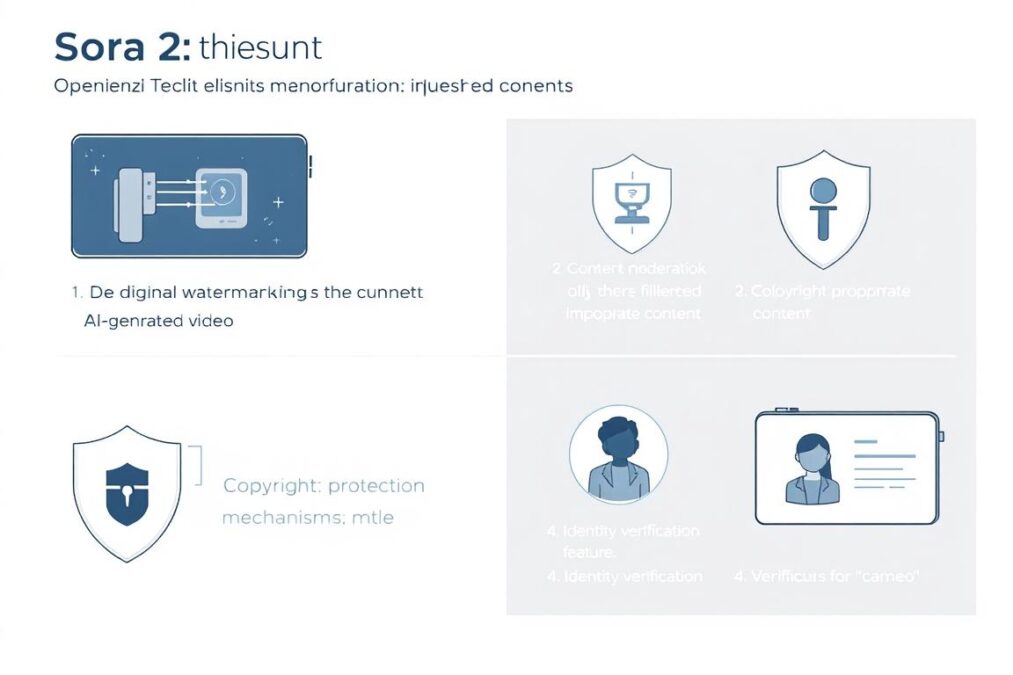
Safeguards Implemented
- Moving watermarks on all videos to indicate AI generation
- Invisible metadata embedded in videos for authentication
- Content moderation to prevent creation of violent or explicit material
- Consent requirements for the “cameo” feature
- Mechanisms for copyright holders to request character blocking
Remaining Concerns
- Potential for deepfakes and misinformation
- Copyright infringement of characters and intellectual property
- Metadata can be easily removed when videos are uploaded to social media
- Job displacement in creative and production industries
- Privacy implications of the “cameo” feature
OpenAI CEO Sam Altman has acknowledged these concerns in a recent blog post, stating that the company is “taking feedback” from users, rights holders, and other stakeholders. He promised more “granular control” for copyright holders over character generation and mentioned potential revenue-sharing models for rights holders who grant permission for their characters to be used.
The Future of AI-Generated Video
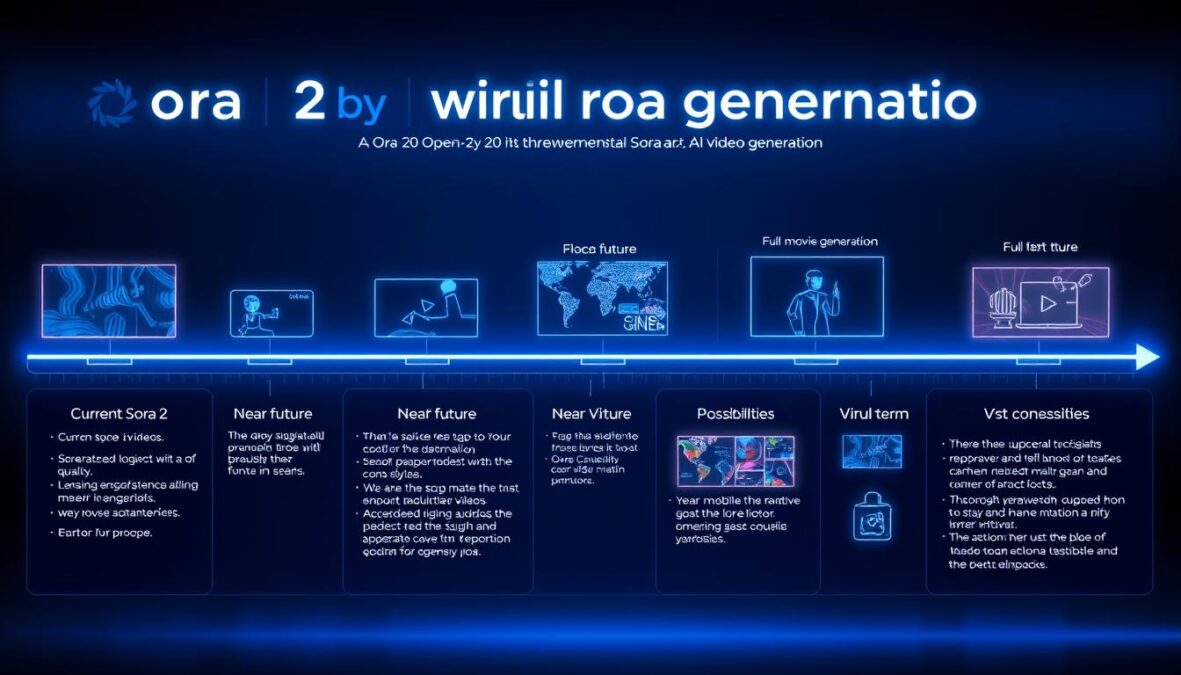
Sora 2 represents just the beginning of what’s possible with AI-generated video. As the technology continues to evolve, we can expect to see:
- Longer, more complex narratives: Future iterations may be able to generate full-length films or episodes with coherent storylines.
- Interactive elements: AI-generated videos might become responsive to viewer input, creating new forms of interactive entertainment.
- Integration with other AI systems: Combining Sora with other AI models could enable even more sophisticated content creation workflows.
- Improved safeguards: As concerns about misuse grow, we’ll likely see more robust authentication and verification systems.
- New creative professions: Rather than simply replacing jobs, AI video generation may create new roles focused on prompt engineering and AI-human collaboration.
Conclusion: The Dawn of a New Creative Era

Sora 2 by OpenAI represents a significant milestone in the evolution of artificial intelligence and content creation. Its ability to generate high-quality videos from text prompts, complete with dialogue and sound effects, opens up new possibilities for creators, educators, marketers, and many others.
While the technology brings exciting opportunities, it also presents important challenges related to copyright, authenticity, and the changing nature of creative work. How we navigate these challenges will shape the future impact of AI-generated media on society.
As with any transformative technology, the ultimate value of Sora 2 will depend not just on its technical capabilities, but on how we choose to use it—whether to enhance human creativity, democratize content production, or address meaningful problems.
Ready to Explore Sora 2?
Join the waitlist to gain access to Sora 2 and start creating your own AI-generated videos. Stay updated on the latest developments and be among the first to experience this groundbreaking technology.
There are no reviews yet. Be the first one to write one.