
The AI landscape is evolving rapidly, with tools like ChatGPT and Perplexity AI transforming how we access information and create content. While both leverage advanced language models, they serve different purposes and excel in distinct areas. ChatGPT functions primarily as a versatile conversational AI assistant, while Perplexity positions itself as an “answer engine” focused on delivering accurate, cited information. Understanding these differences is crucial for choosing the right tool for your specific needs.
In this comprehensive comparison, we’ll explore the key features, strengths, limitations, and ideal use cases for both ChatGPT and Perplexity AI. Whether you’re a content creator, researcher, business professional, or casual user, this guide will help you determine which AI assistant aligns best with your workflow and objectives.
Key Differences Between ChatGPT and Perplexity AI
While both tools are powered by advanced AI technology, ChatGPT and Perplexity AI differ significantly in their core functionality, information sources, and optimal use cases. Understanding these distinctions will help you leverage each tool more effectively.
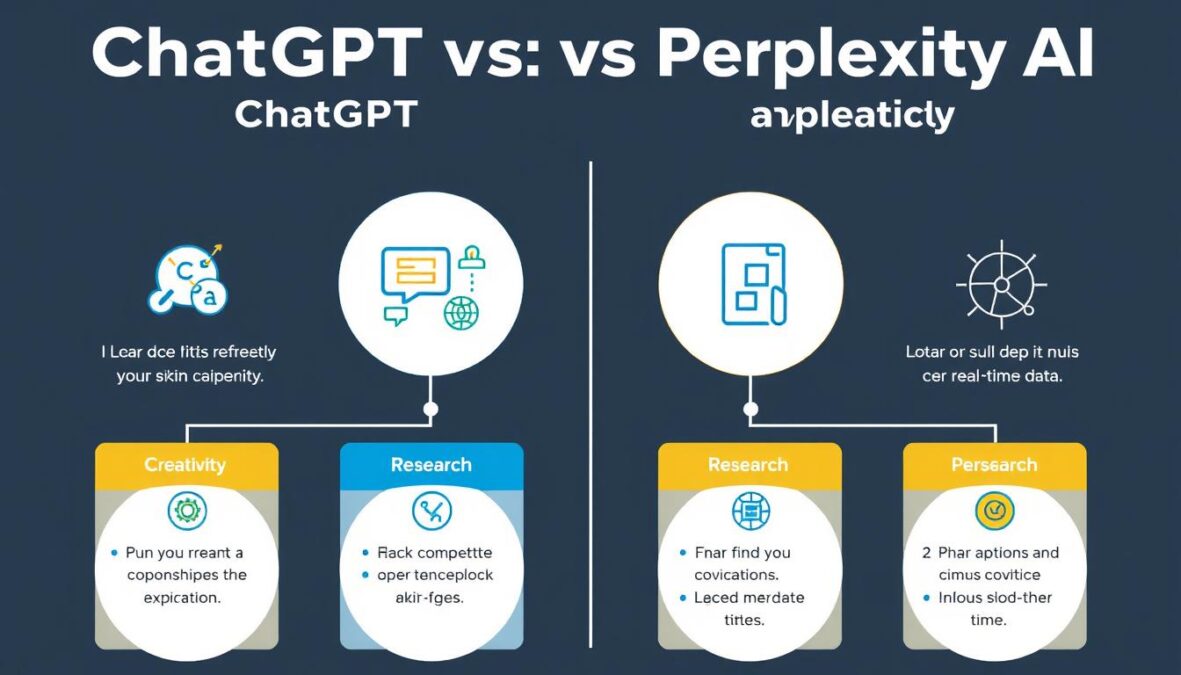
ChatGPT (left) offers a conversational interface while Perplexity AI (right) provides cited answers with source links
| Feature | ChatGPT | Perplexity AI |
| Primary Purpose | General-purpose AI chatbot for conversations and content generation | AI-powered answer engine focused on research and information retrieval with sources |
| Knowledge Source | Pre-trained on data with cutoff date; web browsing available in paid version | Built-in web search fetches real-time information for every query |
| Response Style | Creative, conversational, and adaptable to various tones | Factual, concise, with footnoted citations to sources |
| Pricing | Free tier (GPT-3.5/4.1 mini), Plus tier ($20/month), Pro tier ($200/month) | Free tier (limited searches), Pro ($20/month), Max ($200/month) |
| Multimodal Capabilities | Text, image, audio input/output, file analysis | Text, image analysis, file uploads (limited in free version) |
| Coding Support | Excellent code generation, explanation, and debugging | Basic code explanations, not optimized for development |
| Citations | No built-in citations (except when using web search) | Automatic citations with every response |
ChatGPT: The Creative Conversationalist
ChatGPT excels as a versatile AI assistant capable of handling a wide range of tasks. Developed by OpenAI, it’s designed to engage in natural, flowing conversations while generating content, solving problems, and providing assistance across numerous domains.
ChatGPT Strengths
- Versatile content generation across multiple formats
- Excellent at maintaining context in long conversations
- Superior coding capabilities for development tasks
- Advanced creative writing with adaptable tone and style
- Strong multimodal features (image, audio, text)
- Memory feature that retains context between sessions
ChatGPT Limitations
- Knowledge cutoff date limits information without web search
- No built-in citations for fact verification
- May occasionally “hallucinate” or generate incorrect information
- Web browsing requires paid subscription
- Less effective for current events without using search mode
Perplexity AI: The Knowledgeable Researcher
Perplexity AI positions itself as an “answer engine” rather than just another chatbot. It combines AI language capabilities with real-time web search to deliver accurate, up-to-date information with transparent source citations.

Perplexity AI Strengths
- Built-in web search for up-to-date information
- Automatic citations with every response
- Option to filter sources (academic papers, news, etc.)
- Excellent for fact-checking and research
- Spaces feature for organizing research topics
- Access to multiple AI models (Claude, GPT-4, etc.)
Perplexity AI Limitations
- Less effective for creative writing tasks
- Limited coding capabilities compared to ChatGPT
- Free tier restricts Pro searches to 3 per day
- Less conversational, more focused on direct answers
- No long-term memory between sessions
Ready to explore these AI tools?
Try both platforms to experience their unique capabilities firsthand. Both offer free tiers to get started.
In-Depth Analysis: How ChatGPT and Perplexity AI Perform
Accuracy and Reliability
When it comes to factual accuracy, there are significant differences between how ChatGPT and Perplexity AI operate and the reliability of their responses.

ChatGPT Accuracy
ChatGPT relies primarily on its training data, which has a knowledge cutoff date. This means it may not have access to the most recent information unless using its web browsing feature (available in paid tiers). Without web access, ChatGPT may occasionally “hallucinate” or generate plausible-sounding but incorrect information.
In tests comparing factual queries, ChatGPT’s accuracy improves significantly when using its web search capability, but it still doesn’t provide source citations as prominently as Perplexity AI. This makes fact verification an additional step for users.
Perplexity AI Accuracy
Perplexity AI’s design centers around providing accurate, verifiable information. By integrating web search into every query, it delivers up-to-date responses with footnoted citations. This transparency allows users to verify information directly from the sources.
For factual queries, especially about recent events or specialized topics, Perplexity AI generally provides more reliable information because it’s pulling from current web sources rather than relying solely on training data. The citation-first approach also helps users assess the credibility of sources.
User Experience and Interface
The user experience differs significantly between these two AI tools, with each optimized for different types of interactions.
ChatGPT Interface
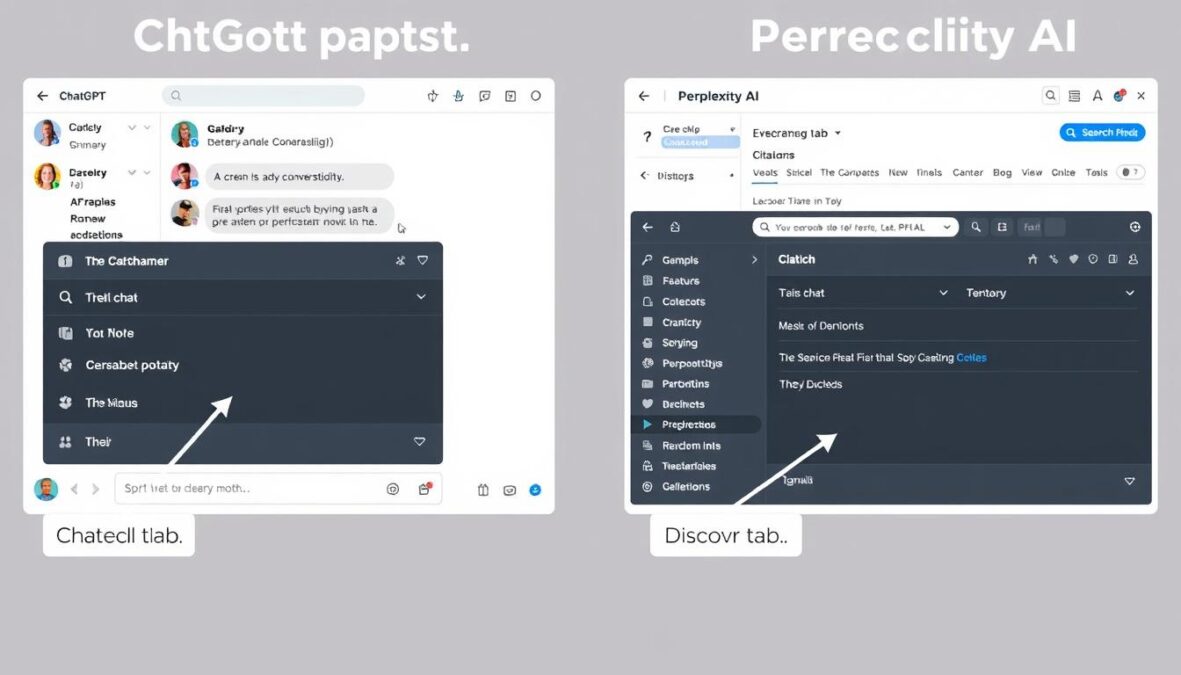
ChatGPT offers a clean, minimalist chat interface designed for conversational interactions. The experience feels similar to messaging apps, making it intuitive for most users. Features like conversation history, the ability to name and save chats, and custom GPTs (in paid tiers) enhance the experience.
The interface prioritizes the back-and-forth dialogue, with options to regenerate responses, continue generating content, or start new conversations. For creative tasks and extended interactions, this design works exceptionally well.
Perplexity AI Interface
Perplexity AI’s interface resembles a hybrid between a search engine and a chat app. The design emphasizes information retrieval with visible source citations. Features like the Discover tab for trending topics and Spaces for organizing research add functionality beyond simple Q&A.
The interface clearly distinguishes between Quick Search and Pro Search modes, with the latter providing more comprehensive results. For research-oriented tasks, this design offers greater transparency and context than traditional chatbots.
Limitations and Biases
Both AI tools have inherent limitations and potential biases that users should be aware of when evaluating their responses.
Important Note: All AI language models, including those powering ChatGPT and Perplexity AI, can reflect biases present in their training data. Critical evaluation of responses is always recommended, especially for sensitive topics.
ChatGPT Limitations
ChatGPT’s primary limitations include its knowledge cutoff date (without web search), potential for generating incorrect information confidently, and occasional difficulty with complex reasoning tasks. It may also struggle with nuanced cultural contexts or highly specialized domain knowledge.
The model can sometimes be overly verbose or produce responses that sound authoritative even when inaccurate. Without built-in citations, verifying information requires additional effort from users.
Perplexity AI Limitations
Perplexity AI’s limitations include less flexibility for creative tasks, potential for reflecting biases or inaccuracies from web sources, and occasional difficulty synthesizing complex information from multiple sources. The free tier’s limit of 3 Pro searches per day can also restrict in-depth research.
While its citation-first approach improves transparency, the quality of responses still depends on the reliability of the web sources it accesses. For specialized or technical topics, source quality can vary significantly.
Enhance your AI toolkit
Upgrade to premium versions of these AI tools to access their full capabilities, including advanced models and additional features.
Use Case Scenarios: When to Choose Each Tool
Choosing between ChatGPT and Perplexity AI depends largely on your specific needs and the type of tasks you’re looking to accomplish. Here’s a breakdown of scenarios where each tool excels.
When to Use ChatGPT

Content Creation and Creative Writing
ChatGPT excels at generating various types of content, from blog posts and social media captions to stories and scripts. Its ability to maintain consistent tone and style makes it ideal for creative writing tasks.
- Drafting blog posts, articles, and newsletters
- Creating social media content across platforms
- Writing marketing copy and product descriptions
- Generating creative stories, poems, and scripts
- Crafting emails and professional communications
Coding and Technical Tasks
For developers and technical users, ChatGPT provides strong support for coding, debugging, and technical explanations. It can generate functional code in multiple languages and help troubleshoot issues.
- Writing and debugging code in various programming languages
- Explaining technical concepts and algorithms
- Converting code between different languages
- Creating simple applications and scripts
- Troubleshooting error messages and bugs
Brainstorming and Ideation
ChatGPT serves as an excellent brainstorming partner, helping generate ideas, outline projects, and explore different approaches to problems. Its conversational nature facilitates iterative refinement of concepts.
- Generating topic ideas for content creators
- Brainstorming business strategies and marketing campaigns
- Outlining presentations, articles, or research papers
- Exploring different perspectives on complex issues
- Developing creative concepts for projects
When to Use Perplexity AI

Research and Fact-Finding
Perplexity AI shines when you need accurate, up-to-date information with verifiable sources. Its integration with web search makes it ideal for research tasks requiring current data.
- Researching current events and recent developments
- Finding statistics and data with proper citations
- Exploring academic topics with source references
- Fact-checking claims and statements
- Gathering information from multiple sources quickly
Data Analysis and Comparison
For tasks involving data interpretation and comparison, Perplexity AI offers strong capabilities, especially with its Pro features that can analyze and visualize information from various sources.
- Comparing products, services, or technologies
- Analyzing market trends with current data
- Summarizing research findings from multiple sources
- Creating data-driven reports with citations
- Interpreting statistics and research studies
Learning and Education
Perplexity AI serves as an excellent educational tool, providing explanations with sources that learners can explore further. Its citation-first approach supports deeper understanding of topics.
- Learning about new subjects with reliable sources
- Finding explanations for complex concepts
- Discovering additional reading materials through citations
- Preparing for academic research with proper references
- Staying updated on developments in specific fields
Hybrid Approach: Using Both Tools Together
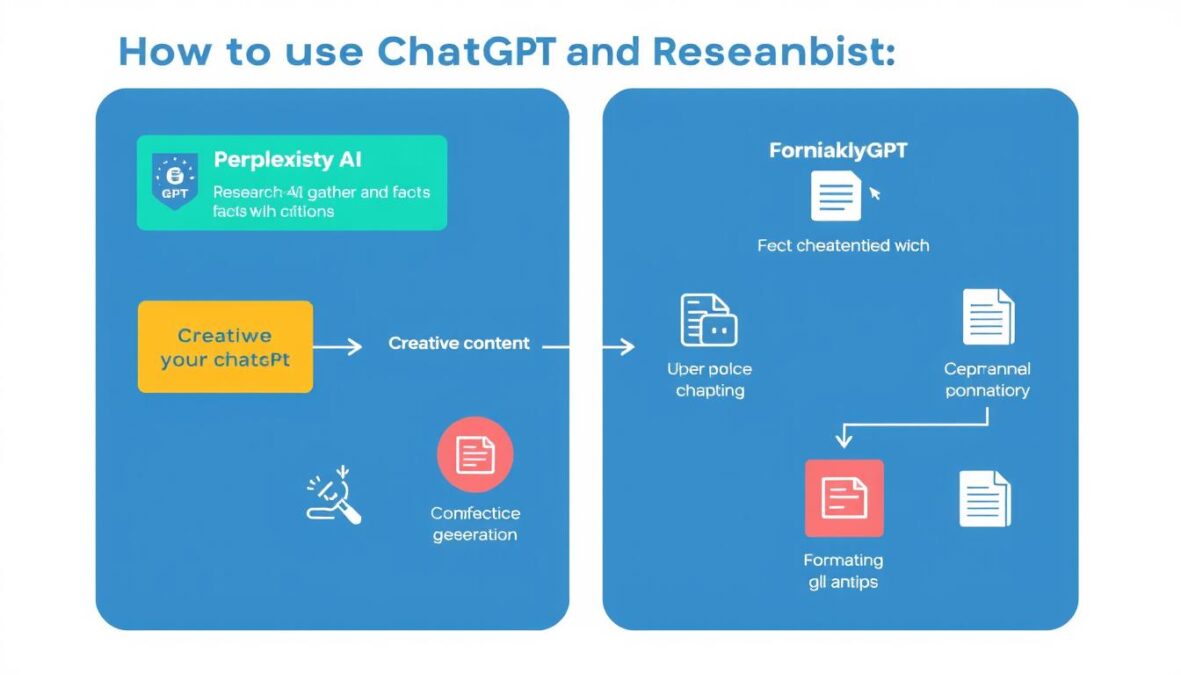
Many users find that combining ChatGPT and Perplexity AI creates a powerful workflow that leverages the strengths of each tool. Here’s how you might use them together effectively:
Research Phase
Start with Perplexity AI to gather facts, statistics, and current information on your topic. The cited sources provide a solid foundation of accurate information.
Use Perplexity’s Pro Search for in-depth research and to explore multiple perspectives on complex topics. Save important findings in Spaces for organization.
Creation Phase
Take the researched information to ChatGPT to craft it into well-structured, engaging content. ChatGPT can transform factual points into flowing narratives, creative pieces, or technical explanations.
Use ChatGPT’s strengths in tone adjustment and format flexibility to tailor the content to your specific audience and purpose.
Verification Phase
Return to Perplexity AI to fact-check any additional information ChatGPT may have added during the creative process. This ensures accuracy throughout the final content.
Use Perplexity to find additional sources or supporting evidence for key points in your content.
Conclusion: Making Your Choice
Choosing between ChatGPT and Perplexity AI ultimately depends on your specific needs, workflow, and the types of tasks you regularly perform. Both tools offer powerful AI capabilities but excel in different areas.
Choose ChatGPT if you:
- Need creative content generation and writing assistance
- Work frequently with code or technical explanations
- Value conversational flow and context retention
- Require multimodal capabilities (text, image, audio)
- Prefer a versatile, general-purpose AI assistant
Choose Perplexity AI if you:
- Prioritize factual accuracy with verifiable sources
- Need up-to-date information on recent events
- Value transparency through citations
- Conduct regular research requiring multiple sources
- Prefer a search-first approach with AI assistance
For many users, the optimal approach is using both tools complementarily: Perplexity AI for research and fact-gathering, and ChatGPT for creative development and content generation. Both platforms offer free tiers that provide substantial functionality, making it practical to incorporate both into your workflow.
As AI technology continues to evolve, both ChatGPT and Perplexity AI are likely to expand their capabilities and narrow their differences. Staying adaptable and understanding the unique strengths of each tool will help you maximize their potential for your specific needs.
Ready to enhance your productivity with AI?
Start using these powerful AI tools today to streamline your research, content creation, and problem-solving workflows.
Frequently Asked Questions
Is Perplexity AI better than ChatGPT for research?
Yes, Perplexity AI generally outperforms ChatGPT for research tasks due to its built-in web search capability and citation-first approach. Every Perplexity response includes source links, making it easier to verify information and explore topics more deeply. For current events and fact-based queries, Perplexity’s real-time web access provides more up-to-date information than ChatGPT’s training data alone.
However, ChatGPT Plus users can access web browsing features that narrow this gap. The best choice depends on your specific research needs—Perplexity excels at quick, cited information gathering, while ChatGPT may be better for synthesizing information into longer, more structured research reports.
Can ChatGPT access the internet like Perplexity AI?
Yes, but with some differences. ChatGPT offers web browsing capabilities through its “Browse with Bing” feature, available to ChatGPT Plus subscribers and in limited capacity to free users. This allows ChatGPT to access current information from the internet. However, there are key differences in how the two tools approach web access:
- Perplexity AI searches the web by default for every query, while ChatGPT requires explicitly activating its browsing feature
- Perplexity prominently displays source citations in its responses, making verification easier
- ChatGPT’s web browsing is more integrated with its conversational abilities, allowing for more natural follow-up questions
For users who need consistent internet access and source citations, Perplexity’s approach is more streamlined, while ChatGPT offers web access as a complementary feature to its core conversational capabilities.
Which is better for coding, ChatGPT or Perplexity AI?
ChatGPT is generally superior for coding tasks. It excels at generating functional code, debugging existing code, explaining programming concepts, and providing step-by-step guidance for development tasks. Its ability to understand context in longer coding conversations and remember previous code snippets makes it particularly valuable for iterative development work.
While Perplexity AI can provide basic code explanations and examples by pulling from online resources, it’s not specifically optimized for coding workflows. For serious development tasks, ChatGPT (especially with GPT-4) offers more comprehensive support and better understands programming best practices across multiple languages.
Are the free versions of ChatGPT and Perplexity AI worth using?
Yes, both free versions offer substantial value. ChatGPT’s free tier provides access to GPT-4.1 mini and limited access to GPT-4o, which is sufficient for many everyday tasks like writing assistance, basic coding help, and general questions. The free version includes limited access to features like web browsing, file uploads, and image generation.
Perplexity AI’s free tier offers unlimited quick searches and 3 Pro searches per day. This is quite generous for casual research needs and provides the core functionality of getting cited answers from the web. For many users, these free tiers provide enough functionality to significantly enhance productivity without requiring a subscription.
The paid versions (/month for both) are worth considering if you use these tools professionally or need access to advanced features like more powerful AI models, higher usage limits, and premium capabilities.
How accurate are ChatGPT and Perplexity AI?
Both tools can provide accurate information, but their accuracy varies depending on the type of query and how they access information:
- Perplexity AI generally provides more reliable factual information because it searches the web for every query and cites sources. This real-time access to information makes it particularly accurate for current events and specialized topics.
- ChatGPT’s accuracy depends on whether it’s using its training data alone or accessing the web. Without web access, it may provide outdated information or occasionally “hallucinate” facts. With web browsing enabled, its accuracy improves significantly.
For critical information, it’s always best to verify responses from either tool against trusted sources. Perplexity’s citation-first approach makes this verification process more straightforward by providing direct links to sources.
There are no reviews yet. Be the first one to write one.