
The world of software development is undergoing a remarkable transformation. What was once the exclusive domain of those fluent in programming languages is now becoming accessible to creative minds regardless of their technical background. At the forefront of this revolution are vibe-coding tools – intuitive platforms that prioritize idea expression over syntax mastery. These tools are reshaping how we think about coding, making it more collaborative, visual, and approachable for everyone.
In this article, we’ll explore how platforms like Replit and Lovable are leading this movement, breaking down traditional barriers to entry, and fostering a new culture of inclusive development. Whether you’re a seasoned developer looking to streamline your workflow or someone who’s always wanted to build digital products but felt intimidated by code, the vibe-coding revolution has something exciting to offer you.
What Are Vibe-Coding Tools?
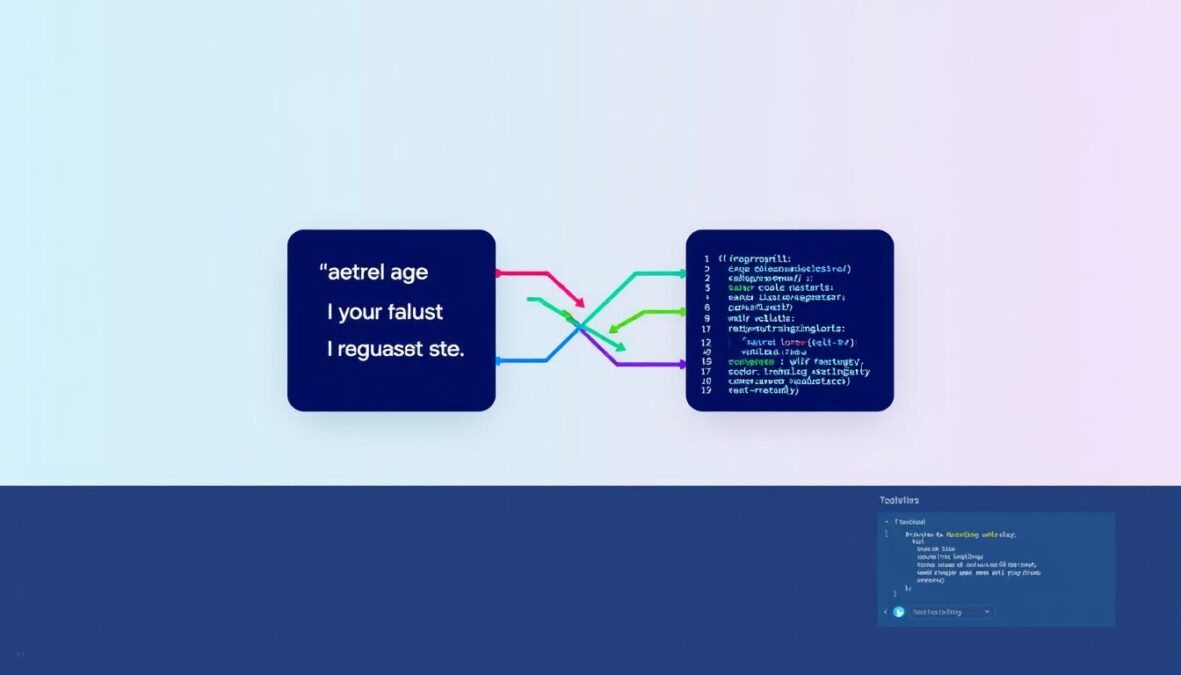
Vibe-coding tools transform natural language instructions into functional code
The term “vibe coding” was first popularized by AI researcher Andrej Karpathy in early 2025, describing a development approach where the focus shifts from writing code line-by-line to guiding AI assistants through natural language. As Karpathy framed it, vibe coding is about “forgetting that the code even exists” and focusing instead on what you want to create.
Unlike traditional programming, which requires precise syntax and deep technical knowledge, vibe-coding tools allow users to describe their desired outcome in plain language. Want to create a user login form? Simply describe it, and the AI handles the implementation details. This represents a fundamental shift in how we approach software development.
Key Characteristics of Vibe-Coding Tools
- Natural language interfaces that translate ideas into code
- Visual-first development environments that show results in real-time
- AI-assisted coding that handles technical implementation details
- Collaborative features that enable team members to work together seamlessly
- Low technical barriers that make coding accessible to non-experts
- Rapid prototyping capabilities that accelerate the development process
The rise of these tools marks a significant departure from traditional IDE (Integrated Development Environment) experiences. Rather than requiring users to memorize commands and syntax, vibe-coding platforms prioritize intuitive interfaces and immediate feedback, making the development process more accessible and enjoyable for everyone involved.
Case Study: Replit’s Collaborative Playground
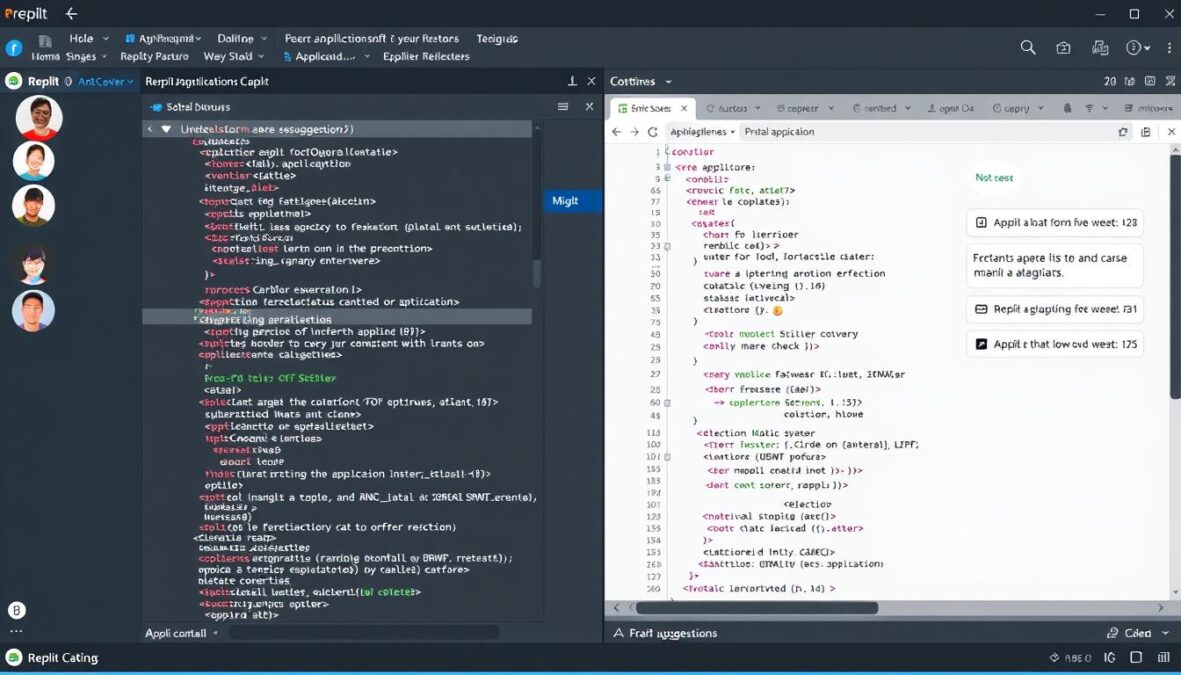
Replit’s collaborative interface allows multiple users to code together in real-time
Replit has emerged as one of the leading platforms in the vibe-coding space, transforming from a simple web-based IDE into a powerful collaborative development environment. What sets Replit apart is its unique combination of traditional coding capabilities with innovative AI-powered features that make development more accessible.
Replit’s Standout Features
AI Agent Planning
One of Replit’s most powerful features is its AI Agent, which asks core questions to understand what type of app you’re building before generating any code. This planning phase ensures the AI uses appropriate development strategies for your specific project.
“Replit’s AI Agent doesn’t just write code – it thinks about architecture and user experience first,” notes Maya Chen, a frontend developer who uses Replit for rapid prototyping. “This planning-first approach produces much more coherent applications than other tools I’ve tried.”
Real-Time Collaboration
Replit shines in collaborative scenarios, allowing multiple developers to work on the same codebase simultaneously. Changes appear in real-time, and the platform includes built-in chat functionality to discuss modifications as they happen.
This makes Replit particularly valuable for distributed teams, coding education, and pair programming sessions where immediate feedback is essential.
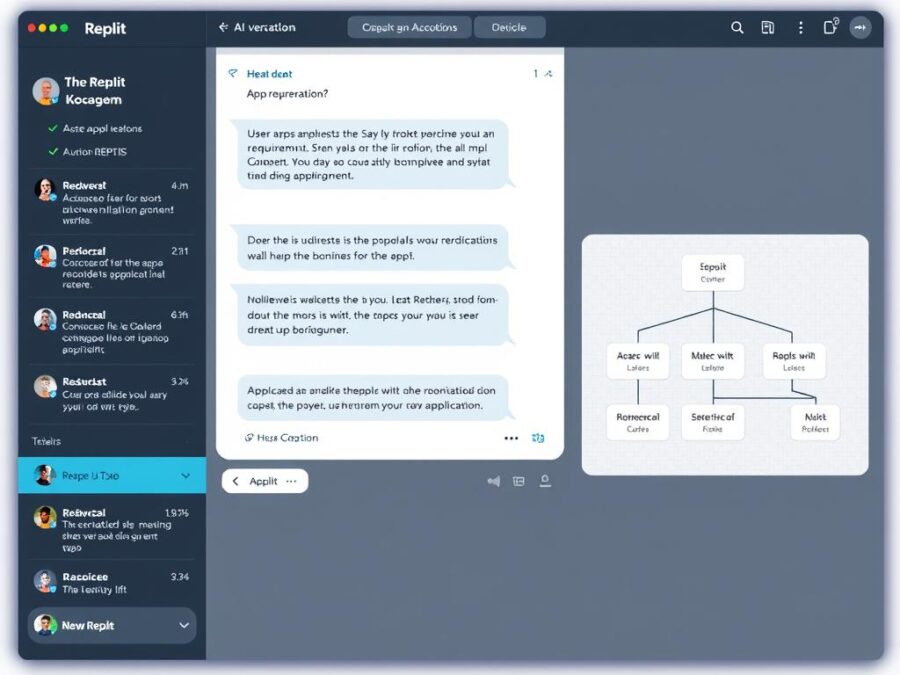
Replit’s AI Agent helps plan application architecture before generating code
Target Audience and Use Cases
Replit serves a diverse audience, from coding beginners to professional development teams:
Perfect For
- Educators teaching programming concepts
- Startups needing rapid prototyping
- Remote teams requiring collaborative tools
- Hobbyists exploring coding without local setup
- Developers building and deploying web applications
May Not Suit
- Enterprise-grade applications with strict security requirements
- Projects requiring specialized hardware access
- Developers who prefer complete control over their environment
- Applications with extremely high performance requirements
The platform’s versatility makes it suitable for everything from educational exercises to production-ready applications. With its combination of traditional coding capabilities and AI assistance, Replit offers a smooth on-ramp for beginners while providing enough depth for experienced developers.
Ready to explore Replit?
Start building collaborative projects with AI assistance in minutes.
Lovable: Making Development Accessible and Intuitive
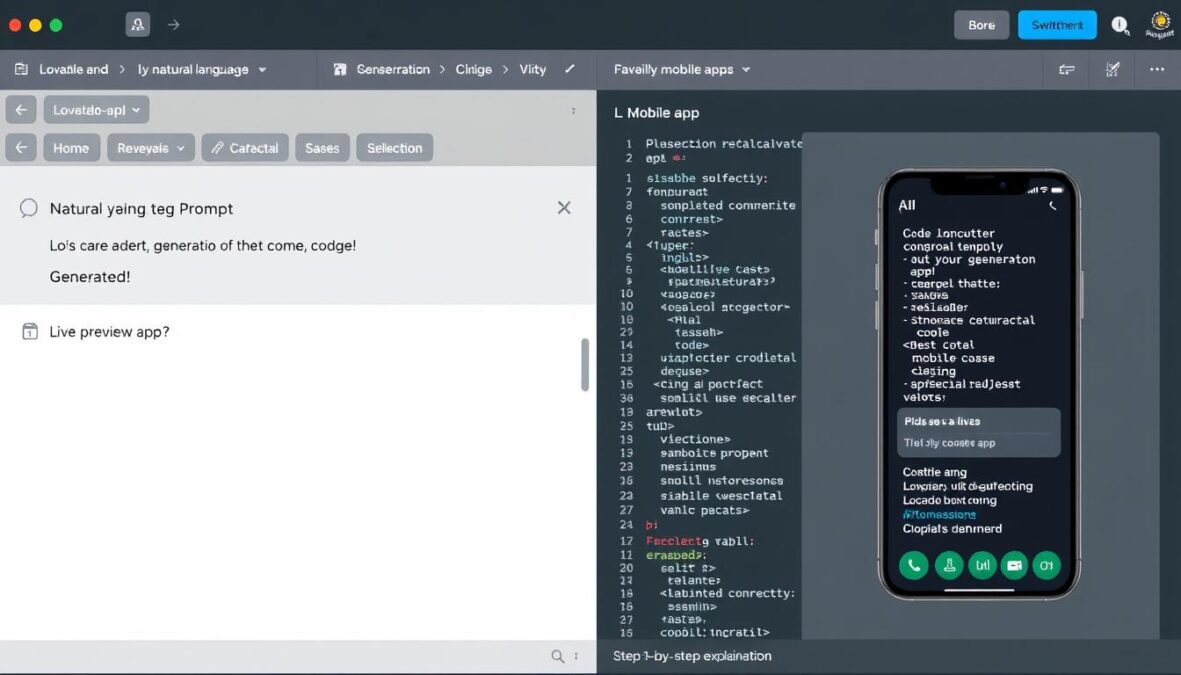
Lovable’s intuitive interface guides users through the app creation process
While Replit bridges the gap between traditional coding and AI assistance, Lovable takes a more radical approach to democratizing development. As its name suggests, Lovable focuses on helping users create minimum loveable products – applications that may start simple but inspire user loyalty from day one.
Lovable’s Unique Approach
What sets Lovable apart is its commitment to making the development process as frictionless as possible for non-technical users. The platform excels at generating good designs without requiring detailed styling instructions and provides clear explanations at each step of the development process.
Step-by-Step Explanations
Lovable doesn’t just generate code – it explains what it’s doing and how it implemented features. This educational approach helps users understand the development process even if they don’t have a technical background.
“I’ve learned more about how web applications work in two weeks with Lovable than in months of trying to learn coding through traditional methods,” says Jamie Rodriguez, a marketing professional who used Lovable to build a customer feedback portal.
Frontend and Backend Integration
Lovable handles both the visual elements users see (frontend) and the server-side logic (backend) through integration with Supabase. This gives users control over authentication, data storage, and other critical aspects of application development without requiring database expertise.
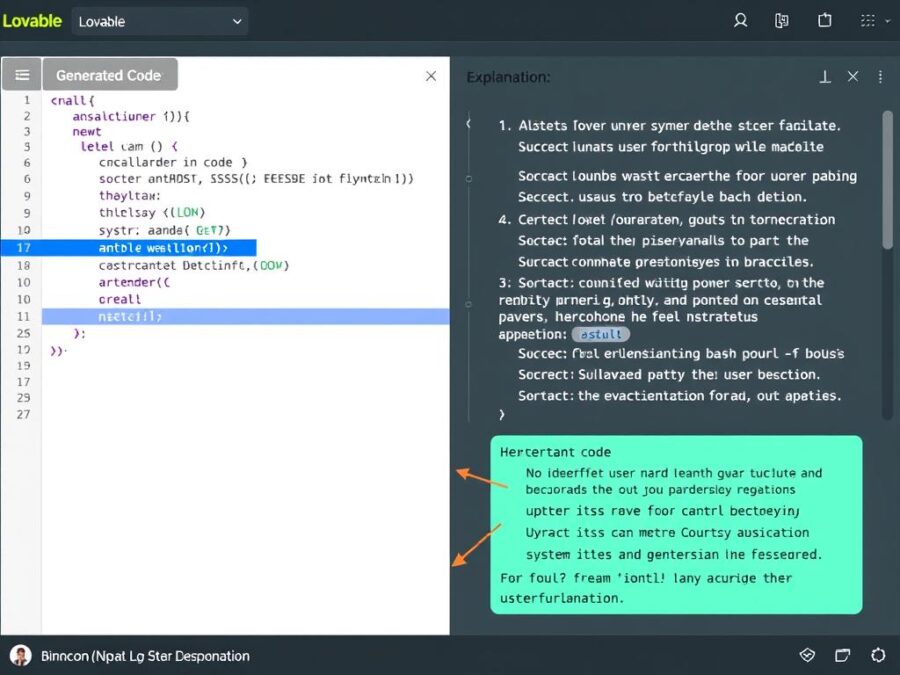
Lovable explains technical implementations in accessible language
Target Audience and Ideal Use Cases
Lovable is particularly well-suited for:
- First-time app creators with no coding experience
- Entrepreneurs validating business ideas quickly
- Designers who want to implement their own concepts
- Small businesses creating internal tools
- Product managers prototyping before engaging developers
The platform’s focus on explanation and accessibility makes it an excellent choice for those who not only want to build something but also understand how it works. This educational component helps users gradually develop technical knowledge while creating functional applications.
Create your first app with Lovable
Turn your idea into a working application today – no coding experience required.
Replit vs. Lovable: Choosing the Right Tool
While both Replit and Lovable fall under the vibe-coding umbrella, they serve slightly different needs and user profiles. Understanding these differences can help you choose the platform that best aligns with your goals and experience level.
| Feature | Replit | Lovable |
| Primary Focus | Collaborative coding with AI assistance | Intuitive app creation with explanations |
| Learning Curve | Moderate – some coding knowledge helpful | Low – designed for non-technical users |
| Best For | Teams, educators, developers seeking efficiency | Entrepreneurs, designers, first-time creators |
| Database Controls | Advanced with direct schema management | Simplified through Supabase integration |
| Deployment Options | Multiple (VM, static, autoscale) | Streamlined with one-click deployment |
| Free Plan | 10 checkpoints, basic AI features | 30 monthly credits (max 5/day) |
| Paid Plans Starting At | $25/month | $25/month |
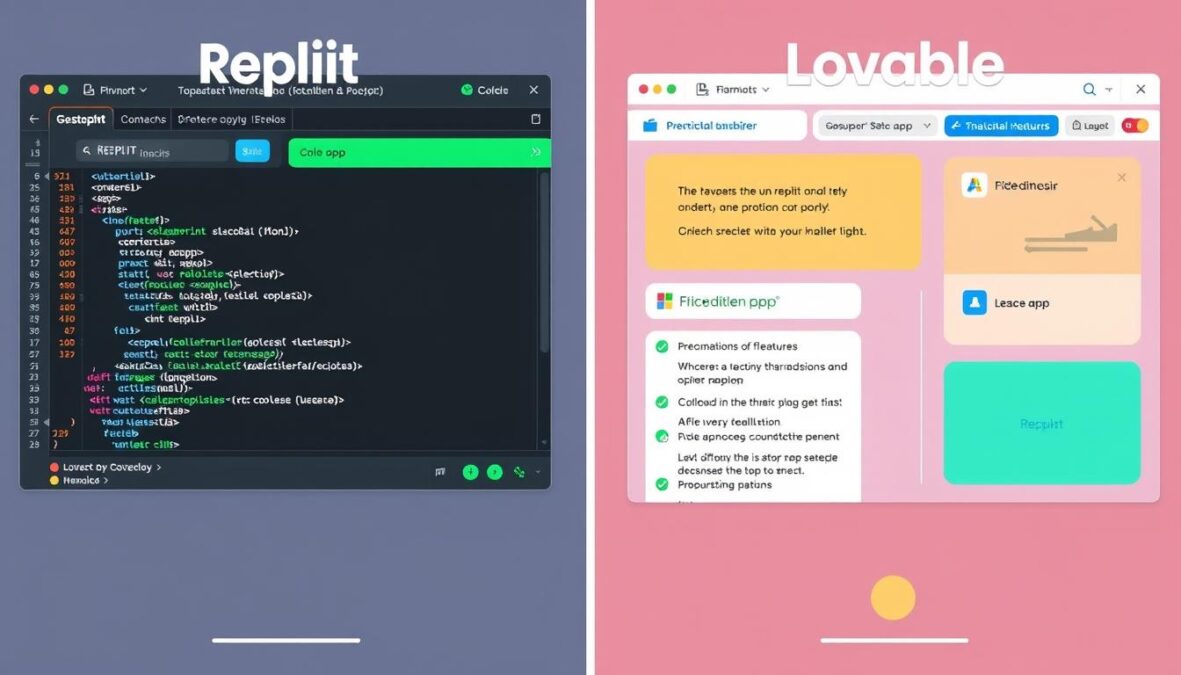
Replit (left) and Lovable (right) offer different approaches to vibe coding
The ideal choice depends on your specific needs and background. If you have some coding experience and value collaboration features, Replit offers a more powerful environment. If you’re new to development and prioritize ease of use, Lovable provides a gentler introduction to app creation.
“The beauty of these vibe-coding tools is that they meet users where they are. Replit grows with you as you develop technical skills, while Lovable makes the entire process accessible from day one. Both represent different paths to the same destination: democratizing the ability to create software.”
The Democratization of Coding: Breaking Down Barriers

Vibe-coding tools are making software development accessible to diverse creators
The rise of vibe-coding tools represents a significant shift in who can participate in software creation. Historically, the ability to build digital products was limited to those with formal technical education or the determination to learn coding through self-study. This created a significant barrier to entry that excluded many creative minds from the digital creation process.
How Vibe-Coding Tools Lower Technical Barriers
- Natural language input replaces complex syntax requirements
- Visual interfaces provide immediate feedback without compilation steps
- AI assistance handles technical implementation details automatically
- Built-in best practices ensure security and performance without specialized knowledge
- Educational components help users learn as they build
These features combine to create an environment where the focus is on what you want to build rather than how to build it. This shift has profound implications for innovation, entrepreneurship, and the future of software development.
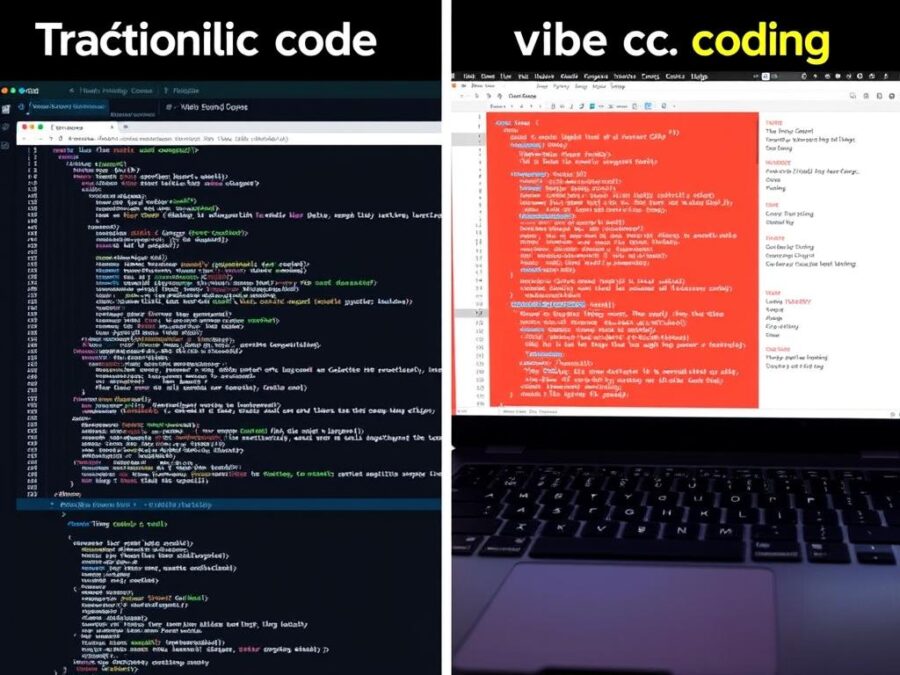
The contrast between traditional coding (left) and vibe coding (right)
Real-World Impact
The democratization of coding through these tools is already having tangible effects across various sectors:
Entrepreneurship
Founders without technical backgrounds can now build and iterate on MVPs without hiring developers, reducing the capital required to launch tech startups and enabling more diverse entrepreneurs to enter the market.
Education
Students can focus on computational thinking and problem-solving rather than syntax memorization, making computer science education more accessible and engaging for a broader range of learners.
Workplace Innovation
Employees in non-technical roles can create internal tools and automation without depending on IT departments, leading to grassroots innovation and efficiency improvements across organizations.
As these tools continue to evolve and improve, we can expect to see even greater diversity in who creates software and what kinds of applications are built. This expanded participation brings fresh perspectives and solutions to problems that might otherwise be overlooked.
The Cultural Shift Toward Vibe-Driven Development

The evolution from isolated development to community-focused creation
Beyond the technical aspects, vibe-coding tools are fostering a broader cultural shift in how we approach software development. This new paradigm emphasizes different values and practices that make the development process more inclusive, collaborative, and human-centered.
Key Elements of the Vibe-Driven Development Culture
Community Focus
Vibe-coding platforms typically include built-in sharing and collaboration features that encourage users to learn from each other. Replit’s Multiplayer mode, for instance, allows real-time collaboration similar to Google Docs, making coding a social rather than solitary activity.
“What’s exciting about these platforms is how they’re turning development into a community activity,” notes Alex Rivera, a software engineer and coding educator. “I’ve seen students who were intimidated by traditional coding thrive when they can work together in these more accessible environments.”
Visual Simplicity
The emphasis on clean, intuitive interfaces represents a departure from the complex, text-heavy IDEs that dominated previous generations of development tools. This visual approach makes the development process more approachable and less intimidating for newcomers.
This shift mirrors broader trends in design thinking and user experience, prioritizing clarity and accessibility over technical sophistication for its own sake.
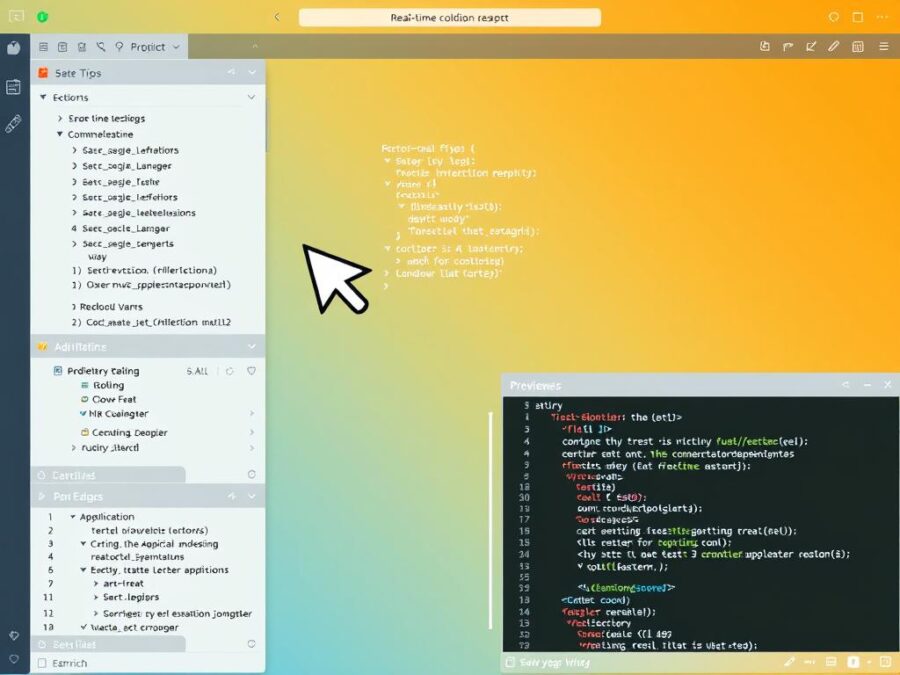
Real-time collaboration transforms coding from a solitary to a social activity
The Impact on Development Teams
This cultural shift extends beyond individual creators to impact how development teams operate:
- Flattened hierarchies as non-technical team members can actively participate in the development process
- Faster iteration cycles enabled by tools that reduce the technical overhead of making changes
- Increased experimentation as the cost (in time and effort) of trying new approaches decreases
- Better alignment between technical implementation and business goals through more inclusive planning
As organizations adopt these tools and practices, they often experience a cultural transformation that extends beyond the development team to influence how the entire organization approaches problem-solving and innovation.
Challenges and Future Trends in Vibe Coding
The future of vibe coding will likely integrate with emerging technologies like AR/VR
While vibe-coding tools offer tremendous potential for democratizing software development, they also face significant challenges that will shape their evolution in the coming years. Understanding these challenges and emerging trends provides insight into how these platforms might develop.
Current Limitations and Challenges
Key Challenges
- Code quality concerns – AI-generated code may not follow best practices or be optimized for performance
- Scalability issues – Applications built with these tools may face limitations when scaling to handle large user bases
- Security vulnerabilities – Without proper oversight, generated code might contain security flaws
- Dependency on platform providers – Users become reliant on the continued availability of these services
- Limited customization – Some advanced features may still require traditional coding approaches
Emerging Solutions
- Improved AI models specifically trained on high-quality, secure code
- Hybrid approaches that combine AI assistance with human oversight
- Better code explanation features to help users understand and modify generated code
- Integration with traditional development workflows and tools
- Open-source alternatives reducing dependency on commercial platforms
Future Trends to Watch
Specialized vibe-coding tools for different industries are likely to emerge
Looking ahead, several trends are likely to shape the evolution of vibe-coding tools:
Industry Specialization
Future tools may focus on specific industries or application types, with specialized features for e-commerce, healthcare, education, and other sectors. This specialization will enable more sophisticated applications without requiring deep domain expertise.
AI/Human Collaboration
Rather than fully autonomous development, we’ll likely see more sophisticated collaboration between AI systems and human developers, with each handling the aspects they’re best suited for. This hybrid approach combines AI efficiency with human creativity and judgment.
Cross-Platform Integration
Vibe-coding tools will increasingly integrate with other software in the development ecosystem, from design tools to deployment platforms, creating more seamless end-to-end workflows for turning ideas into production applications.
As these trends develop, vibe-coding tools will continue to evolve, addressing current limitations while expanding their capabilities to serve an even broader range of users and use cases.
Embracing the Vibe-Coding Revolution
The rise of vibe-coding tools represents a significant inflection point in the history of software development. By lowering technical barriers and emphasizing intuitive, collaborative approaches, platforms like Replit and Lovable are opening the door to a more diverse and inclusive community of creators.
This democratization has profound implications not just for who can build software, but for what gets built. As more voices with different perspectives gain the ability to create digital products, we can expect to see new types of applications addressing previously overlooked needs and opportunities.
Whether you’re a seasoned developer looking to streamline your workflow, an entrepreneur bringing your ideas to life, or simply someone curious about creating in the digital realm, vibe-coding tools offer an accessible entry point to the world of software development.
Start Your Vibe-Coding Journey Today
The best way to understand the potential of these tools is to experience them firsthand. Both Replit and Lovable offer generous free tiers that let you explore their capabilities without commitment.
“The most exciting aspect of vibe coding isn’t just that it makes development more accessible – it’s that it fundamentally changes who gets to participate in shaping our digital future. That diversity of perspective is what will drive the next wave of innovation.”
There are no reviews yet. Be the first one to write one.