
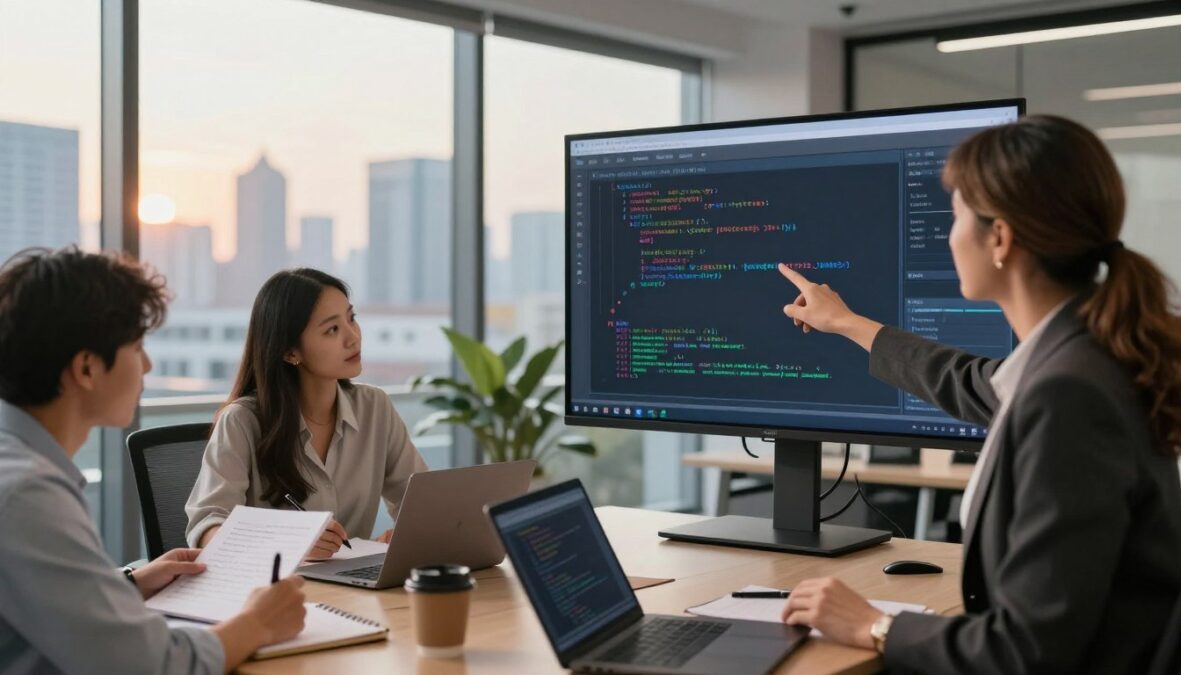
The landscape of software engineering is shifting rapidly as intelligent agents become standard in our daily workflows. During the recent conference held in San Francisco on May 6th, industry leaders showcased how modern tools are fundamentally changing the way teams maintain high standards of quality.
This Claude Code Review 2026 update represents a major leap forward for developers seeking to automate verification processes. By integrating these advanced agentic workflows, your team can spend less time on manual checks and more time building innovative features.
Understanding these new capabilities is essential for staying competitive in today’s fast-paced technical environment. We will explore how these systems function and how you can adopt them to improve your project outcomes starting today.
Key Takeaways
- AI-native development is transforming standard software engineering practices.
- The San Francisco conference highlighted new methods for automated verification.
- Agentic workflows help teams reduce manual overhead significantly.
- Integrating these tools improves overall project quality and speed.
- Modern developers must adapt to these shifts to remain competitive.
The Evolution of AI-Assisted Development
Software engineering has undergone a massive transformation, moving far beyond simple autocomplete tools. We have entered an era where autonomous agentic systems handle the heavy lifting of routine programming tasks. This shift represents a fundamental change in how developers interact with their codebases every single day.
The role of the modern software engineer is evolving into a more product-focused position. Instead of spending hours typing syntax, engineers now act as orchestrators who manage fleets of asynchronous agents. This transition allows teams to focus on high-level architecture and strategic problem-solving rather than manual implementation.
Recent insights from the 2026 developer conference highlight that the primary bottleneck in development has shifted. Writing code is no longer the main challenge; the focus has moved toward verification, cross-functional coordination, and the strategic deployment of AI agents. Teams that embrace this new workflow often see significant gains in productivity and system reliability.
“The future of software development is not about writing more lines of code, but about designing the systems that write and maintain that code for us.”
To understand how this shift impacts your daily operations, consider the following comparison between traditional methods and the new AI-assisted paradigm:
| Feature | Traditional Development | AI-Assisted Development |
|---|---|---|
| Primary Focus | Manual Code Writing | System Architecture & Strategy |
| Task Management | Individual Ticket Handling | Managing Agentic Fleets |
| Bottleneck | Syntax and Implementation | Verification and Coordination |
| Outcome | Feature Delivery | Product-Centric Value |
This evolution requires a mindset shift for many engineering teams. By delegating repetitive tasks to intelligent systems, developers can finally dedicate their energy to innovation. Embracing these tools is essential for staying competitive in the fast-paced landscape of 2026.
Understanding Claude Code Review 2026
The landscape of software engineering is shifting toward terminal-native intelligence with the arrival of Claude Code Review 2026. This tool moves beyond simple suggestions by interacting directly with your project files to execute complex tasks.
By operating within the terminal, it gains a deep understanding of your entire repository structure. This allows for multi-file refactoring that traditional plugins often struggle to achieve.
https://www.youtube.com/watch?v=IyyHRst68Eo
Core Functionality and Architecture
At its heart, the architecture of Claude Code Review 2026 is designed for high-context awareness. It does not rely on fragmented snippets or manual copy-pasting to function.
Instead, the system reads your project architecture to provide intelligent, autonomous operations. This capability ensures that changes remain consistent across every file in your workspace.
“The future of coding lies in agents that understand the intent behind the architecture, not just the syntax of the lines.”
Integration with Modern IDEs
Integrating this tool into your daily workflow is surprisingly smooth. It functions as a powerful companion to your existing IDE, bridging the gap between terminal commands and visual code editing.
Developers can trigger reviews without leaving their preferred environment. This seamless connection reduces friction and keeps your focus on building features rather than managing tool overhead.
| Feature | Traditional Plugins | Claude Code Review 2026 |
|---|---|---|
| Context Scope | Single File | Full Repository |
| Execution | Manual Copy-Paste | Autonomous Updates |
| Workflow | IDE-Bound | Terminal-Native |
| Refactoring | Limited | Multi-File |
By leveraging Claude Code Review 2026, teams can automate repetitive tasks with confidence. This shift represents a significant leap forward for developers who prioritize both speed and code integrity.
Key Features of the Claude Code Review 2026 Platform
By leveraging a fleet of specialized agents, the Claude Code Review 2026 platform redefines the standard for automated code analysis. This system moves beyond simple pattern matching to provide a deep, multi-layered evaluation of your codebase.
Automated Syntax and Logic Analysis
The platform introduces the powerful /ultra review command, which dispatches a fleet of agents to analyze logic, security, and performance in parallel. Unlike traditional tools that often flag false positives, this system requires bugs to be independently reproduced and verified by multiple agents. This rigorous process ensures that only confirmed, actionable issues are surfaced to the developer, significantly reducing the noise of speculative warnings.
Context-Aware Security Scanning
Security is no longer an afterthought but a core component of the review cycle. The platform utilizes context-aware scanning to understand the intent behind your code, rather than just looking for known vulnerabilities. By simulating potential attack vectors, the agents provide a comprehensive security posture that adapts to your specific project architecture.
Natural Language Feedback Loops
Communication is the bridge between AI and human developers. These natural language feedback loops allow developers to iterate on their code with higher confidence and precision. Instead of cryptic error codes, you receive clear, conversational explanations that guide you toward the most efficient solution.
| Feature | Traditional Static Analysis | Claude Agentic Review |
|---|---|---|
| Issue Verification | Single-pass detection | Multi-agent reproduction |
| Feedback Style | Technical logs | Natural language guidance |
| Noise Level | High (False positives) | Low (Verified findings) |
| Scope | Syntax only | Logic, Security, Performance |
Pros and Cons of Adopting Claude Code Review 2026
Adopting new AI-native tools often feels like a balancing act between high-performance output and operational expenses. Teams must carefully evaluate how these systems fit into their existing pipelines to ensure they provide real value.
Advantages for Development Teams
The primary benefit of this platform is the ability to perform deep verification on complex codebases. By utilizing the /ultra review feature, developers can identify subtle bugs that traditional static analysis tools often miss.
This capability is particularly useful during complex refactors where maintaining logic integrity is paramount. When teams leverage these automated insights, they significantly reduce the time spent on manual peer reviews.

Furthermore, the platform excels at providing consistent feedback across large teams. By standardizing the review process, you ensure that every contributor adheres to the same high quality standards.
Potential Limitations and Learning Curves
While the benefits are clear, teams must remain mindful of the variable cost structure associated with advanced features. Because high-level analysis requires significant compute power, it is best reserved for critical production paths rather than every minor commit.
Managing agentic workflows also introduces a learning curve that cannot be ignored. Developers need time to understand how to prompt the AI effectively and interpret its suggestions without over-relying on automated output.
To maximize your return on investment, consider the following breakdown of when to utilize these advanced features:
- Critical Production Paths: Use /ultra review for high-stakes deployments.
- Complex Refactors: Leverage AI to map dependencies during large-scale changes.
- Routine Commits: Rely on standard linting to keep operational costs predictable.
Ultimately, Claude Code Review 2026 serves as a powerful force multiplier when used with intention. By balancing the cost of compute against the complexity of the task, your team can maintain a high velocity without sacrificing code integrity.
Best Code Review Practices in the Age of AI
As AI tools become standard, the way we approach code quality assurance strategies must evolve. While automation handles repetitive tasks, the human element remains the final gatekeeper for complex logic. Adopting the best code review practices today means knowing exactly when to trust the machine and when to intervene.
Maintaining Human Oversight in Automated Workflows
AI can generate code at lightning speed, but it lacks the context of your specific business requirements. Developers must shift their focus from syntax checking to architectural integrity. By keeping a human in the loop, teams ensure that automated suggestions align with long-term project goals.
Effective oversight involves auditing AI-generated pull requests for security vulnerabilities and hidden technical debt. You should treat AI output as a draft that requires critical human review before merging. This collaborative approach prevents the accumulation of errors that automated tools might overlook.
Balancing Speed with Code Quality Assurance
The pressure to ship features faster often conflicts with the need for rigorous testing. To maintain high standards, teams are increasingly shifting verification left in the development cycle. This means catching potential issues during the initial coding phase rather than waiting for a final review.
Implementing robust code quality assurance strategies allows you to leverage AI for speed without sacrificing reliability. By automating the mundane parts of the review, developers gain more time to focus on high-level design and complex problem-solving. Following these best code review practices ensures that your team remains both agile and precise in a competitive landscape.
How to Optimize Your Code Review Process
You can significantly improve your output by fine-tuning how your AI tools interact with your codebase. When you take control of your environment, you transform a standard workflow into a high-performance engine. This proactive approach is the best way to optimize code review process standards across your entire team.
Customizing Claude for Specific Language Stacks
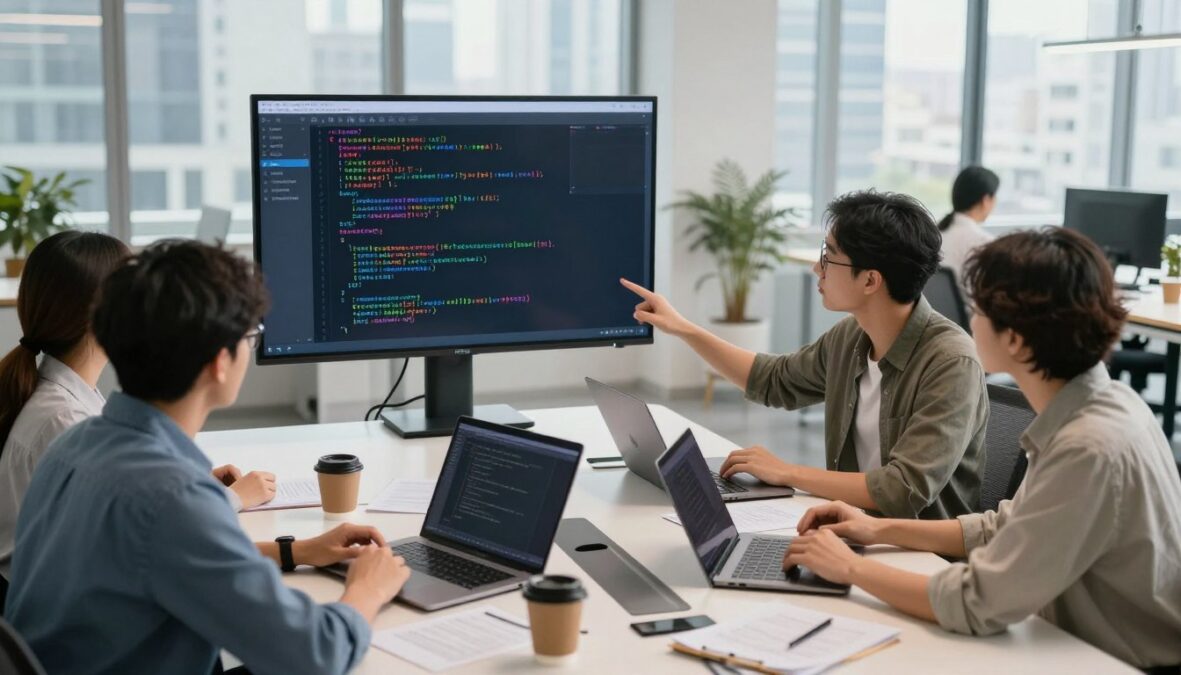
Managing context effectively is the secret to getting the most out of your AI assistant. By using .claudeignore files, you can strip away unnecessary data that clutters the model’s focus. This simple step ensures the AI only analyzes the files that truly matter to your current task.
This configuration is highly effective for reducing token costs by up to 70%. When you limit the scope of the analysis, you enhance code review efficiency while maintaining high accuracy. It allows the system to prioritize relevant logic, which leads to much sharper insights during your daily software development review process.
Setting Up Automated Pull Request Triggers
Speed is a critical factor in modern engineering, and automation is the key to maintaining momentum. By setting up automated triggers, you ensure that every pull request receives an immediate initial scan. This creates a faster feedback loop that keeps your developers moving forward without unnecessary delays.
Automated triggers remove the manual burden of initiating reviews, allowing your team to focus on building features rather than managing tools. Consistent automation ensures that no code goes unreviewed, which significantly improves overall quality. By integrating these triggers into your CI/CD pipeline, you create a seamless experience that supports rapid iteration and deployment.
Enhancing Code Collaboration with Claude
Collaboration in the age of AI demands a fresh approach to technical communication. As teams integrate advanced models into their daily tasks, the software development review process must evolve to keep human engineers and AI agents perfectly aligned. By focusing on shared intent, teams can ensure that every line of code reflects the broader architectural vision.
Standardizing Team Feedback Protocols
To maintain consistency, teams should adopt structured protocols for AI interactions. Tools like ClaudeMem offer cross-session memory, which allows the system to remember previous design decisions and constraints. This contextual awareness prevents the AI from suggesting changes that contradict established project goals.
Standardization ensures that every team member understands how to prompt the AI for specific feedback. When everyone follows the same guidelines, the output becomes predictable and highly reliable. This approach helps to optimize code review process efficiency across the entire engineering department.
“The true power of AI in development lies not in replacing the human, but in amplifying the collective intelligence of the entire engineering team through shared context and clear communication.”
Reducing Friction in Peer Review Cycles
Friction often arises when multiple agents or developers provide conflicting feedback on a single pull request. By establishing clear boundaries for AI participation, you can improve code collaboration and keep the review cycle moving forward. It is essential to treat the AI as a junior partner that requires clear, documented instructions.
The following table highlights the shift from traditional manual reviews to AI-assisted collaborative workflows:
| Feature | Traditional Review | AI-Enhanced Review |
|---|---|---|
| Context Retention | Limited to current PR | Cross-session memory |
| Feedback Speed | Dependent on human availability | Instant preliminary analysis |
| Consistency | Varies by reviewer | Standardized by protocols |
| Human Role | Primary reviewer | Strategic decision maker |
Ultimately, the goal is to foster a culture where human engineers feel empowered by their AI counterparts. When you reduce the noise in your feedback loops, you create more space for creative problem-solving. Clear communication remains the most vital component of any successful technical team.
Top Code Review Tools Compared to Claude
If you want to enhance code review efficiency, you must understand how new AI agents differ from legacy solutions. The market is currently flooded with options, making it vital to distinguish between simple automation and true intelligent reasoning.
Claude versus Traditional Static Analysis Tools
Traditional static analysis tools have long served as the backbone of code quality. These systems excel at identifying syntax errors, style violations, and common security vulnerabilities by scanning code against predefined rulesets.
However, Claude Code Review 2026 operates on a different level. While static analysis tools look for surface-level mistakes, this platform uses advanced reasoning to understand the intent behind your code. It acts as a collaborative partner that can explain why a specific logic chain might fail in production.
Claude versus Copilot-based Review Systems
Many developers are familiar with standard Copilot-based systems that offer real-time code suggestions. These tools are excellent for writing boilerplate code, but they often struggle with complex, multi-file refactoring tasks.
In contrast, Claude Code Review 2026 is designed for autonomous planning across entire repositories. It maintains context across multiple files, allowing it to suggest changes that align with your project’s broader architecture. This capability makes it one of the top code review tools for teams managing large-scale applications.
| Feature | Static Analysis | Copilot Systems | Claude Code |
|---|---|---|---|
| Reasoning | Rule-based | Pattern-matching | Context-aware |
| Scope | Single file | Snippet-focused | Repository-wide |
| Primary Goal | Compliance | Speed | Collaboration |
When selecting the right software for your team, consider these factors to enhance code review efficiency:
- Integration depth: Does the tool work seamlessly with your existing IDE?
- Context retention: Can the system handle complex logic spanning multiple files?
- Autonomous capability: Does it offer actionable planning rather than just suggestions?
By comparing Claude Code Review 2026 against other top code review tools, you can ensure your team adopts a solution that truly supports your development goals. Choosing the right partner in your workflow is the first step toward building more reliable software.
Effective Code Review Techniques for 2026
As we move further into 2026, the landscape of software quality is shifting toward smarter automation. Teams that prioritize effective code review techniques are finding that they can ship features faster without sacrificing stability. By moving beyond manual checks, developers can focus on high-level logic while machines handle the repetitive heavy lifting.
Adopting these modern workflows is essential for any team aiming to stay competitive. Implementing best code review practices today ensures that your codebase remains clean, secure, and easy to maintain as your project scales.
Leveraging AI for Technical Debt Reduction
Technical debt often accumulates silently, turning a healthy project into a maintenance nightmare. To combat this, developers are now using automated hooks that trigger security scans and formatting checks during every pull request. These code quality assurance strategies act as a first line of defense, catching vulnerabilities before they ever reach the main branch.
By integrating AI-driven analysis, you can identify patterns of inefficiency that human reviewers might miss. This proactive approach allows your team to address architectural flaws early. Reducing technical debt becomes a continuous, automated process rather than a massive, dreaded cleanup task at the end of a sprint.
Improving Documentation through Automated Summaries
One of the biggest challenges in software development is keeping documentation in sync with rapidly changing code. When code evolves, documentation often becomes outdated, leading to confusion for new team members. Fortunately, AI tools can now generate and update technical summaries automatically based on recent commits.
These automated summaries ensure that your project documentation remains a reliable source of truth. By leveraging these effective code review techniques, you save valuable time that would otherwise be spent manually updating README files or wikis. Ultimately, these code quality assurance strategies help maintain a high standard of clarity across your entire development organization.
Who Should Use Claude Code Review 2026
Claude Code Review 2026 offers a versatile solution that scales effectively across different team sizes and project complexities. By integrating top code review tools into your daily routine, you can ensure that your software remains robust and maintainable. This platform adapts to your specific requirements, whether you are working solo or leading a large engineering department.
Ideal Use Cases for Enterprise Environments
Large organizations often struggle with maintaining consistency across massive, distributed codebases. Claude excels here by providing multi-agent orchestration, which allows different AI agents to handle specific modules or security protocols simultaneously. This approach ensures that security scanning is never an afterthought but a core part of the development lifecycle.
Enterprise teams can leverage these advanced features to enforce strict compliance standards without slowing down the deployment pipeline. By automating repetitive checks, senior engineers can focus their energy on high-level architectural decisions. This shift in focus is essential for maintaining velocity in competitive markets.
Suitability for Independent Developers and Startups
For independent developers and lean startups, the primary goal is often to punch above their weight by maximizing output with limited resources. Implementing effective code review techniques early in the project lifecycle prevents technical debt from accumulating. This proactive stance allows small teams to ship high-quality features at a pace usually reserved for much larger organizations.
Startups can use these automated workflows to bridge the gap between rapid prototyping and production-ready code. The platform helps to improve code collaboration by providing clear, actionable feedback on every pull request. This creates a culture of continuous learning, even when team members are working remotely or across different time zones.
- Automated Security: Protect your intellectual property with built-in scanning.
- Workflow Efficiency: Reduce manual overhead by automating routine code checks.
- Scalability: Grow your codebase with confidence using AI-driven insights.
Conclusion
Claude Code represents a massive shift in how teams build and verify software in 2026. This technology changes the daily rhythm of engineering by prioritizing agentic workflows and rigorous verification steps.
You can reach higher levels of productivity by integrating these tools into your existing stack. Start your journey by testing small hooks or automated evaluations. These minor adjustments reveal how AI fits into your specific development environment.
The landscape of software engineering moves fast. Mastering these AI-native processes serves as a vital skill for your career growth. Adaptability remains the best way to stay ahead in this competitive industry.
Share your experiences with these tools on platforms like GitHub or Reddit to help the community grow. Your feedback shapes the future of automated code review. Dive into the documentation today and begin building more efficient systems.
FAQ
How does Claude Code Review 2026 change the daily workflow of a software engineer?
What makes Claude Code different from traditional IDE plugins like GitHub Copilot?
How can I optimize code review process costs while using AI?
What are the best code review practices for maintaining quality in 2026?
How does the /ultra review feature improve code quality assurance strategies?
Can I use AI to enhance code review efficiency within a team environment?
What effective code review techniques help in reducing technical debt?
How does Claude Code help to improve code collaboration between humans and agents?
Is Claude Code Review 2026 suitable for independent developers or just large enterprises?
There are no reviews yet. Be the first one to write one.