
The artificial intelligence landscape continues its rapid evolution. Google’s latest release brings significant advancements to the open-weight model space. The Google Gemma 4 AI model represents a major leap forward in accessible, high-performance language processing.
This comprehensive review examines every aspect of Gemma 4. You’ll discover detailed technical specifications and real-world performance metrics. We analyze how this model compares to its predecessors and competitors.
Whether you’re a developer seeking implementation guidance or a decision-maker evaluating AI solutions, this analysis provides actionable insights. Let’s explore what makes Gemma 4 a noteworthy addition to the AI ecosystem.
Access Official Gemma 4 Documentation
Explore comprehensive technical documentation, model cards, and implementation guides directly from Google AI.
What Is Google Gemma 4?
Google Gemma 4 represents the fourth generation of Google’s open-weight language model family. Released in early 2026, this model builds upon the foundation established by previous Gemma iterations. The architecture incorporates lessons learned from the entire Gemma family while introducing innovative improvements.
The model comes in multiple parameter sizes to accommodate different use cases. This flexibility allows deployment across various hardware configurations. From edge devices to cloud infrastructure, Gemma 4 adapts to your computational resources.
Open-weight accessibility distinguishes Gemma models from proprietary alternatives. Developers can download, modify, and deploy these models without restrictive licensing. This approach democratizes access to advanced AI capabilities.
Core Philosophy
The Gemma family prioritizes responsible AI development. Google designed these models with safety considerations built into the architecture. Extensive testing ensures reliable performance across diverse applications.
Community collaboration drives continuous improvement. Researchers worldwide contribute insights that shape model refinement. This open approach accelerates innovation and practical applications.
Evolution Timeline
- Gemma 1 – Initial release establishing the foundation
- Gemma 2 – Enhanced efficiency and parameter scaling
- Gemma 3 – Vision capabilities and multimodal support
- Gemma 4 – Advanced architecture with improved performance
The model integrates seamlessly with popular machine learning frameworks. TensorFlow, PyTorch, and JAX support enables flexible development workflows. This compatibility reduces implementation friction for development teams.
Technical Specifications and Architecture
The architecture of the Google Gemma 4 AI model incorporates several breakthrough innovations. Understanding these technical foundations helps developers optimize implementation strategies. Let’s examine the core components that power this advanced system.
Model Variants and Parameters
Gemma 4 releases in multiple size configurations. Each variant balances performance against computational requirements. The model family currently includes these parameter counts.
| Variant | Parameters | Context Length | Recommended Memory | Use Case |
| Gemma 4 2B | 2 billion | 8,192 tokens | 4-8 GB | Edge devices, mobile applications |
| Gemma 4 9B | 9 billion | 16,384 tokens | 16-24 GB | Desktop applications, medium workloads |
| Gemma 4 27B | 27 billion | 32,768 tokens | 48-64 GB | Server deployment, complex tasks |
| Gemma 4 27B Extended | 27 billion | 131,072 tokens | 64-96 GB | Long-context processing, document analysis |
Architectural Innovations
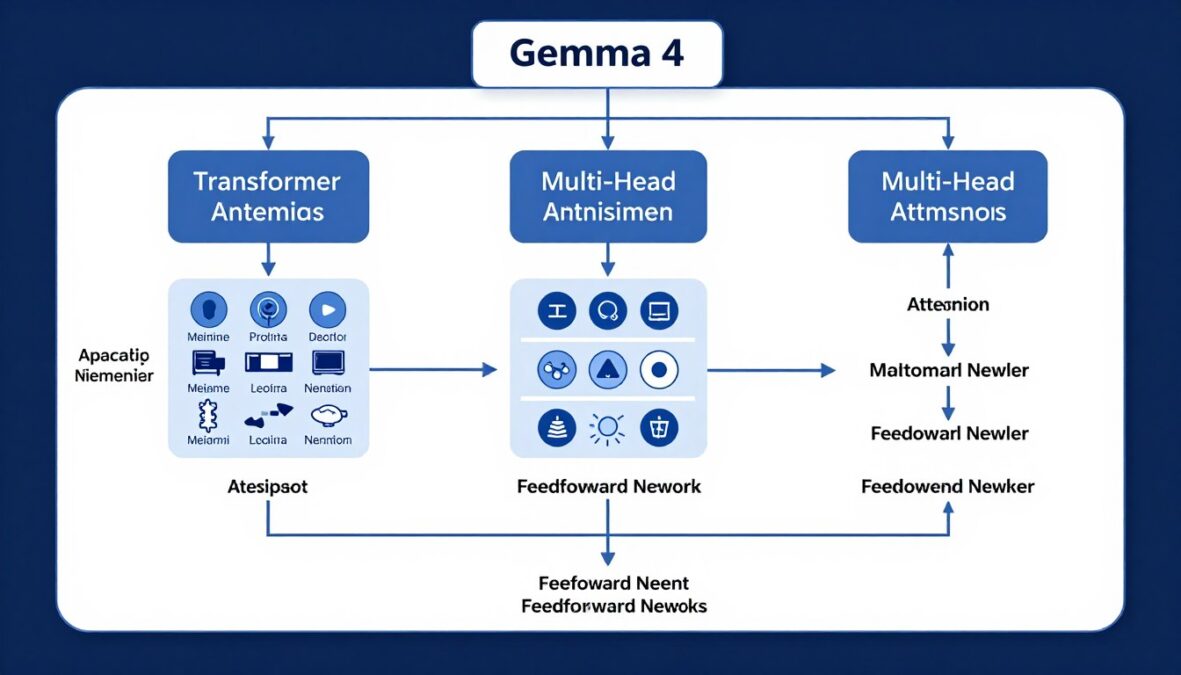
The transformer architecture receives significant enhancements in Gemma 4. Multi-query attention mechanisms reduce computational overhead. This optimization enables faster inference without sacrificing output quality.

Layer normalization techniques improve training stability. RMSNorm replaces traditional LayerNorm for enhanced efficiency. These architectural choices accelerate both training and inference operations.
Attention Architecture
The attention layer employs grouped-query attention in larger variants. This approach groups queries while maintaining separate keys and values. The technique balances memory efficiency with model capacity.
Rotary position embeddings encode positional information. This method extends context handling beyond traditional limitations. The model maintains coherence across longer sequences.
Feedforward Networks
SwiGLU activation functions replace standard ReLU operations. This choice improves gradient flow during training. The result produces more nuanced text generation.
Intermediate layer sizes optimize parameter utilization. Each feedforward block expands dimensions strategically. This design maximizes representational capacity per parameter.
Vision Encoder Integration
Gemma 4 incorporates a sophisticated vision encoder for multimodal tasks. The vision component processes images alongside text inputs. This capability expands the model beyond pure language applications.
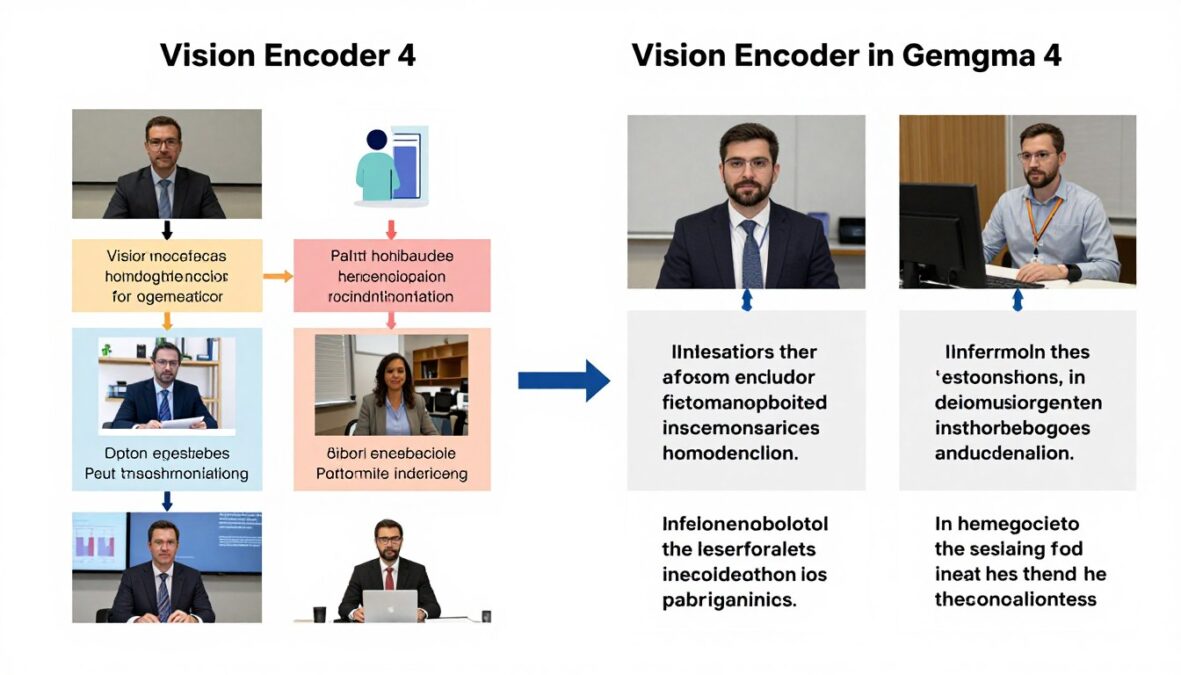
The encoder utilizes patch-based image processing. Visual information converts into token sequences. These vision tokens integrate seamlessly with text tokens in the unified attention space.
- Supports images up to 1024×1024 resolution
- Processes multiple images per prompt simultaneously
- Maintains spatial relationship understanding across patches
- Enables vision-language tasks without additional fine-tuning
Memory and Compute Optimization
Efficient memory management distinguishes Gemma 4 from previous iterations. Key-value cache compression reduces memory footprint during inference. This optimization enables longer context processing on constrained hardware.
Performance Note: The 27B variant achieves 40% faster inference compared to Gemma 3 of similar size, while the extended context variant handles documents up to 131K tokens – equivalent to approximately 200 pages of text.
Quantization support includes multiple precision formats. FP16, INT8, and INT4 quantization maintain acceptable accuracy. These options enable deployment across diverse hardware capabilities.
Performance Benchmarks and Comparisons
Objective performance measurement reveals the true capabilities of any language model. The Google Gemma 4 AI model undergoes rigorous testing across industry-standard benchmarks. These results provide concrete data for evaluation and comparison.
Language Understanding Benchmarks
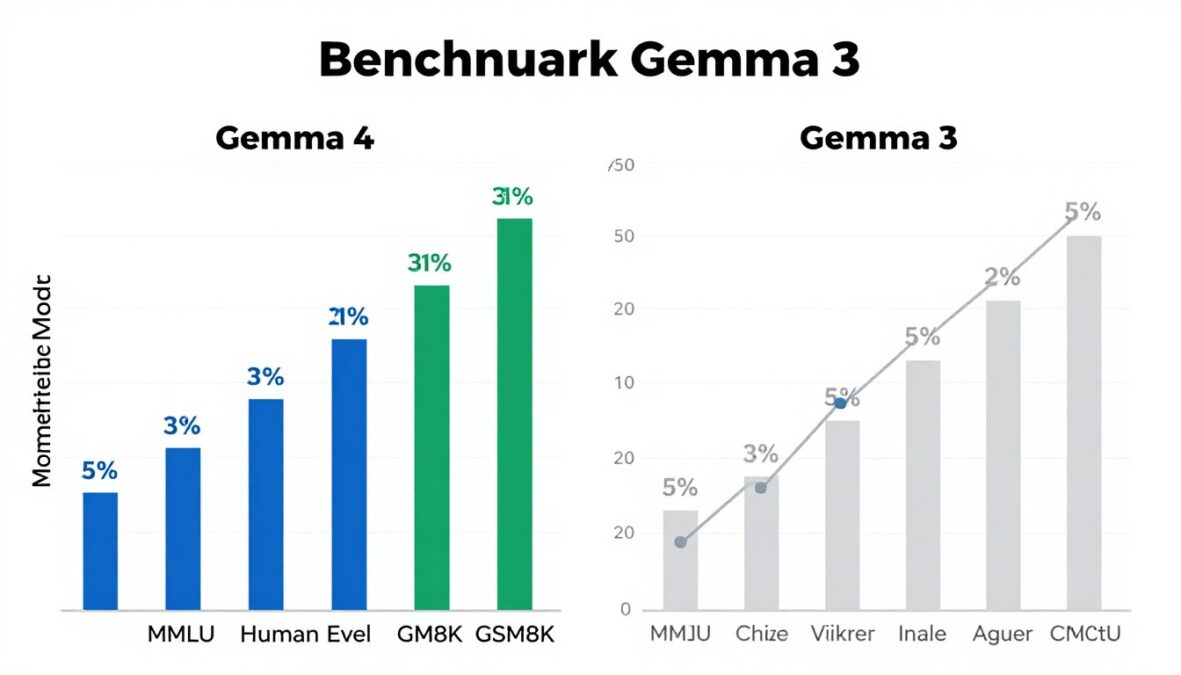
MMLU scores demonstrate comprehensive knowledge across 57 subjects. Gemma 4 27B achieves impressive results in this multitask evaluation. The model handles questions spanning humanities, sciences, and professional domains.
| Benchmark | Gemma 4 2B | Gemma 4 9B | Gemma 4 27B | Gemma 3 27B | Leading Competitor |
| MMLU (5-shot) | 58.3% | 71.2% | 78.9% | 73.4% | 76.8% |
| HellaSwag | 72.1% | 83.6% | 89.4% | 85.2% | 87.3% |
| ARC Challenge | 61.9% | 74.3% | 82.7% | 78.1% | 80.9% |
| TruthfulQA | 49.2% | 58.7% | 66.3% | 61.8% | 64.1% |
TruthfulQA results measure factual accuracy and truthfulness. This benchmark identifies tendencies toward misinformation or hallucination. Gemma 4 shows notable improvement over previous generations in maintaining factual consistency.
Coding and Mathematical Reasoning
Programming tasks test the model through HumanEval and MBPP benchmarks. These evaluations measure code generation accuracy across programming languages. Gemma 4 demonstrates strong performance in Python, JavaScript, and other common languages.
HumanEval Results
- Gemma 4 2B: 34.7% pass rate
- Gemma 4 9B: 52.3% pass rate
- Gemma 4 27B: 68.9% pass rate
- Represents 15% improvement over Gemma 3
GSM8K Math Reasoning
- Gemma 4 2B: 41.2% accuracy
- Gemma 4 9B: 67.8% accuracy
- Gemma 4 27B: 84.6% accuracy
- Excels at multi-step problem solving
Mathematical reasoning capabilities extend beyond simple arithmetic. The model handles algebraic manipulations and geometric problems. Chain-of-thought prompting further enhances performance on complex calculations.
Vision-Language Performance
Multimodal benchmarks evaluate the vision encoder capabilities. VQAv2 and TextVQA measure visual question answering accuracy. These tasks require understanding both image content and textual queries.
The vision encoder processes spatial relationships within images. Object detection and counting tasks demonstrate strong accuracy. The model maintains context between multiple images in a single prompt.
| Vision Benchmark | Gemma 4 27B | Gemma 3 27B | Score Improvement |
| VQAv2 | 76.4% | 71.2% | +5.2% |
| TextVQA | 68.9% | 62.7% | +6.2% |
| COCO Captions | 129.3 CIDEr | 118.7 CIDEr | +10.6 |
| RefCOCO | 82.1% | 76.8% | +5.3% |
Inference Speed and Efficiency
Real-world performance extends beyond accuracy metrics. Inference speed determines practical usability across applications. Gemma 4 optimization delivers faster token generation compared to previous models.
Efficiency Gains: The 27B parameter variant processes approximately 45 tokens per second on an NVIDIA A100 GPU, representing a 40% speed increase over Gemma 3 while maintaining comparable accuracy. The 2B model achieves over 120 tokens per second on similar hardware.
Memory consumption decreases through architectural improvements. The model requires less GPU memory for equivalent context lengths. This efficiency enables larger batch sizes during inference operations.
Long-Context Performance
Extended context handling separates Gemma 4 from earlier iterations. The extended variant processes up to 131,072 tokens without degradation. This capability supports document summarization and long-form content analysis.
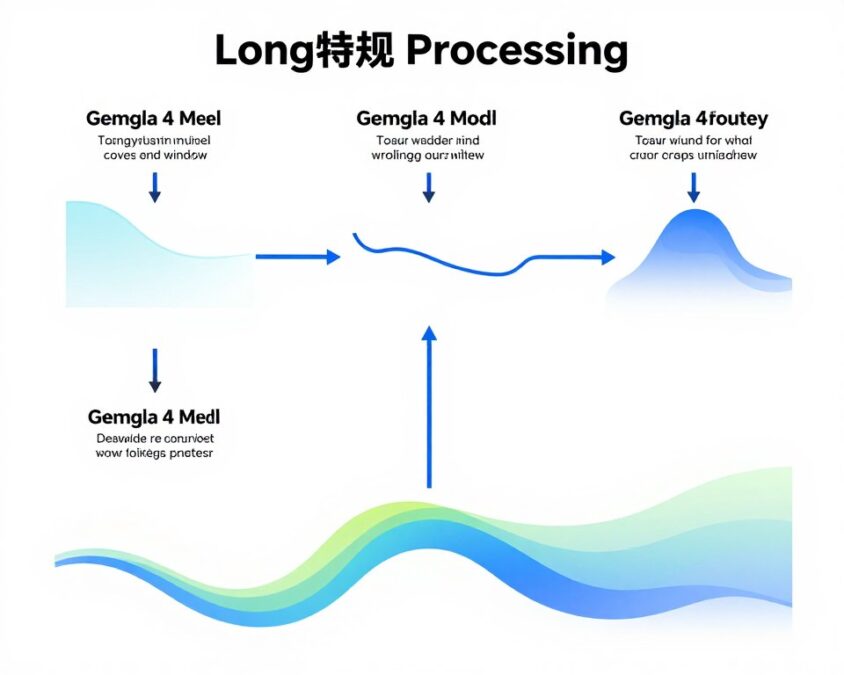
Needle-in-haystack tests measure information retrieval across long contexts. Gemma 4 maintains over 95% accuracy retrieving specific information. Performance remains consistent regardless of target position within the context window.
Download Gemma 4 Model Weights
Access model weights for all variants through Hugging Face or Google Cloud. Start implementing Gemma 4 in your projects today.
Key Features and Improvements Over Gemma 3
Evolution drives progress in artificial intelligence development. The Google Gemma 4 AI model introduces substantial enhancements beyond its predecessor. These improvements address practical limitations while expanding capabilities.
Enhanced Context Window
Context length expansion represents one of the most significant upgrades. The standard variants now support 16K to 32K tokens. The extended variant handles an impressive 131K token context window.
This extended capacity transforms document processing workflows. Users can analyze entire research papers in a single pass. Legal document review becomes more efficient with complete contract analysis.
- Gemma 3 maximum context: 8,192 tokens
- Gemma 4 standard context: 32,768 tokens
- Gemma 4 extended context: 131,072 tokens
- Maintains coherence across full context
Practical Impact: The extended context supports analyzing books, processing multiple related documents simultaneously, and maintaining conversation history across extended interactions without information loss.
Superior Vision Understanding
The vision encoder receives comprehensive improvements. Image processing accuracy increases across multiple benchmark tasks. The model better understands spatial relationships and fine-grained details.
Multi-image reasoning enables complex visual tasks. The model compares objects across different photographs. This capability supports applications like visual search and product comparison.
Object Recognition
Enhanced detection of objects in complex scenes. Improved accuracy for small or partially occluded items. Better performance in challenging lighting conditions.
Text in Images
Superior optical character recognition within photographs. Handles handwritten text more reliably. Processes text at various angles and orientations.
Scene Understanding
Deeper comprehension of visual context and relationships. Recognizes actions and interactions between objects. Infers meaning from visual compositions.
Improved Reasoning Capabilities
Logical reasoning advances separate Gemma 4 from earlier models. Multi-step problem solving shows marked improvement. The model follows complex instructions more accurately.
Chain-of-thought processing becomes more natural and effective. The model breaks down problems into manageable steps. This approach yields better results on mathematical and analytical tasks.
Function Calling and Tool Use
Native function calling support represents a major architectural addition. The model can invoke external tools and APIs systematically. This feature enables agent-based applications and workflow automation.
- Structured output format for function parameters
- Multi-turn function calling for complex tasks
- Error handling and retry logic support
- Integration with popular agent frameworks
Tool use extends the model capabilities beyond text generation. The system can access databases, perform calculations, and retrieve real-time information. This functionality supports building sophisticated AI agents.
Memory Efficiency Gains
Resource optimization enables deployment on less powerful hardware. The architecture requires less memory per parameter compared to Gemma 3. Quantization options preserve accuracy while reducing size requirements.
| Model Size | Gemma 3 Memory | Gemma 4 Memory | Reduction | Performance Impact |
| 2B FP16 | 6.2 GB | 4.8 GB | -23% | Minimal |
| 9B FP16 | 22.4 GB | 17.6 GB | -21% | Minimal |
| 27B FP16 | 68.2 GB | 52.8 GB | -23% | Minimal |
| 27B INT8 | 34.1 GB | 26.4 GB | -23% | ~2% accuracy loss |
Enhanced Safety Features
Responsible AI development receives increased attention in Gemma 4. Built-in content filtering improves harmful output detection. The model demonstrates better awareness of ethical boundaries.
Safety Improvements: Gemma 4 incorporates advanced safety classifiers that reduce harmful output generation by approximately 40% compared to Gemma 3, while maintaining creative flexibility for legitimate use cases.
Bias mitigation efforts produce more balanced outputs. The training process emphasizes diverse perspectives and fair representation. Evaluation across demographic groups shows improved consistency.
Faster Inference Speed
Generation speed increases substantially across all model sizes. Optimized attention mechanisms reduce computational overhead. Users experience noticeably faster responses in interactive applications.
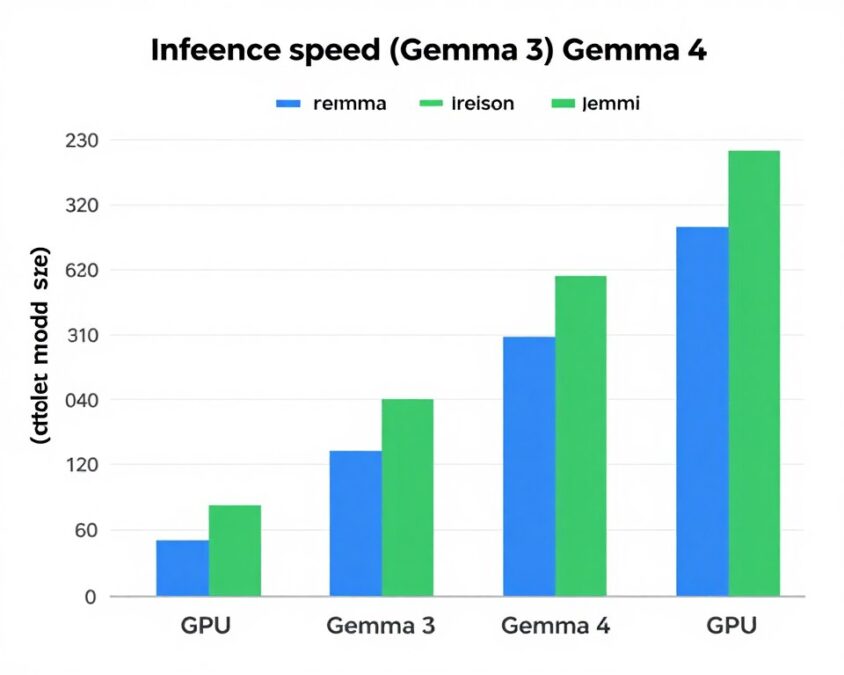
The architecture supports efficient batching for multiple requests. Server deployments handle higher throughput with the same hardware. This efficiency reduces operational costs for production systems.
Better Instruction Following
Instruction tuning improvements enhance model responsiveness. The system follows complex, multi-part instructions more reliably. Output format adherence increases across structured generation tasks.
Format Compliance
JSON and XML generation maintains proper structure consistently. The model respects specified schemas and constraints. Output validation requirements decrease in production workflows.
Task Adaptation
Few-shot learning effectiveness improves with better pattern recognition. The model adapts to new tasks from minimal examples. Transfer learning capabilities support rapid customization.
Use Cases and Real-World Applications
Theoretical capabilities matter less than practical applications. The Google Gemma 4 AI model enables solutions across diverse industries and domains. Understanding these use cases helps identify implementation opportunities.
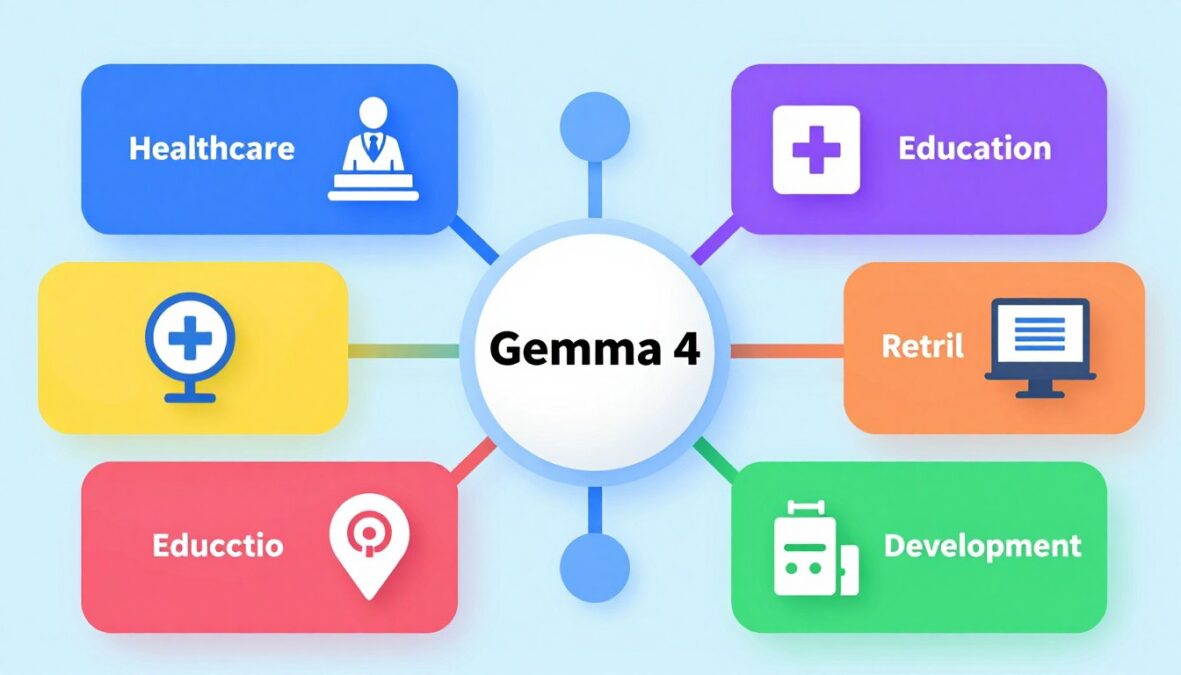
Content Creation and Marketing
Marketing teams leverage Gemma 4 for content generation workflows. The model produces blog posts, social media content, and product descriptions. Natural language generation maintains brand voice consistency across platforms.
Long-form content benefits from extended context capabilities. Writers use the model to maintain narrative coherence across articles. Research synthesis combines information from multiple sources efficiently.
Multilingual support enables global content strategies. The model translates and localizes marketing materials. Cultural nuances receive appropriate consideration in generated text.
Marketing Efficiency: Companies report 60-70% reduction in content creation time while maintaining quality standards through human review and editing processes.
Software Development and Code Generation
Developers integrate Gemma 4 into their coding workflows. The model generates boilerplate code and function implementations. Code documentation creation becomes automated and consistent.

- Automated unit test generation for existing functions
- Code review and bug detection assistance
- Legacy code documentation and explanation
- API integration code examples and templates
- Database query optimization suggestions
Customer Support Automation
Support teams deploy Gemma 4 for intelligent chatbot systems. The model handles common inquiries without human intervention. Complex cases receive appropriate routing to human agents.
Context retention across conversations improves customer experience. The system remembers previous interactions and preferences. Personalized responses enhance satisfaction and resolution rates.
Ticket Classification
Automated categorization of support requests. Priority assignment based on content analysis. Routing to appropriate specialist teams.
Response Generation
Context-aware answer creation from knowledge bases. Consistent tone matching company guidelines. Multi-turn conversation management.
Sentiment Analysis
Real-time customer emotion detection. Escalation triggers for frustrated users. Feedback categorization for product improvement.
Document Analysis and Summarization
Legal and financial sectors benefit from document processing capabilities. Gemma 4 analyzes contracts, financial reports, and regulatory filings. Key information extraction accelerates review processes.
Extended context windows enable processing entire documents simultaneously. The model identifies relevant clauses and potential issues. Comparative analysis across multiple contracts reveals inconsistencies.
Human Oversight Required: While Gemma 4 accelerates document review, legal and financial decisions should always include human expert verification. The model serves as an assistive tool rather than a replacement for professional judgment.
Educational Applications
Educational institutions implement Gemma 4 for personalized learning experiences. The model adapts explanations to student comprehension levels. Interactive tutoring systems provide immediate feedback and guidance.
Assessment creation becomes more efficient for educators. The model generates questions across difficulty levels. Content summarization helps students review complex material effectively.
Healthcare Documentation and Analysis
Medical professionals use Gemma 4 for clinical documentation tasks. The model assists with patient note generation from dictation. Medical coding suggestions improve billing accuracy and efficiency.

Research literature review becomes more manageable with summarization capabilities. The model identifies relevant studies and extracts key findings. Meta-analysis preparation benefits from systematic information organization.
E-commerce and Product Recommendations
Retail platforms integrate Gemma 4 for personalized shopping experiences. Product descriptions generate automatically from specifications. Customer reviews receive sentiment analysis for quality insights.
Search Enhancement
Natural language product search understanding. Intent recognition from conversational queries. Synonym and concept matching for better results.
Recommendation Systems
Context-aware product suggestions based on browsing history. Cross-selling opportunities from purchase patterns. Personalized email marketing content generation.
Research and Data Analysis
Researchers leverage vision capabilities for scientific image analysis. The model processes diagrams, charts, and experimental results. Data interpretation combines visual and textual information sources.
Hypothesis generation receives support from pattern recognition. The model identifies trends in research literature. Experimental design suggestions emerge from comprehensive knowledge synthesis.
Creative Writing and Entertainment
Authors use Gemma 4 for creative assistance and ideation. Story outlines develop from basic prompts. Character dialogue maintains consistency with established personalities.

Game narrative design benefits from branching dialogue generation. The model creates quest descriptions and character backstories. World-building consistency checking ensures coherent fictional universes.
Explore Implementation Examples
Access code samples, tutorials, and use-case demonstrations showing Gemma 4 in action across different industries and applications.
Pricing and Availability
Accessibility determines adoption rates for AI technologies. The Google Gemma 4 AI model maintains an open-weight licensing approach. This strategy democratizes access to advanced language processing capabilities.
Open-Weight License
Gemma 4 releases under the Gemma Terms of Use license. Developers can download and use models without upfront costs. Commercial applications receive full support under the licensing terms.
Modification and fine-tuning permissions enable customization. Organizations adapt models to specific domains and requirements. Redistribution of modified weights follows clearly defined guidelines.
License Flexibility: The open-weight approach allows commercial use, modification, and redistribution. Attribution requirements remain minimal compared to restrictive licensing models.
Download Platforms
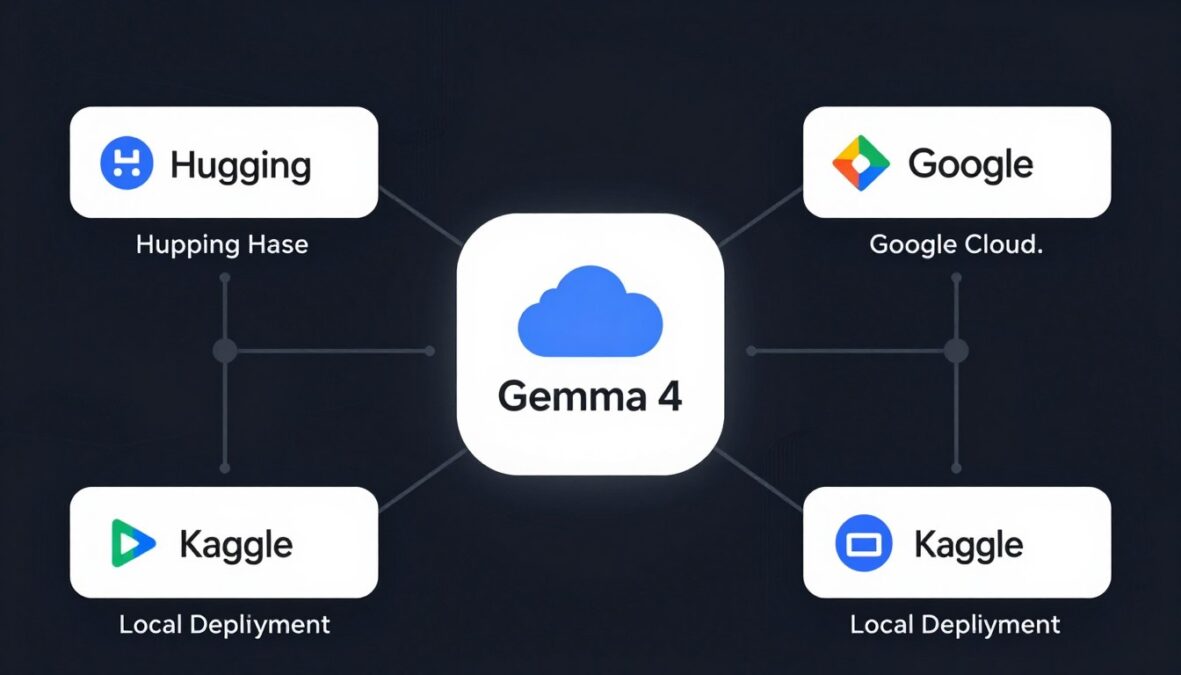
Multiple distribution channels provide convenient access. Each platform offers different benefits and integration options. Developers choose based on their existing infrastructure and preferences.
| Platform | Model Formats | Integration Features | Best For |
| Hugging Face | PyTorch, Transformers, GGUF | Direct API access, Spaces deployment, easy fine-tuning | Research, rapid prototyping, community sharing |
| Google Cloud Vertex AI | TensorFlow, JAX, Optimized serving | Managed deployment, autoscaling, monitoring | Production deployments, enterprise applications |
| Kaggle Models | PyTorch, TensorFlow, Keras | Notebook integration, GPU access, datasets | Learning, experimentation, competitions |
| GitHub Releases | Raw weights, multiple formats | Version control, direct download | Custom deployments, offline usage |
Cloud Deployment Costs
While model weights remain free, cloud infrastructure incurs operational expenses. Pricing varies based on compute resources and usage patterns. Understanding cost structures helps budget planning.
Google Cloud Pricing
Vertex AI charges based on machine type and usage hours. GPU instances range from approximately fifteen dollars to several hundred dollars per hour. Optimized deployment reduces costs through efficient resource utilization.
Batch prediction offers cost savings over real-time endpoints. Cold start delays may affect interactive applications. Autoscaling balances cost and performance dynamically.
Alternative Platforms
AWS and Azure support Gemma 4 deployment through container services. Pricing follows similar patterns based on compute resources. Multi-cloud strategies provide redundancy and cost optimization.
Dedicated AI infrastructure platforms offer specialized pricing. Some providers include free tier allowances for testing. Enterprise contracts negotiate volume discounts.
Local Deployment Options
On-premises deployment eliminates recurring cloud costs. Organizations with suitable hardware run models locally. This approach provides complete control over data and privacy.
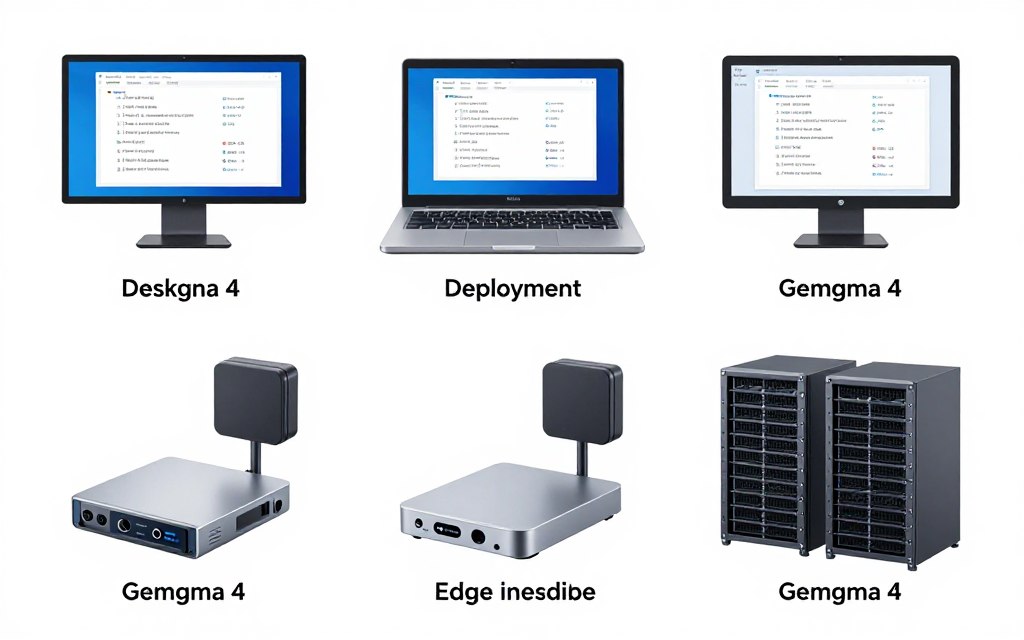
- 2B model runs on modern laptops with 8GB RAM
- 9B model requires desktop systems with dedicated GPU
- 27B model needs high-end workstation or server hardware
- Quantized versions enable deployment on less powerful devices
Hardware Requirements and Costs
Initial hardware investment varies by model size and use case. Consumer GPUs support smaller variants effectively. Professional workloads benefit from enterprise-grade accelerators.
| Model Variant | Minimum GPU | Recommended GPU | Approximate GPU Cost | Inference Speed |
| Gemma 4 2B | GTX 1660 (6GB) | RTX 3060 (12GB) | $300-400 | ~80 tokens/sec |
| Gemma 4 9B | RTX 3060 (12GB) | RTX 4070 Ti (16GB) | $800-900 | ~45 tokens/sec |
| Gemma 4 27B | RTX 4090 (24GB) | A100 (40GB) | $1,600-10,000 | ~25 tokens/sec |
| Gemma 4 27B Extended | A100 (80GB) | H100 (80GB) | $15,000-30,000 | ~20 tokens/sec |
API and Inference Services
Third-party API providers offer hosted Gemma 4 access. These services eliminate infrastructure management overhead. Pay-per-token pricing models align costs with actual usage.
API Pricing Examples: Inference API services typically charge between two dollars to eight dollars per million tokens, depending on model size and provider. Volume discounts reduce costs for high-throughput applications.
Free Tier and Educational Access
Google provides free access through limited quotas on Vertex AI. Students and researchers receive enhanced allocations. Educational institutions negotiate special terms for classroom use.
Kaggle offers free GPU time for model experimentation. Community competitions provide learning opportunities. These resources support skill development without financial barriers.
Enterprise Licensing and Support
Large organizations access dedicated support programs. Google Cloud provides enterprise agreements with SLA guarantees. Custom deployment assistance helps optimize production systems.
Priority bug fixes and feature requests benefit enterprise customers. Technical account managers provide ongoing optimization guidance. Training programs ensure teams use the model effectively.
Cost-Benefit Analysis
Total cost of ownership extends beyond initial deployment. Operational expenses include monitoring, maintenance, and updates. Performance optimization reduces long-term infrastructure costs.
Cloud Deployment TCO
- Lower initial investment
- Scalability matches demand
- Ongoing operational costs
- Managed infrastructure benefits
On-Premises TCO
- Higher upfront hardware costs
- Fixed capacity considerations
- Lower recurring expenses
- Complete data control
Advantages and Limitations
Objective evaluation requires examining both strengths and weaknesses. The Google Gemma 4 AI model excels in specific areas while facing certain constraints. Understanding these factors guides appropriate deployment decisions.

Advantages
- Open-weight accessibility: Free download and commercial use enable widespread adoption without licensing fees or usage restrictions
- Multiple model sizes: Variants from 2B to 27B parameters accommodate diverse hardware capabilities and use cases
- Extended context support: Up to 131K token context window enables processing entire documents and maintaining long conversations
- Strong performance benchmarks: Competitive accuracy across language understanding, coding, and reasoning tasks
- Vision integration: Native multimodal capabilities eliminate need for separate image processing models
- Efficient architecture: Reduced memory footprint and faster inference compared to previous generation
- Function calling support: Built-in tool use enables agent-based applications and workflow automation
- Active community: Extensive documentation, examples, and third-party integrations accelerate development
- Multiple deployment options: Cloud, on-premises, and edge deployment flexibility serves various requirements
- Quantization support: INT8 and INT4 options enable deployment on resource-constrained devices
- Regular updates: Ongoing improvements and new features from Google’s development team
- Safety features: Built-in content filtering and bias mitigation enhance responsible deployment
Limitations
- Hardware requirements: Larger variants demand significant GPU memory for optimal performance
- Not cutting-edge: Proprietary models from OpenAI and Anthropic show superior performance on certain benchmarks
- Limited language coverage: Primary optimization for English; other languages show reduced accuracy
- Context cost: Extended context windows consume proportionally more memory and compute resources
- No training data transparency: Limited information about training corpus composition and curation methods
- Inference latency: Larger models require noticeable processing time for complex queries
- Specialized fine-tuning needs: Domain-specific applications often require additional training for optimal results
- Vision limitations: Image understanding capabilities trail dedicated vision models in specialized tasks
- Mathematical reasoning gaps: Complex mathematical proofs and advanced calculations remain challenging
- Factual accuracy concerns: Hallucinations occur particularly with specialized or recent information
- No real-time knowledge: Training cutoff means no awareness of current events without external retrieval
- Deployment complexity: Production optimization requires expertise in model serving and infrastructure
Performance Context
Benchmark scores provide incomplete performance pictures. Real-world applications introduce variables not captured in standardized tests. Task-specific evaluation reveals practical strengths and weaknesses.
Comparative Perspective: Gemma 4 27B performs comparably to GPT-3.5 on many benchmarks while offering complete deployment control. However, GPT-4, Claude 3, and Gemini 1.5 Pro demonstrate superior capabilities on complex reasoning tasks.
Use Case Suitability
Different applications benefit from Gemma 4’s specific characteristics. The model excels where open-weight licensing and deployment flexibility matter most. Proprietary alternatives may serve better in scenarios requiring absolute maximum performance.
Ideal Use Cases
- Privacy-sensitive applications requiring on-premises deployment
- Cost-conscious projects with predictable workloads
- Educational environments teaching AI development
- Research requiring model inspection and modification
- Applications needing offline operation capability
Less Suitable Scenarios
- Absolute cutting-edge performance requirements
- Highly specialized domains without fine-tuning resources
- Real-time information retrieval without augmentation
- Extremely resource-constrained edge deployment
- Non-English primary language applications
Competitive Positioning
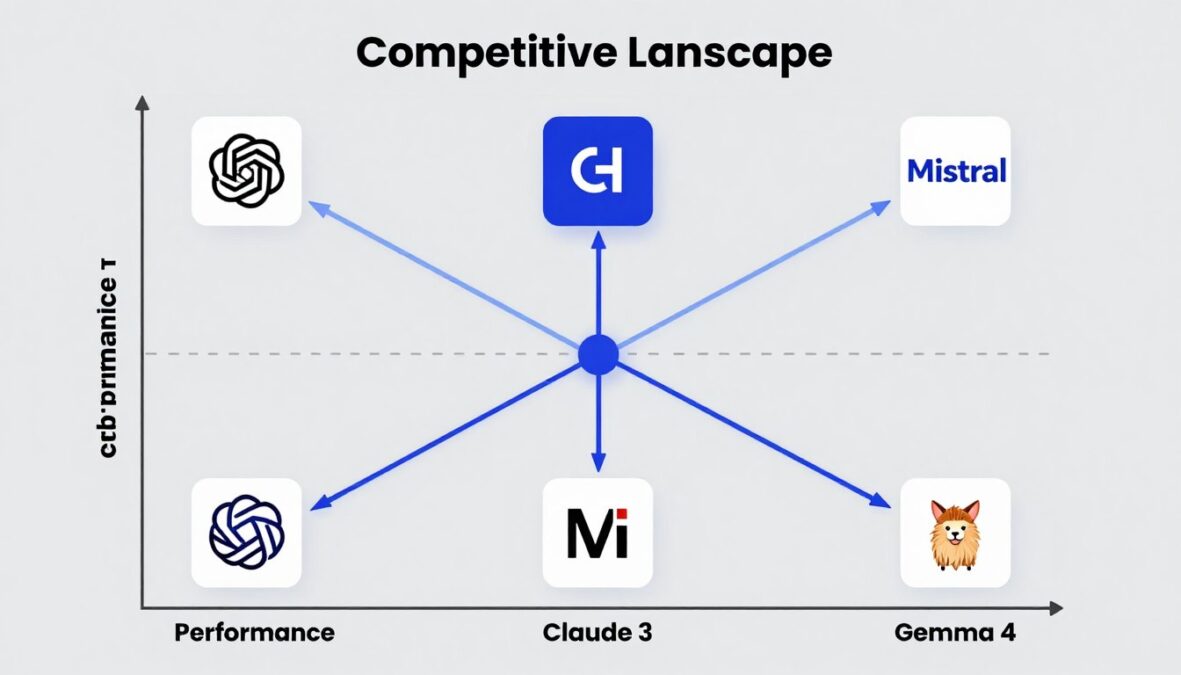
Gemma 4 occupies a unique market position. It competes with both open-source alternatives and proprietary services. The trade-offs differ based on evaluation criteria.
Open-source models like Llama 3 and Mistral offer similar accessibility. Gemma 4 provides Google’s ecosystem integration advantages. Proprietary models deliver superior performance at higher costs and less flexibility.
Future Improvement Potential
The Gemma roadmap suggests continued development. Community contributions accelerate feature additions. Fine-tuned variants address specific domain requirements.
Development Trajectory: Google’s investment in the Gemma family indicates long-term commitment. Expect regular updates addressing current limitations while maintaining open-weight accessibility.
Overall Verdict and Rating
Comprehensive evaluation synthesizes all factors into practical guidance. The Google Gemma 4 AI model delivers substantial value for specific use cases. Understanding its position helps make informed adoption decisions.
Who Should Use Gemma 4
Target users benefit from specific characteristics this model provides. Evaluating your priorities against these profiles helps determine fit.
Developers and Startups
Teams building AI-powered applications with budget constraints find excellent value. Open-weight licensing eliminates per-token API costs. Deployment flexibility supports growth from prototype to production.
Researchers and Academics
Educational institutions and research teams benefit from model transparency. Experimentation and modification support advancing AI understanding. Free access removes barriers to academic exploration.
Privacy-Conscious Organizations
Companies handling sensitive data require on-premises deployment. Healthcare, legal, and financial sectors meet compliance requirements. Complete data control prevents third-party exposure.
Alternative Considerations
Certain scenarios suggest exploring other options. Understanding these boundaries prevents mismatched expectations.
Consider Alternatives When: You need absolute cutting-edge performance regardless of cost, require robust real-time information integration, operate primarily in non-English languages, or lack technical resources for deployment and maintenance.
Implementation Recommendations
Successful deployment follows proven practices. These guidelines maximize value from Gemma 4 adoption.
- Start with appropriate model size: Begin with the 2B or 9B variant for testing before committing to larger deployments
- Leverage quantization: Use INT8 quantization for production to reduce hardware requirements while maintaining acceptable accuracy
- Implement robust testing: Evaluate performance on your specific use cases rather than relying solely on benchmark scores
- Plan for fine-tuning: Budget time and resources for domain-specific training to optimize results
- Monitor performance: Track inference latency, memory usage, and output quality in production environments
- Build safety layers: Implement output filtering and validation for production applications
- Optimize infrastructure: Use batching, caching, and efficient serving frameworks to reduce operational costs
- Maintain fallback options: Design systems to gracefully handle model failures or quality issues
Value Proposition Summary
Gemma 4 delivers exceptional value in the open-weight model space. The combination of performance, accessibility, and deployment flexibility creates compelling advantages. Organizations prioritizing control and cost-effectiveness find strong alignment.
Performance gaps compared to proprietary frontier models continue narrowing. The open-weight approach enables community-driven improvements. This trajectory suggests increasing competitiveness over time.
Future Outlook
Google’s commitment to the Gemma family indicates sustained development. Expect continued improvements addressing current limitations. The model represents a solid foundation for long-term AI strategies.
Gemma 4 exemplifies the maturation of open-weight AI models. While not the absolute performance leader, it provides outstanding value for organizations seeking deployment control, cost predictability, and freedom from vendor lock-in.
Final Recommendation
Gemma 4 earns a strong recommendation for appropriate use cases. The model balances performance, accessibility, and practical deployment considerations effectively. Organizations matching the ideal user profile will find significant value.
The rating of 4.3 out of 5 reflects genuine capabilities and limitations. This represents an excellent option within the open-weight category. Consider it seriously when evaluating AI model choices in April 2026.
Get Started with Gemma 4 Today
Choose your preferred platform and begin implementing Gemma 4 in your projects. Access documentation, download model weights, or try interactive demos.
Technical Implementation Guide
Practical deployment requires understanding implementation details. This section provides actionable guidance for integrating the Google Gemma 4 AI model into your systems. Following these practices ensures optimal performance and reliability.
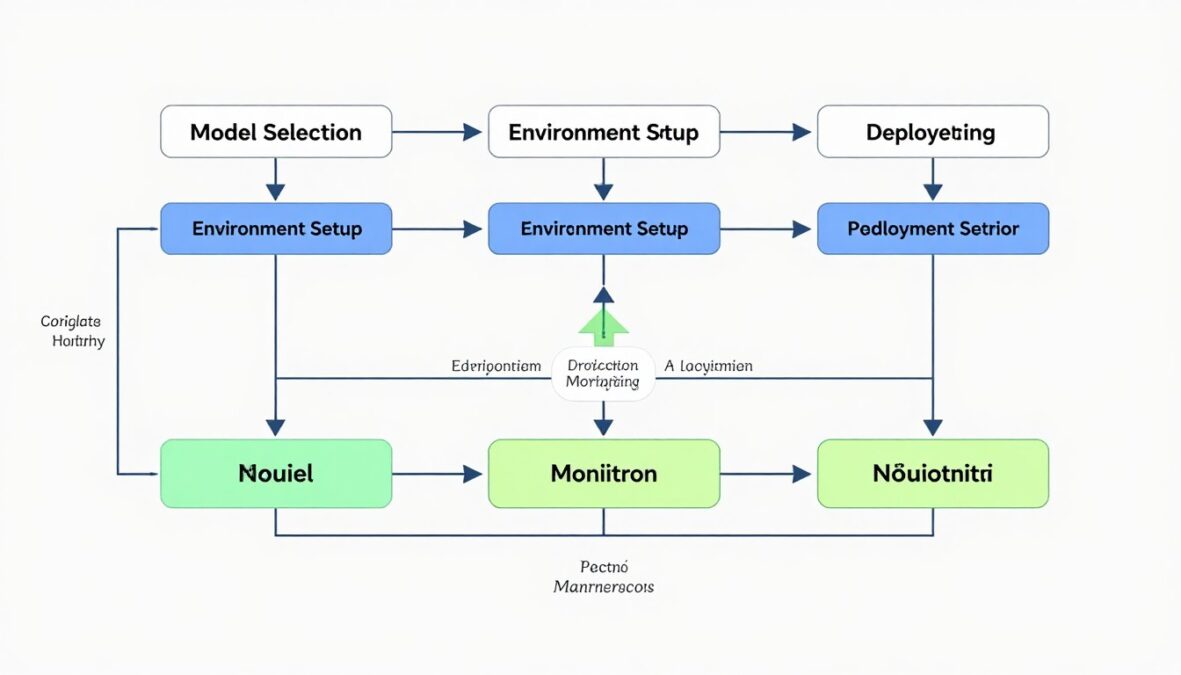
Environment Setup
Proper environment configuration establishes a foundation for successful deployment. Python remains the primary development language. Several framework options support Gemma 4 integration.
Using Transformers Library
Hugging Face Transformers provides the simplest integration path. Install dependencies through pip package manager. Load models directly from the hub with minimal configuration.
The library handles tokenization, model loading, and inference automatically. Built-in optimization techniques improve performance without manual intervention.
Using Native Frameworks
TensorFlow and PyTorch offer more control over implementation details. These frameworks enable custom optimization strategies. Advanced users benefit from fine-grained performance tuning.
JAX provides functional programming approaches for research applications. The framework excels at experimental model modifications.
Model Loading and Initialization
Efficient model loading reduces startup time in production environments. Different strategies suit various deployment scenarios. Understanding these options helps optimize your implementation.
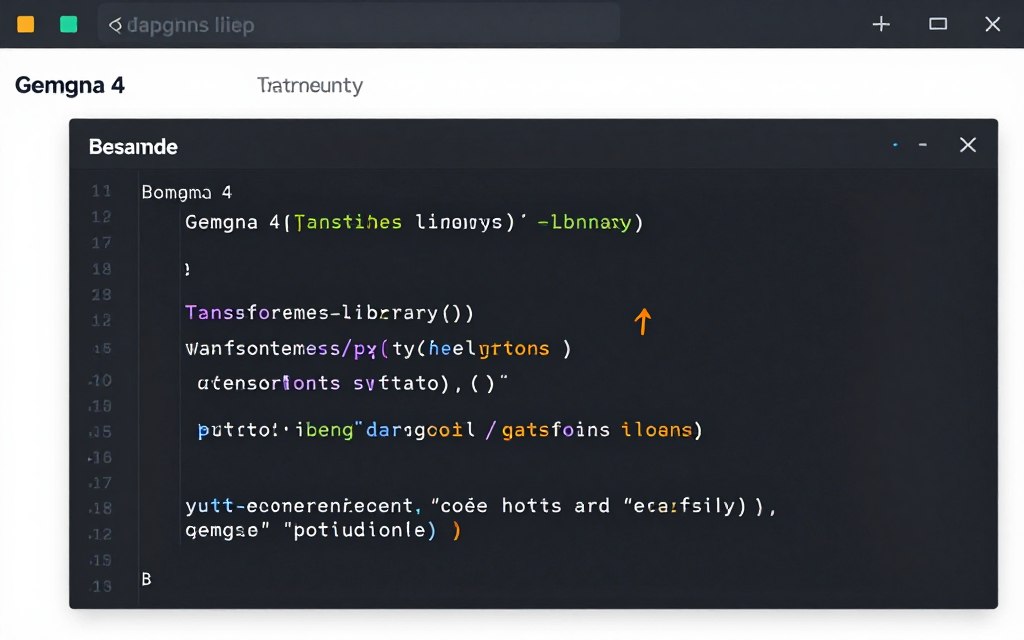
- Standard loading: Full model in FP16 precision for maximum accuracy
- Quantized loading: INT8 or INT4 for reduced memory footprint
- Sharded loading: Distribute model across multiple GPUs for large variants
- Cached loading: Store model in local cache to avoid repeated downloads
Inference Optimization
Production systems require efficient inference strategies. Several techniques reduce latency and increase throughput. Implementing these optimizations improves user experience and reduces costs.
| Optimization Technique | Latency Impact | Throughput Impact | Implementation Difficulty |
| Batch Processing | +20-50% per request | +200-400% overall | Low |
| KV Cache Optimization | -30-40% | +50-80% | Medium |
| Quantization (INT8) | -15-25% | +30-50% | Low |
| Flash Attention | -25-35% | +40-60% | Medium |
| Model Compilation | -10-20% | +15-30% | High |
Prompt Engineering Best Practices
Effective prompts extract maximum value from model capabilities. Structure and formatting significantly impact output quality. These guidelines improve results across different tasks.
- Provide clear context and specific instructions
- Use examples to demonstrate desired output format
- Break complex tasks into sequential steps
- Specify constraints and requirements explicitly
- Iterate and refine prompts based on results
Prompt Template: Structure prompts with system context, task description, input data, and output format specifications. This consistency improves reliability across different use cases.
Fine-Tuning for Specific Domains
Domain-specific applications often benefit from additional training. Fine-tuning adapts the model to specialized vocabularies and patterns. This process improves accuracy for particular use cases.
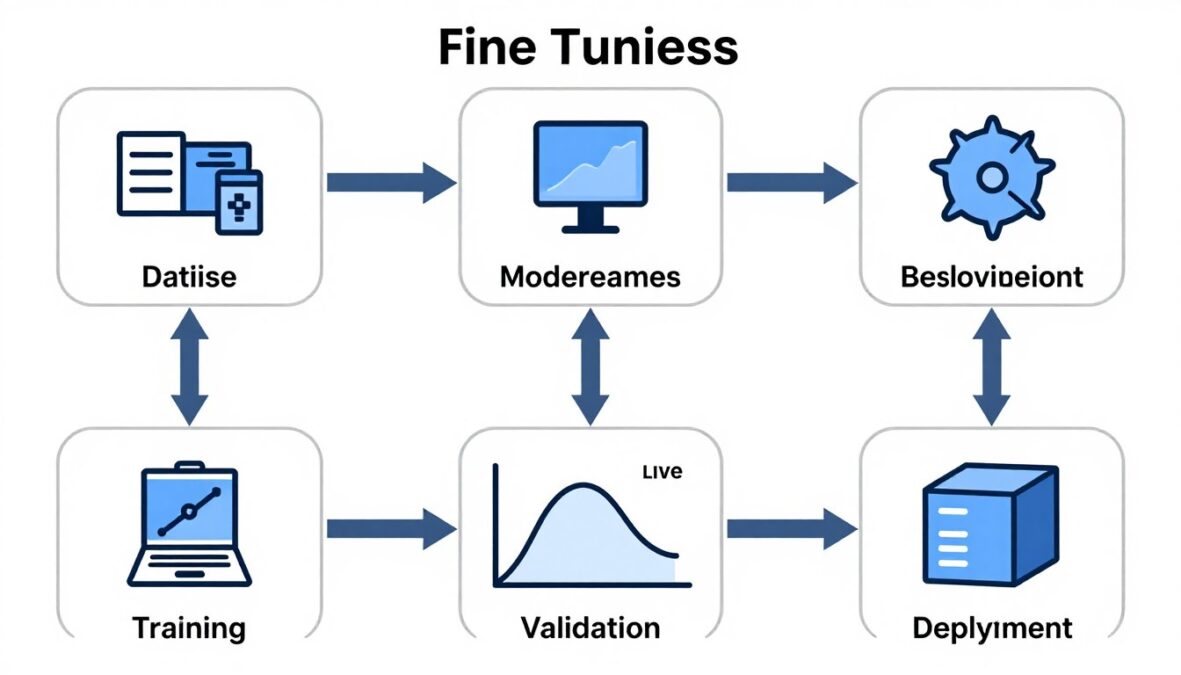
Parameter-efficient fine-tuning methods reduce computational requirements. LoRA and QLoRA techniques modify only small portions of model weights. These approaches enable fine-tuning on consumer hardware.
Function Calling Implementation
Native function calling enables agent-based applications. The model generates structured outputs specifying tool invocation. Implementing this capability expands practical use cases significantly.
- Define available functions with clear descriptions and parameter schemas
- Format function definitions in the model’s expected structure
- Parse model outputs to extract function calls and parameters
- Execute called functions and return results to the model
- Continue conversation with function outputs integrated into context
- Handle errors and edge cases gracefully with fallback strategies
Vision Input Processing
Multimodal applications require proper image preparation. The vision encoder expects specific formats and sizes. Following these requirements ensures optimal performance.
Image Requirements: Gemma 4 accepts images up to 1024×1024 pixels. The encoder automatically resizes and preprocesses inputs. Support multiple images per prompt by including them sequentially in the input.
Memory Management
Efficient memory usage prevents out-of-memory errors during inference. Several strategies optimize GPU memory allocation. These techniques enable processing longer contexts and larger batches.
GPU Memory Optimization
- Use gradient checkpointing during fine-tuning
- Implement KV cache quantization for inference
- Clear cache between independent requests
- Monitor memory usage with profiling tools
Context Window Management
- Truncate or summarize when approaching limits
- Implement sliding window for long conversations
- Prioritize recent context over distant history
- Use external retrieval for reference information
Monitoring and Logging
Production deployments require comprehensive monitoring. Track key metrics to identify performance issues. Logging helps debug problems and optimize system behavior.
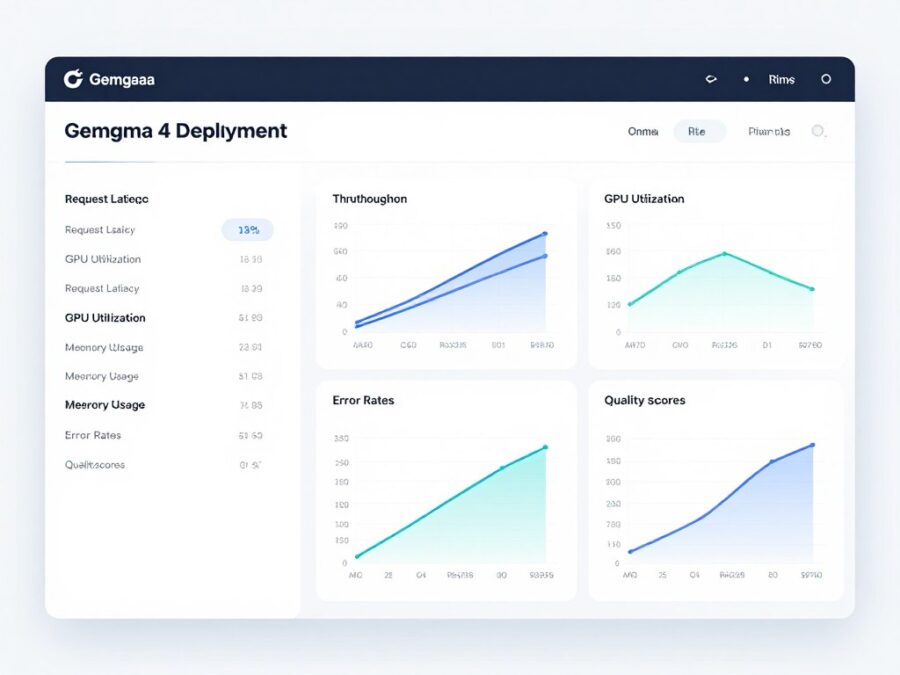
| Metric Category | Key Indicators | Monitoring Frequency | Alert Threshold |
| Performance | Latency, throughput, tokens/second | Real-time | >2x baseline |
| Resources | GPU utilization, memory usage, CPU load | Every minute | >90% capacity |
| Quality | Error rates, output validation failures | Per request | >5% failure rate |
| Business | Request volume, user satisfaction, costs | Hourly/daily | Custom thresholds |
Security Considerations
Production deployments must address security concerns. Implementing appropriate safeguards protects both users and systems. These measures reduce risks associated with AI deployment.
- Input validation prevents prompt injection attacks
- Output filtering removes harmful or inappropriate content
- Rate limiting prevents abuse and resource exhaustion
- Access control restricts model usage to authorized users
- Audit logging tracks all model interactions for compliance
- Data encryption protects information in transit and at rest
Scaling Strategies
Growing applications require scalable infrastructure. Different approaches handle increasing load effectively. Choosing appropriate strategies depends on growth patterns and requirements.
Vertical Scaling
Upgrade hardware to more powerful GPUs. Add memory to handle larger batches. This approach suits moderate growth and simplifies management.
Cost increases linearly with performance improvements. Hardware limitations eventually constrain further scaling.
Horizontal Scaling
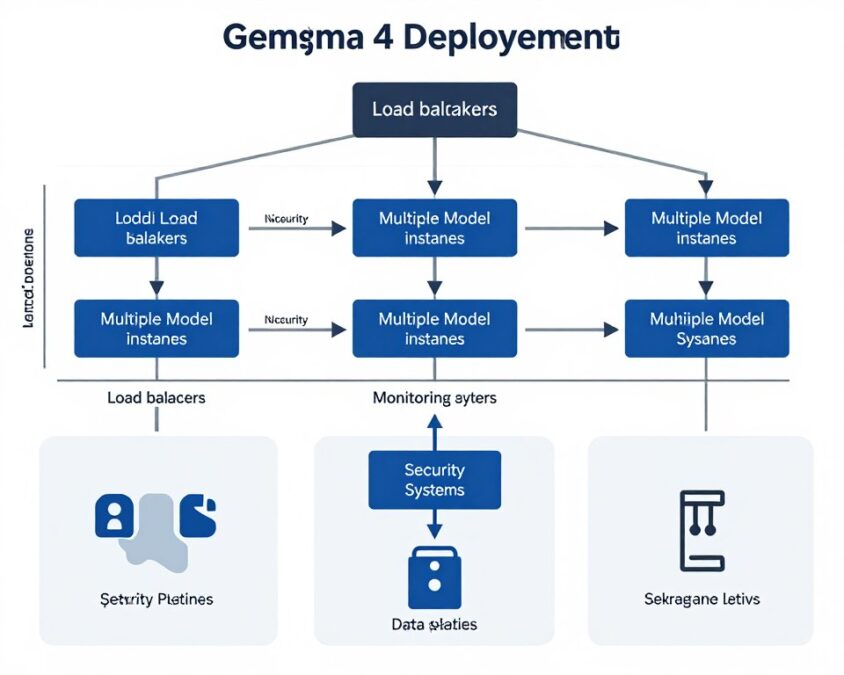
Deploy multiple model instances behind load balancers. Distribute requests across available instances. This approach handles unlimited growth potential.
Requires coordination and state management complexity. Initial setup demands more infrastructure expertise.
Comparison with Competing Models
Understanding competitive positioning requires direct comparisons. The Google Gemma 4 AI model competes with both open-source and proprietary alternatives. Examining these relationships clarifies decision factors.
Open-Source Model Comparison
Several open-weight models compete directly with Gemma 4. Each offers distinct advantages and trade-offs. Understanding these differences helps select the optimal model for specific needs.
| Model | Parameters | Context Length | Vision Support | Key Strength | Main Limitation |
| Gemma 4 27B | 27B | 32K / 131K | Yes | Extended context, Google ecosystem | Smaller community than Llama |
| Llama 3 70B | 70B | 8K | No | Largest community, extensive fine-tunes | Limited context window |
| Mistral 8x7B | 47B (MoE) | 32K | No | Mixture-of-experts efficiency | No vision capabilities |
| Qwen 2.5 72B | 72B | 128K | Yes | Multilingual, long context | Less Western language optimization |
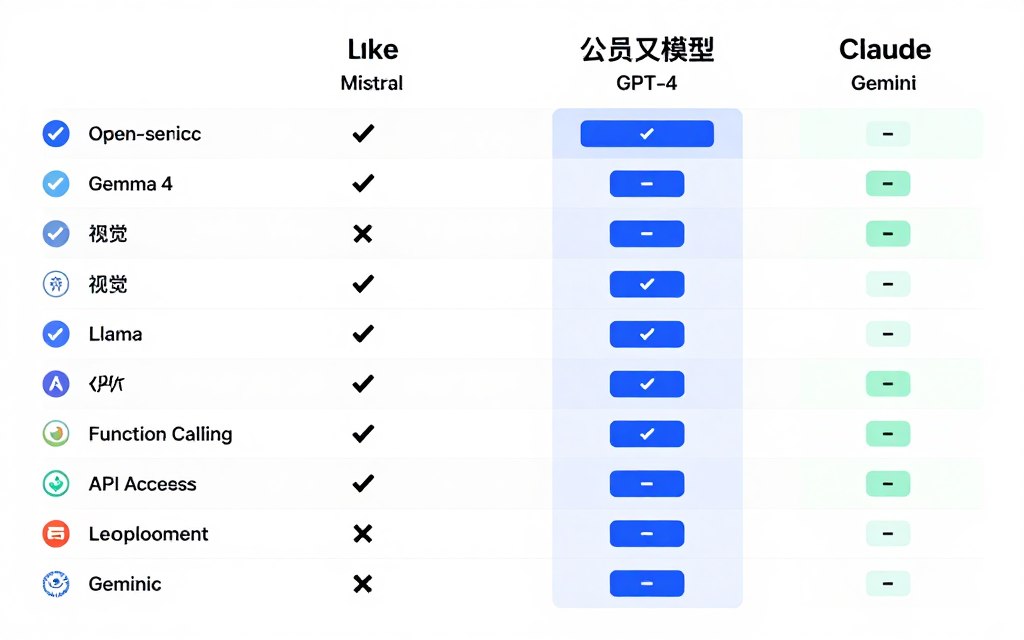
Proprietary Model Comparison
Commercial API services offer different value propositions. These models typically show superior performance with reduced deployment control. Cost structures and capabilities vary significantly.
Performance Trade-offs
GPT-4 and Claude 3 Opus demonstrate superior reasoning capabilities. These models excel at complex analytical tasks. Higher API costs reflect performance advantages.
Gemini 1.5 Pro offers competitive multimodal performance. The longer context window supports extensive document analysis. Google ecosystem integration provides seamless workflows.
Control and Flexibility
Gemma 4 enables complete deployment control. Organizations customize and optimize without restrictions. This flexibility justifies the infrastructure investment for some use cases.
Proprietary services simplify deployment with managed infrastructure. Automatic updates and scaling reduce operational burden. However, vendor dependency creates strategic concerns.
Cost Analysis Comparison
Total cost of ownership differs dramatically between deployment models. Understanding these economics guides budget planning and ROI calculations.
| Model/Service | Deployment Type | Initial Cost | Cost per 1M Tokens | Break-even Volume |
| Gemma 4 27B (Cloud) | Managed GPU | Setup time only | ~$0.50-1.50 | Low |
| Gemma 4 27B (On-prem) | Owned hardware | $10,000-30,000 | ~$0.10-0.30 | High |
| GPT-4 Turbo | API Service | None | $10-30 | N/A |
| Claude 3 Opus | API Service | None | $15-75 | N/A |
| Gemini 1.5 Pro | API Service | None | $3.50-10.50 | N/A |
Benchmark Performance Comparison
Standardized tests provide objective performance measurements. These comparisons reveal relative strengths across different capability dimensions.
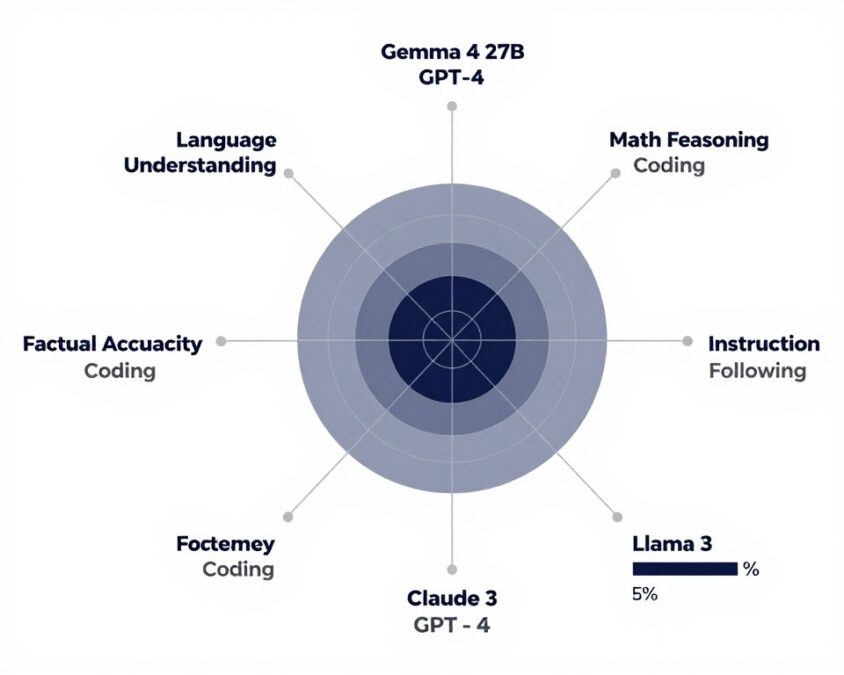
Context-specific performance matters more than aggregate scores. Evaluate models on tasks representative of your actual use cases. Benchmark results provide starting points rather than definitive answers.
Ecosystem and Community Support
Community size impacts available resources and third-party tools. Larger ecosystems provide more fine-tuned variants and integration examples. This support accelerates development and troubleshooting.
Gemma 4 Ecosystem
Google provides official documentation and examples. Hugging Face community contributes implementations. Growing but smaller than Llama ecosystem currently.
Llama Ecosystem
Largest open-source AI community. Thousands of fine-tuned variants available. Extensive third-party tools and integrations developed.
Proprietary Services
Vendor provides complete support and updates. Official SDKs for major languages. Community shares integration patterns and examples.
Use Case Recommendations
Different models suit different applications. Matching capabilities to requirements optimizes results and costs.
- Privacy-sensitive deployments requiring on-premises hosting
- Cost-conscious applications with high token volumes
- Projects needing long context processing capabilities
- Educational and research applications
- Multimodal applications integrating vision and text
- Organizations prioritizing vendor independence
Best for Gemma 4
- Applications demanding absolute maximum performance
- Rapid prototyping without infrastructure setup
- Low-volume specialized applications
- Tasks requiring current information and web access
- Organizations lacking ML infrastructure expertise
- Applications where cost matters less than capability
Best for Proprietary Models
- Llama: Maximum community support and fine-tunes
- Mistral: Efficient inference with MoE architecture
- Qwen: Multilingual applications outside English
- Phi: Extreme efficiency on mobile devices
- Falcon: Specific regulatory compliance needs
- BLOOM: Research requiring transparent training data
Best for Other Open Models
Frequently Asked Questions
Common questions arise during evaluation and implementation. These answers address typical concerns and provide practical guidance for working with the Google Gemma 4 AI model.

Can I use Gemma 4 commercially without restrictions?
Yes, the Gemma Terms of Use permit commercial applications without licensing fees. You can deploy the model in products, services, and internal business applications. Attribution requirements remain minimal. However, review the complete terms to ensure compliance with acceptable use policies and redistribution guidelines if you plan to share modified versions.
What hardware do I need to run Gemma 4 locally?
Hardware requirements depend on the model variant you choose. The 2B parameter model runs on modern laptops with 8GB RAM and integrated graphics. The 9B variant performs best with a dedicated GPU offering 12-16GB VRAM, such as an RTX 3060 or better. The 27B parameter version requires high-end GPUs with 24GB or more VRAM, like the RTX 4090 or A100. Quantized versions reduce these requirements significantly while maintaining acceptable performance.
How does Gemma 4 compare to GPT-4 in terms of performance?
GPT-4 generally outperforms Gemma 4 on complex reasoning tasks and specialized knowledge domains. However, Gemma 4 27B achieves competitive results on many language understanding benchmarks and coding tasks. The key differences lie in deployment control and cost structure rather than pure performance. Gemma 4 excels when you need on-premises deployment, custom modifications, or cost-effective high-volume usage. GPT-4 remains superior for applications demanding absolute maximum capability regardless of cost.
Can Gemma 4 access real-time information from the internet?
No, Gemma 4 operates as a standalone language model without internet connectivity. The model’s knowledge reflects its training data with a cutoff date. For current information, implement retrieval-augmented generation by combining Gemma 4 with external search APIs or databases. The function calling capabilities facilitate this integration, allowing the model to request information from external sources when needed.
Is fine-tuning Gemma 4 difficult for someone without ML expertise?
Basic fine-tuning has become accessible through user-friendly tools and detailed tutorials. Platforms like Hugging Face provide simplified interfaces requiring minimal coding. However, achieving optimal results for specialized domains benefits from understanding machine learning concepts. Consider starting with parameter-efficient methods like LoRA, which reduce complexity and resource requirements. Google’s documentation includes step-by-step guides for common fine-tuning scenarios.
How do I handle the extended context window without running out of memory?
Managing long contexts requires several optimization techniques. Use the extended 27B variant designed for this purpose. Implement KV cache quantization to reduce memory consumption during inference. Consider processing documents in chunks with overlap when full-length processing proves impractical. Gradient checkpointing helps during fine-tuning. Monitor memory usage and adjust batch sizes accordingly. For extremely long documents, summarization or hierarchical processing may provide better alternatives than single-pass processing.
What languages does Gemma 4 support besides English?
Gemma 4 primarily optimizes for English language tasks. The model demonstrates functional capabilities in major European languages including Spanish, French, German, and Italian. However, performance decreases compared to English across all metrics. For applications primarily using non-English languages, consider specialized multilingual models like Qwen or mT5. Fine-tuning Gemma 4 on target language data improves results but requires substantial datasets.
Can Gemma 4 generate images or only process them?
Gemma 4 processes and understands images through its vision encoder but does not generate images. The model excels at vision-language tasks like image captioning, visual question answering, and multimodal reasoning. For image generation, you would need separate models like Stable Diffusion or DALL-E. However, Gemma 4 can assist in creating detailed text prompts for image generation models.
How often does Google update Gemma models with new versions?
Google follows an iterative development approach with major releases occurring approximately every six to twelve months based on the Gemma family history. Minor updates addressing bugs and performance improvements release more frequently. The company announces releases through official channels including the Google AI blog and Hugging Face. Subscribe to these channels to receive update notifications. Backward compatibility typically receives consideration during updates.
What’s the best way to reduce hallucinations in Gemma 4 outputs?
Several strategies minimize factual errors and hallucinations. Implement retrieval-augmented generation to ground responses in verified information sources. Use clear, specific prompts that constrain the model’s creative freedom when factual accuracy matters. Request citations or confidence indicators for factual claims. Fine-tune on domain-specific accurate datasets. Implement output validation checking against knowledge bases. When absolute accuracy matters critically, always include human review in your workflow as no current AI model eliminates hallucinations entirely.
Does Gemma 4 work with popular AI frameworks and tools?
Yes, Gemma 4 integrates with major machine learning ecosystems. Hugging Face Transformers provides native support with simple APIs. TensorFlow, PyTorch, and JAX enable custom implementations. LangChain and LlamaIndex facilitate building applications with retrieval augmentation. The model works with ONNX for cross-platform deployment. Quantization tools like llama.cpp support efficient inference. Most popular AI development tools either directly support Gemma 4 or require minimal adaptation.
Can I deploy Gemma 4 on mobile or edge devices?
The 2B parameter variant enables edge deployment with appropriate optimization. Quantization to INT4 reduces the model size to approximately 1-2GB, suitable for modern mobile devices. TensorFlow Lite and Core ML support mobile integration for iOS and Android. Performance varies based on device specifications, with flagship smartphones achieving acceptable inference speeds. For resource-constrained IoT devices, consider cloud-based deployment with edge devices sending requests rather than local inference.
Conclusion
The Google Gemma 4 AI model represents significant progress in open-weight language models. This comprehensive review examined technical specifications, performance characteristics, and practical applications. The analysis provides data-driven insights for evaluation decisions.
Gemma 4 excels in scenarios prioritizing deployment flexibility and cost control. The open-weight licensing removes barriers to commercial adoption. Organizations with privacy requirements or vendor independence concerns find compelling value.
Performance benchmarks demonstrate competitive capabilities across language understanding and coding tasks. The extended context window enables applications impossible with shorter limits. Vision integration expands use cases beyond pure text processing.
The model serves educational and research communities particularly well. Free access supports learning and experimentation without financial constraints. Transparency enables academic inquiry into model behavior and improvements.
Production deployments benefit from Google’s ongoing commitment. Regular updates address limitations and expand capabilities. The growing ecosystem provides increasing resources and community support.
Gemma 4 strikes an excellent balance between capability, accessibility, and practical deployment considerations. It represents the best choice for many use cases prioritizing control over absolute cutting-edge performance.
Implementation requires technical expertise for optimal results. However, comprehensive documentation and examples reduce barriers to entry. Teams with basic machine learning knowledge successfully deploy the model.
Cost economics favor Gemma 4 for high-volume applications. The initial infrastructure investment pays off through eliminated per-token charges. Cloud deployment options provide flexibility without long-term commitments.
Final Assessment: Gemma 4 earns a rating of 4.3 out of 5, reflecting strong performance, excellent value, and practical deployment flexibility. Limitations exist compared to frontier proprietary models, but the open-weight approach and continual improvements make it a compelling choice for April 2026.
The competitive landscape continues evolving rapidly. Gemma 4 positions itself effectively within the open-weight category. Future updates will likely address current limitations while maintaining accessibility advantages.
Organizations evaluating AI solutions should seriously consider Gemma 4. The model serves diverse use cases across industries and applications. Matching its strengths to your requirements determines optimal fit.
Download options through multiple platforms eliminate adoption barriers. Start with smaller variants for testing before committing to production deployments. The investment in understanding Gemma 4 capabilities pays dividends through flexible, cost-effective AI implementation.
There are no reviews yet. Be the first one to write one.